
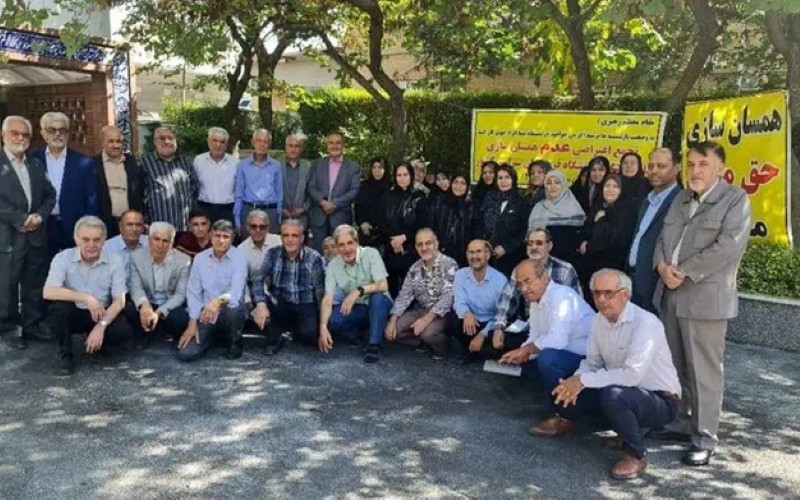

With over 15 million Iranians dependent on pensions and healthcare services, the looming collapse of the Social Security Organization threatens one of the last remaining pillars of the regime.
Mounting Dependence, Escalating Risks
Official figures reveal that more than 4.3 million retirees in Iran directly receive pensions from the Social Security Organization. Including their families, the number of dependents exceeds 15 million people—nearly one-fifth of the country’s population. Projections indicate that within five years, the number of pensioners will rise above 7.5 million, making nearly a quarter of Iran’s population reliant on a system now “racing toward bankruptcy.”
A Widening Financial Abyss
The Social Security Organization currently spends around 95 trillion tomans monthly on pensions and 25 trillion tomans on healthcare services. Yet its revenues fall short by more than 20 trillion tomans each month. On top of this deficit, the regime has left behind an ever-growing mountain of unpaid debts to the organization. Even emergency cash injections from the government are no longer sufficient to prevent collapse.
Beyond Numbers: A Crisis of Trust
This crisis is not merely financial—it represents a deep social rupture. Workers and retirees, after decades of paying insurance contributions, now face the prospect of losing their livelihoods and healthcare. As public trust erodes, resentment and anger spread rapidly. The crisis, rooted in structural mismanagement, cannot be resolved with temporary measures or hollow promises.
The Social Security Organization is more than a financial entity—it represents a pact between state and society, linking workers and employers, today’s citizens and future generations. Its collapse would not only mark an economic failure but also tear down one of the last social pillars sustaining the regime’s legitimacy.
Approaching the Breaking Point
Analysts warn that if the regime continues its policy of denial and delay, the “point of explosion” is not far away. Should millions be deprived of pensions and healthcare, social unrest would be inevitable and uncontrollable. Such an eruption would go beyond financial collapse, fueling nationwide protests and uprisings.
A Wider Context of Social Volatility
Global experience shows that welfare crises in systems lacking transparency and public participation often spark social revolts. In Iran, where inequality deepens, unemployment persists, and public trust in the regime has eroded, the collapse of Social Security could be the spark that ignites a broader uprising.
This crisis underscores a historic inevitability: when a regime can no longer fulfill even its minimum obligations, the streets become the people’s only recourse. In Iran, this shift has already begun.
Retirees Joining the Wider Resistance
Retirees, united with workers and other oppressed sectors, increasingly recognize that their only solution lies in street protests. This “army of millions” of retirees, when aligned with other disaffected groups, represents a force no repression can fully contain. The collapse of Social Security, therefore, risks becoming not only an economic disaster but also a catalyst for nationwide revolt.