The failure of a draft resolution to extend the suspension of sanctions against Iran’s regime sets the stage for the automatic return of international measures, while Tehran faces mounting internal divisions and external pressure.
The United Nations Security Council on Friday rejected a draft resolution that would have prolonged the suspension of international sanctions against Iran. The outcome, which failed to secure the nine necessary votes, brings the automatic reimposition of sanctions—known as the “snapback” mechanism under Resolution 2231—closer than ever. Unless a new resolution is proposed and adopted before the looming deadline, sanctions lifted prior to 2016 will return at the end of September.
This development is not merely a diplomatic spectacle; its implications are both practical and far-reaching. The reinstatement of sanctions on missile industries, military weapons, nuclear technology, banking, and shipping would severely undermine the regime’s already fragile economic prospects and weaken its capacity to pursue strategic projects.
Limited Diplomatic Options
European and American officials have hinted that if Tehran provides strong guarantees, sanctions could be delayed. Yet such guarantees appear difficult, if not impossible, for the regime to deliver. French President Emmanuel Macron and other Western leaders have already warned that sanctions could be reimposed by late September. While side discussions with Iranian officials are planned in New York, the diplomatic space for Tehran is narrowing rapidly, and any concessions are unlikely to buy more than short-term reprieve.
Internal Power Struggles
Complicating matters further are the regime’s deep internal divisions. The so-called principlists led by the IRGC, hardline parliamentarians, and circles close to the Supreme Leader, rejects any concessions. Meanwhile, the so-called “reformist” faction argues that negotiations are essential to maintain even minimal political and economic survival. These rifts have led to open confrontations, including public criticism of the diplomatic establishment, impeachment threats, and damaging leaks. Such discord undermines decision-making coherence and delays Tehran’s responses at critical junctures, risking outcomes harmful to the regime’s stability.
Buying Time Through Tactical Maneuvers
In an effort to delay the inevitable, Tehran has employed a series of tactical maneuvers. These include rejecting or amending proposed resolutions, floating partial proposals, and demanding ungrantable guarantees from the United States. Foreign sources suggest the regime has even tried to focus negotiations solely on its 60% uranium enrichment stockpile—a proposal quickly dismissed as insufficient by Europe. Tehran’s inconsistency and lack of credible texts have only deepened international skepticism.
At the same time, the regime has attempted to push its agenda within the International Atomic Energy Agency (IAEA), drafting resolutions to ban attacks on nuclear facilities and signaling cooperation with allied powers. Yet most of these initiatives have been quietly withdrawn under international pressure, underscoring the regime’s lack of cohesion and limited influence on the global stage.
Domestic Consequences
The looming snapback sanctions raise a critical question: what impact will renewed international pressure have on Iran’s internal power dynamics? Analysts argue that economic strangulation, combined with international isolation, could erode the regime’s financial capacity to sustain its repressive security apparatus. Reduced resources would increase the costs of domestic repression while diminishing its effectiveness.
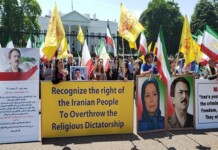
In such circumstances, if protest movements and organized resistance forces manage to coordinate effectively, there is potential for a significant shift in the balance of power. The interplay of external pressure and internal weakening could open a window of opportunity for widespread unrest, provided the opposition maintains unity, leadership, and the ability to mobilize broader segments of society.
A Decisive Test for the Regime
Ultimately, the question of whether sanctions return—or are temporarily delayed—has moved beyond the realm of technical diplomacy at the UN Security Council. It has become a decisive test of the Iranian regime’s capacity to withstand intensifying pressure. The combination of international sanctions and domestic factionalism could redefine the country’s political landscape in the months ahead.
With the end of September approaching, every diplomatic decision, internal rift, and tactical maneuver carries heightened significance. The outcome may well shape not only Tehran’s foreign relations but also the trajectory of its internal power structure in the critical period to come.