


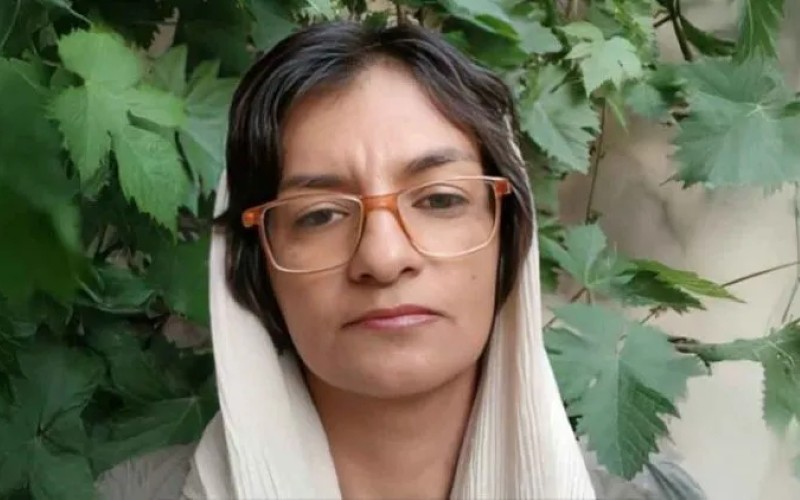

42-year-old political prisoner dies after ten days in a coma, as fellow inmates accuse authorities of deliberate negligence.
A Preventable Tragedy
Somayeh Rashidi, a 42-year-old political prisoner held in Qarchak Prison, died on Thursday, September 25, after spending ten days in a coma at Mofatteh Hospital in Varamin. Rashidi, who had long suffered from epilepsy, was repeatedly denied proper medical treatment by prison authorities, who dismissed her seizures as “malingering.”
According to one source familiar with her case:
“Somayeh collapsed and had seizures in front of her cellmates many times. The prison doctor told her she was faking. Only when her condition became irreversible did they finally transfer her. On the first day, doctors said there was no hope of her recovery.”
Hospital staff confirmed that Rashidi’s level of consciousness was recorded as “5” upon admission—a critical indicator that recovery was unlikely.
Arrest, Charges, and Transfer
Born in 1983 and a resident of Tehran, Rashidi was arrested on April 24, 2025, for writing slogans in the Javadieh district. Initially held in Evin Prison, she was transferred to Qarchak after Israel’s missile strike on Evin in mid-2025. Her official charge was “propaganda against the regime.”
The judiciary’s media center attempted to frame her death as a result of her “security background” and pre-existing medical conditions. In an official statement, the regime claimed she had been arrested multiple times for alleged links to the opposition group the People’s Mojahedin Organization of Iran (PMOI/MEK) and accused her of involvement in “at least 10 sabotage operations.”
Despite acknowledging her epilepsy, the judiciary insisted she had been examined “eight times by general practitioners and six times by specialists” during her detention. However, these claims sharply contrast with testimonies from inmates who witnessed her repeated seizures and systematic denial of treatment.
Voices from Inside Qarchak
In a joint statement, 45 female political prisoners in Qarchak Prison strongly rejected the regime’s narrative. They declared:
- Rashidi was never a drug addict and did not suffer from psychological disorders.
- She had epilepsy from the beginning of her imprisonment, known to all prison officials and medical staff.
- She suffered multiple severe seizures in recent months, yet was consistently returned to prison without hospital admission.
- Despite being granted bail set at three billion tomans, authorities refused to facilitate her release, knowing her critical medical condition.
The statement emphasized:
“Somayeh Rashidi was full of life and determination until her last days. She died because of the regime’s incompetence and deliberate lies. Other ‘Somayehs’ remain in prisons across Iran, their health in imminent danger.”
The prisoners also warned of two recent, unreported deaths among non-political inmates in Qarchak, underscoring a broader pattern of neglect. They demanded the immediate release of inmates over 60 and those with life-threatening conditions.
A Pattern of Lethal Neglect
Rashidi’s death is the latest in a growing list of preventable fatalities among political and ideological prisoners in Iran. Human rights organizations have repeatedly documented cases where authorities deliberately withheld medical care as a method of silent execution.
Her case reflects both systemic cruelty and the judiciary’s attempt to retroactively justify such deaths by linking victims to political opposition groups.
The rushed statement by the regime’s judiciary only highlights its culpability—whether Rashidi’s death was hastened by interrogation-related trauma or by the calculated denial of medical treatment under the label of “malingering,” the result is the same: another political prisoner killed by neglect.
Conclusion
The death of Somayeh Rashidi has sparked outrage among human rights advocates, political prisoners, and ordinary citizens. It highlights once again the regime’s medieval prison practices, where withholding medical care has become a tool of repression.
As her fellow inmates warned, unless urgent action is taken, many more lives remain at risk in Iran’s prisons.