


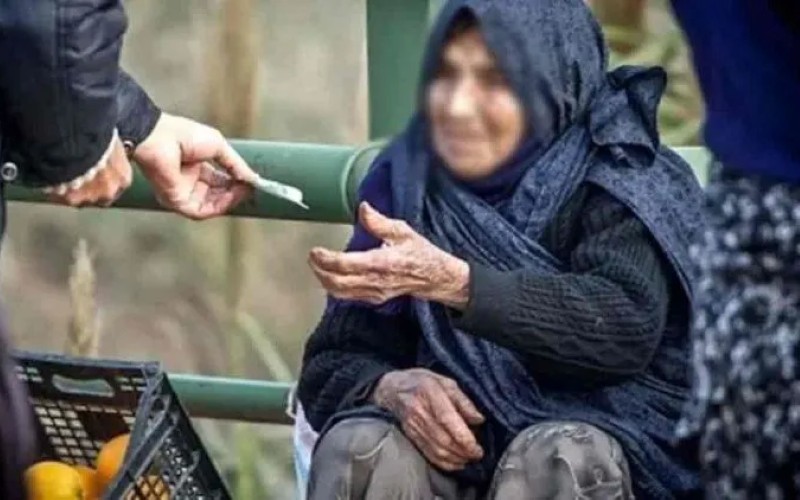

With incomes far below basic living costs, more than half the population is pushed into poverty amid price shocks and policy failure.
New economic figures reported by a state-affiliated media outlet on December 11, 2025, reveal a stark escalation in Iran’s livelihood crisis. According to the report, the poverty line has surpassed 55 million tomans per month, while average monthly household income remains between 15 and 17 million tomans. This widening gap places nearly 60 percent of the population below the poverty line, underscoring a severe deterioration in living conditions across the country.
The latest increase marks a new record. In many cities, the poverty threshold has crossed the 55-million-toman mark, presenting an unfiltered picture of economic collapse for the majority of society. With incomes covering barely a third of basic living costs, daily life for millions has been reduced to a struggle for survival rather than stability.
These figures translate into concrete deprivations. Adequate food, medical care, education, and even secure housing are being steadily eliminated from household budgets. Family food baskets continue to shrink, while debt expands month after month. For a growing segment of society, meeting minimum living standards is no longer possible.
Despite the scale of the crisis, Iran’s regime has taken no meaningful steps to contain it. On the contrary, recent months have brought a fresh wave of price increases. Dairy products have risen by as much as 150 percent, while meat and poultry prices have nearly doubled. At the same time, taxes have increased by up to 55 percent. These decisions have directly intensified pressure on households already living below the poverty line.
Price hikes imposed without regard for real incomes have pushed livelihoods to the brink. Housing rents now consume the largest share of household earnings. Food has effectively become a luxury item. Medical treatment is postponed or abandoned altogether by many families. Under these conditions, the regime’s calls for “patience” ring ridiculous and an insult to the people, as society undergoes continuous economic erosion.
The poverty line has thus moved beyond being a technical economic indicator. It has become a measure of how far Iran’s regime is detached from social reality. Policy decisions made from insulated positions of power, without public participation or accountability, inevitably translate into structural injustice. Such policies systematically exclude large segments of the population from any prospect of a dignified life.
In this context, a recurring debate promoted by officials and regime-aligned commentators is fundamentally misleading. Questions about whether cheaper fuel could ease livelihood pressures deliberately obscure the real issue. The central problem is not the price of a single commodity, but the vast and growing gap between income levels and the poverty line. No isolated price adjustment can bridge this divide.
So-called support policies have long lost their effectiveness. Wage increases that fail to match the real poverty threshold exist only on paper. Cash subsidies have been rendered meaningless by runaway inflation. These measures function more as public relations gestures than as solutions, while the burden of the crisis continues to fall on those who played no role in creating it.
The pattern is consistent: each year, the poverty line rises, and the state remains several steps behind. This lag is not accidental. It reflects a structural reality in which widespread poverty serves as a mechanism of control. Economic vulnerability weakens the capacity for public demands and keeps society in a state of exhaustion and dependency.
The livelihood crisis can no longer be described as temporary or cyclical. The soaring poverty line has become a clear indicator of the collapse of a governing model defined by systemic corruption, resource plunder, and chronic incompetence. As long as this structure remains intact, every new poverty statistic will merely confirm the continuation of the same destructive trajectory.