
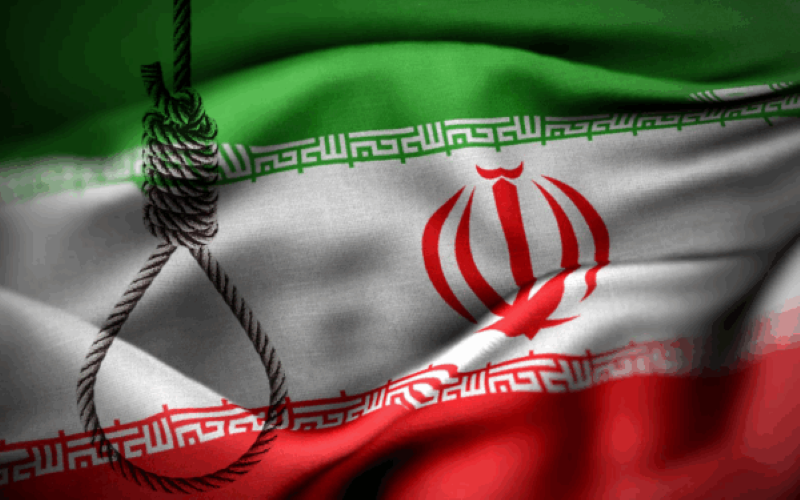

At least 52 prisoners were executed across Iran between December 22 and December 26, 2025, exposing the scale and coordination of state repression
The execution of prisoners in the final days of December 2025 has laid bare a new and alarming dimension of the Iranian regime’s naked repression. Between December 22 and December 26, corresponding to the first days of Dey 1404 in the Persian calendar, at least 52 prisoners were executed in prisons across the country. This latest wave continues a deadly trajectory that has intensified since the beginning of the year, pushing execution figures to some of the highest levels recorded in recent decades.
According to a statement by the National Council of Resistance of Iran (NCRI), the total number of executions carried out since the start of Persian year 1404 (March 2025) has reached 1,900. This figure is more than double the number reported for the previous year. In November 2025 alone, at least 363 executions were documented. With the onset of December, the pace of executions accelerated even further.
On Wednesday, December 24, at least 24 prisoners, including one woman, were executed in various prisons. Among them were Eskandar Bakhshoudeh, 32, in Isfahan; Ebrahim Alizadeh, 33; Yaqub Mansouri; Mohammad Mehdi Adavi; and Massoud Moradi in Qezel Hesar Prison.
In Shiraz, Ayoub Dehghani and another prisoner identified as Nazir were executed. Khodakaram Safapour was put to death in Sabzevar, Noushad Kazemian in Malayer, and Amir Aziz along with Zahra Khanzadeh in Mashhad. A prisoner with the surname Rastegari was executed in Mahabad.
Executions continued across the country. In Rasht, Mehdi Rajabali-Zadeh, 23, Sohrab Majidi, 30, and Mostafa Keyfari were executed. Nemat Khosravi and Yadollah Almasi were put to death in Kashmar, Noureddin Panahi in Bushehr, and Jahanshah Rashidian in Damghan. Two prisoners were executed in Chabahar, Mohammad Nourian in Shahrekord, Yarmohammad Saljouqi in Taybad, and Behrouz Sheikhi in Behbahan.
On Tuesday, December 23, at least 17 prisoners were executed. Afshin Tousi in Quchan, Milad Norouzi in Nowshahr, and Jalal Taheri in Bukan were among the victims. Sepahr Moradi was executed in Mahshahr, and Houshang Amiri in Nishapur.
Further executions included two prisoners in Qaemshahr, Karim Yousefian in Khaf, Saman Barzegar in Birjand, and Yazdan Jouzipour in Yazd. In Ilam, Shirzad Chamani and Qanbar Farhadi were executed. Safarali Sadeghi and Habib Amouri were put to death in Ahvaz, Nejat Yari in Borazjan, and Manouchehr Mahaki in Jiroft.
On Monday, December 22, at least 11 prisoners were executed. In addition to names announced in earlier statements, Mohammadreza Madadi, 30, and Kazem Hamidi were executed in Gorgan. Another unnamed prisoner was also put to death in Isfahan.
The wave of executions continued on Thursday, December 25. On that day, Amin Safari was executed in Bojnord, Majid Khani in Sari, and Heshmat Beigi in Ferdows. Morad Karimi-Galeh and Nowruz Khalafi were hanged in Shushtar. The identities of other victims executed that day have not yet been fully confirmed.
Executions on this scale present a stark picture of a state policy built on intimidation and fear. The geographical spread—from Mashhad to Ahvaz, from Rasht to Chabahar—demonstrates that this repression is not confined to any single region. Iran’s judicial and security apparatuses are acting in coordinated and relentless fashion.
What unfolded in late December 2025 underscores the regime’s systematic reliance on executions as a means of survival. These killings are not a display of strength, but a sign of fear by a regime that has lost its legitimacy. A system that anchors its survival to the gallows offers no vision beyond eventual collapse in the face of the Iranian people’s will.