



A new wave of summonses, expulsions, and arrests targeting teachers, students, workers, and labor activists reveals the Iranian regime’s growing fear that separate grievances could converge into a broader uprising.
The Iranian regime is intensifying its campaign of summonses, arrests, expulsions, and intimidation against teachers, students, workers, and labor activists as social discontent continues to deepen across the country.
While the regime has routinely responded to demands for basic rights with repression, the latest wave appears increasingly preventive. Rather than waiting for protests to erupt, security authorities are attempting to identify and neutralize people capable of organizing, mobilizing, and connecting different sectors of society.
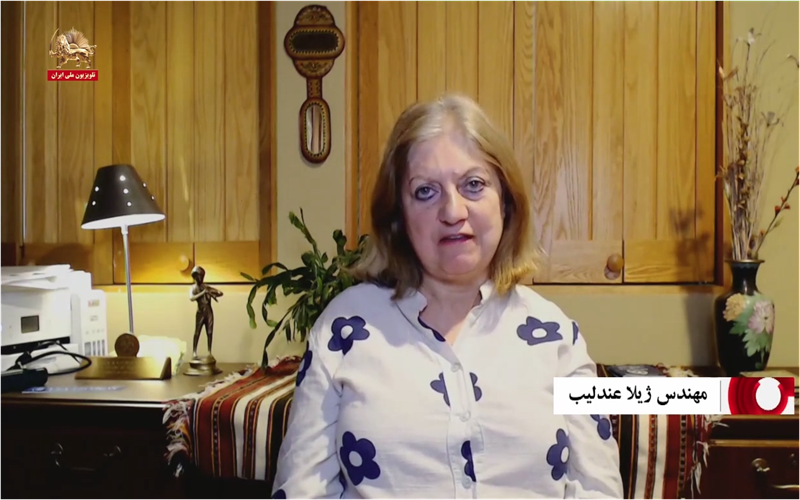
In an interview, Jila Andalib, an engineer and supporter of the Iranian Resistance, described the latest arrests as an indication not of the regime’s strength, but of its growing fear of society and the possibility of a new nationwide uprising.
Why Is the Regime Arresting Those Who Demand Their Rights?
According to Andalib, the recent arrests should not be viewed as isolated incidents.
“When we put these reports together, we see that the regime is deeply concerned about the situation in society and the emergence of another uprising,” she said.
The detention of teachers, students, workers, and labor activists is not new. Throughout its existence, the regime has treated legitimate social and economic demands as security threats.
But Andalib identified an important difference in the current wave: the arrests are becoming broader, more simultaneous, and increasingly preventive.
She pointed to three major factors behind this approach.
The first is what she described as a profound management and governance deadlock.
The regime has increasingly demonstrated an inability to address even basic demands from different segments of society. Teachers demand adequate wages and working conditions. Workers demand their unpaid salaries and basic labor rights. Retirees protest deteriorating living conditions.
Instead of addressing these grievances, the authorities target the people making the demands.
In this way, an ordinary labor or social demand is transformed into a “security” issue.
Economic pressures are also intensifying the situation. According to Andalib, additional economic pressure following the latest U.S. measures, combined with corruption, systemic mismanagement, and the regime’s own policies, is making life increasingly difficult for ordinary Iranians and is likely to deepen social discontent.
Why Has the Start of the Academic Year Become a Security Concern?
The second factor is the approaching reopening of schools and universities.
The regime’s security apparatus is well aware of the historical role played by teachers and students in Iran’s protest movements. Universities in particular have repeatedly served as centers of political debate, mobilization, and protest.
Andalib argued that the authorities are therefore attempting to act before the new academic year begins.
Their objective, she said, is to identify individuals with organizational capacity and influence and subject them to summonses, threats, expulsions, or arrest before they can mobilize others.
One example she cited involved six students at Sharif University of Technology who were reportedly expelled in connection with student protests. The measure was not merely based on an unofficial report, she noted; a university official had confirmed the expulsions.
Such measures, according to Andalib, should be understood as a form of preemptive repression.
The regime fears that the reopening of universities could provide a spark for renewed student activism and that protests originating on campuses could spread to other parts of society.
The concern is not simply about demonstrations within universities. It is about the possibility that students could become a bridge connecting different social grievances.
The Regime’s Greatest Fear: Connecting Social Protests
Andalib identified the third and potentially most important factor as the regime’s fear that protests by different social groups could converge.
In the past, a teachers’ protest might have focused primarily on wages and benefits, while a student protest might have remained centered on university policies.
Those boundaries, she argued, are increasingly becoming blurred.
When teachers speak about their salaries and working conditions, their demands can also encompass dignity, freedom, and the future of their children.
Likewise, when students protest, their grievances can extend beyond a particular university decision to broader concerns about the future of an entire generation.
This creates a potentially powerful convergence.
The regime understands that if the anger of different social groups becomes connected with the organizational and social influence of students, teachers, workers, and other activists, containing the resulting movement becomes far more difficult.
For this reason, Andalib argued, the authorities are attempting to sever these connections before they fully develop.
“This is why the regime has become so alarmed,” she said.
Repression Is Not a Sign of Strength
The wave of arrests and expulsions, therefore, should not necessarily be interpreted as evidence of political control.
Andalib argued that a government frightened by a teachers’ statement, a student gathering, or a basic labor demand cannot be considered genuinely secure.
The repression instead reveals the authorities’ fear of society and uncertainty about their own future.
The central question is whether this preventive repression can achieve its intended objective.
Andalib acknowledged that arrests and intimidation may create fear temporarily. Detaining an activist can put pressure on their family. Expelling a student can increase the immediate personal cost of protesting. Imprisoning a labor activist can temporarily disrupt an organized campaign.
But these measures cannot eliminate the underlying causes of discontent.
“The regime can arrest a teacher, but it cannot arrest the reason teachers are protesting,” she said. “It can expel a student, but it cannot eliminate the anger of an entire generation.”
Likewise, imprisoning a labor activist cannot place the broader dissatisfaction of millions of people behind prison walls.
Why Executions Have Become Another Tool of Repression
Andalib also connected the latest arrests to the regime’s extensive use of executions.
In her assessment, the execution policy serves the same broader purpose: creating fear throughout society and raising the perceived cost of dissent.
An execution is therefore intended not only to eliminate an individual prisoner, but also to send a warning to everyone outside the prison system.
The message the regime seeks to convey is that challenging its authority can carry the ultimate penalty.
Yet even this strategy has encountered resistance.
Andalib pointed to the continuing “No to Execution Tuesdays” campaign, which has expanded to dozens of prisons across Iran.
According to her, the campaign had entered its 135th week and spread to 61 prisons, with prisoners at the prison in Nur, Mazandaran Province, among the latest groups to join.
The development carries particular significance because prisons are precisely the places where the regime expects dissent to be silenced.
Instead, prisoners themselves continue to organize and express opposition to executions.
Resistance Behind and Beyond Prison Walls
For Andalib, the persistence of the prison-based campaign demonstrates the limits of repression.
The authorities can restrict prisoners’ movement, isolate them, threaten their families, and impose severe punishments. But they cannot necessarily eliminate the ideas and grievances that produced resistance in the first place.
The same applies outside prisons.
Teachers, students, workers, retirees, and other social groups continue to face problems that cannot be resolved through arrests. Economic hardship, unpaid wages, deteriorating living conditions, restrictions on basic rights, and political repression remain sources of anger.
Andalib also highlighted the role of the Resistance Units outside the prisons, portraying their activities as another expression of opposition to the regime.
The broader picture, therefore, is one of a government attempting to prevent the convergence of multiple sources of social anger.
The Limits of Preventive Repression
The latest wave of arrests raises a fundamental question: Can a government prevent an uprising simply by arresting those who might help organize it?
The experience described by Andalib suggests that repression may disrupt individual protests or temporarily intimidate activists, but it cannot resolve the structural grievances driving those protests.
A teacher can be summoned, but the problem of inadequate living conditions remains.
A student can be expelled, but the frustrations of an entire generation remain.
A worker can be imprisoned, but unpaid wages and economic insecurity remain.
And a prisoner can be executed, but the grievances that brought people into the streets cannot be executed with them.
The regime’s increasingly preventive approach may therefore reveal a deeper vulnerability. Its security apparatus appears to be preparing for protests before they occur because it understands that isolated grievances could develop into something much larger if different sectors of Iranian society begin acting together.
The expanding “No to Execution Tuesdays” campaign demonstrates that repression has not eliminated resistance even inside the regime’s prisons.
Outside the prisons, the same unresolved grievances continue to accumulate.
The question facing the regime is not whether it can arrest individual teachers, students, workers, or activists. It is whether it can arrest the social anger that continues to generate new demands for change.
So far, the evidence suggests that it cannot.