


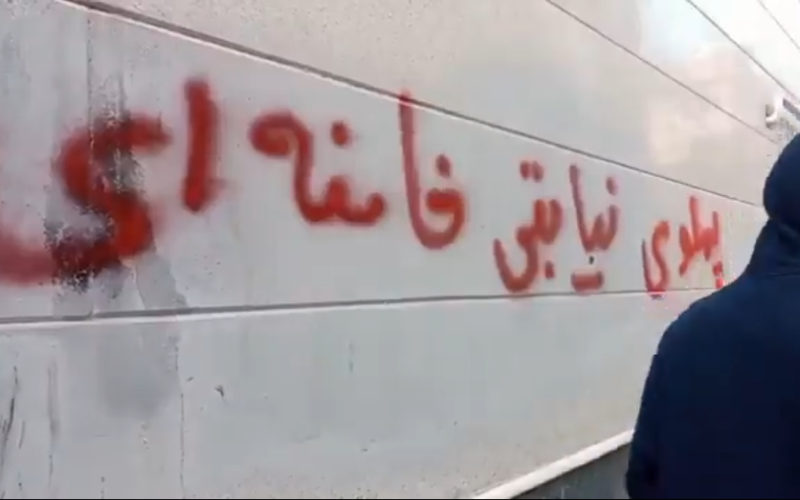

How coordinated harassment linked to monarchist networks—and systematically exploited by Tehran—mirrors global disinformation tactics used to silence dissent.
For many Iranian activists, journalists, and political analysts, the experience has become familiar and increasingly suffocating: raise a question, express a criticism, or propose an alternative political vision—and within minutes, a torrent of abuse follows. On X, accounts swarm replies and mentions, branding dissenters as “regime agents,” “leftists,” or outright traitors. The volume is often overwhelming, the tone aggressively personal, and the goal unmistakable: silence through intimidation.
This pattern has become especially pronounced around discussions involving Reza Pahlavi, the exiled son of Iran’s deposed Shah. In recent months—particularly from late 2025 into early 2026—Persian-language spaces on X have seen a sharp escalation in coordinated harassment targeting those who question Pahlavi’s political strategy, leadership claims, or suitability as a unifying figure for Iran’s future. What is at stake, however, is not one individual, but the integrity of democratic political discourse among those seeking change in Iran.
The Anatomy of a Smear Campaign
The behavior observed across these online spaces goes well beyond ordinary political disagreement. It follows a recognizable pattern of reputational warfare.
Critics describe rapid pile-ons in which dozens or hundreds of accounts converge on a single target. Instead of engaging arguments, attackers deploy identity-based delegitimization: questioning the critic’s motives, loyalty, or moral standing. Accusations of being affiliated with the Iranian regime, or vague “foreign agendas” are used interchangeably, often without evidence. Others are dismissed as bots themselves—ironically echoing the very tactics they are accused of using.
In many cases, these attacks are accompanied by mass-reporting of posts or accounts, leading to content takedowns or temporary suspensions. The cumulative effect is not persuasion, but exhaustion. For many activists, the message is clear: criticism carries a cost.
Loyalty or Betrayal: The Collapse of Political Debate
At the core of these smear campaigns lies a dangerous binary logic. In this framing, there are only two positions: unconditional support for Reza Pahlavi, or complicity with the Iranian regime. Any attempt to articulate a third path—republicanism, collective leadership, transitional councils, or pluralistic opposition frameworks—is treated as sabotage.
This logic is not merely exclusionary; it is structurally authoritarian. Democratic politics depend on dissent, internal critique, and competing visions of the future. When criticism is reframed as treason, debate becomes impossible. Ironically, this mirrors the very mentality that has sustained authoritarian rule in Iran for decades.
Artificial Amplification and the Illusion of Consensus
Compounding this environment is growing evidence that online support for Pahlavi has been artificially amplified. Investigations by outlets and research groups including Haaretz, the Citizen Lab at the University of Toronto, and forensic analysts such as Treadstone71 have documented networks of suspicious accounts—many using AI-generated profile images—engaged in coordinated posting, liking, and hashtag flooding.
Campaigns promoting monarchy restoration and hashtags such as #KingRezaPahlavi have generated millions of interactions, often originating from clusters of accounts exhibiting automated or semi-automated behavior. This does not negate the existence of genuine supporters. But it does distort perception, manufacturing an illusion of overwhelming consensus while marginalizing dissenting voices through sheer volume.
Visibility, in this ecosystem, becomes a weapon.
From Chaos to Pattern: The Global Disinformation Order
What may appear as uniquely Iranian infighting is, in fact, part of a well-documented global phenomenon. The 2019 report The Global Disinformation Order details how organized social media manipulation—often termed “computational propaganda”—has become a routine tool of political power. By 2019, such operations were documented in 70 countries, a 150 percent increase from just two years earlier.
One finding is particularly relevant: One finding is particularly relevant: in 89 percent of countries studied, smear campaigns and personal harassment were the primary tactics used to marginalize dissenting and independent political voices. Trolling, disinformation, and efforts to drive social division were not aberrations, but standard practice.
Crucially, these tactics are defined by their effects, not the stated intentions of those deploying them. Whether used by governments, parties, or informal networks, the outcome is the same: silenced voices, polarized communities, and degraded democratic space.
Iran’s Regime and the Industrialization of Smear Warfare
The Mullahs’ regime stands out in this global landscape as a high-capacity actor. According to the same report, the regime maintains permanent cyber units dedicated to both domestic and foreign information manipulation. Unlike states that activate such operations only during elections or crises, Iran’s cyber apparatus functions year-round.
These operations employ a mix of automated bots and human-run accounts to spread pro-regime narratives, harass dissidents, and flood platforms with distracting content. Mass-reporting is used strategically to game automated moderation systems, resulting in the removal of activist content and the suspension of critical accounts. Facebook and Twitter have formally attributed foreign influence operations to Iran, placing it among a small group of states—including Russia and China—engaged in sustained global information warfare.
For the regime, smear campaigns are not incidental; they are a core instrument of authoritarian control.
The Toxic Convergence
The most dangerous dynamic emerges where these two worlds intersect. When monarchist-aligned networks deploy smear tactics against democratic activists and independent critics, while the regime simultaneously runs professional disinformation operations, the outcomes converge—even if the actors and intentions differ.
The result is fragmentation. Trust erodes. Activists self-censor. Coalitions fail to form. The regime benefits not because it has persuaded anyone, but because its opponents are locked in mutual delegitimization.
Authoritarian outcomes, it bears emphasizing, do not require authoritarian intent.
A Strategic Failure for Iran’s Democratic Future
This convergence represents a strategic disaster for any genuine democratic transition. Any political current that suppresses internal dissent cannot build durable democratic institutions. An opposition that equates criticism with betrayal reproduces the culture it claims to oppose.
Iran’s future will not be secured by a single figure elevated beyond scrutiny, nor by digital militias enforcing ideological conformity. It will be shaped—if at all—by pluralism, accountability, and the hard work of coalition-building across differences.
Democracy Cannot Be Smeared Into Existence
The Iranian regime has perfected the art of silencing dissent through intimidation, disinformation, and division. When such methods are deployed by networks that seek to impose monarchism as Iran’s political future while silencing dissent, the line between resistance and the reproduction of authoritarianism collapses entirely.
Criticism is not sabotage. Dissent is not treason. And democracy cannot be enforced by smear.
If Iran is to move toward a democratic future, those forces genuinely committed to change must reject not only the regime’s authoritarian rule, but also the authoritarian methods reproduced by actors who merely claim to oppose it.