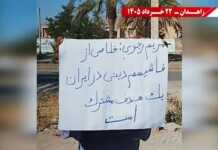
As Iranians rally abroad after the death of Ali Khamenei, calls grow for international recognition of a democratic transition and support for a provisional government.
On March 7, 2026, the streets of Paris and Washington witnessed large gatherings that reflected a profound shift in Iran’s political landscape. As the ruling establishment struggles in the aftermath of the death of the regime’s supreme leader Ali Khamenei, thousands of Iranians and supporters of the National Council of Resistance of Iran (NCRI) rallied to deliver a clear message to the international community: Iran’s future does not lie in a return to monarchy, nor in preserving the current authoritarian system, but in moving decisively toward a free and democratic republic.
The demonstrations represented more than symbolic protests. They projected a political vision for Iran’s future—one rooted in democratic governance, national sovereignty, and the rejection of both past and present forms of dictatorship.
Power Vacuum or Democratic Transition?
One of the greatest fears during the collapse of authoritarian regimes is the prospect of chaos or a power vacuum. However, the demonstrations in Paris and Washington highlighted an alternative narrative. According to speakers and organizers, the organized Iranian resistance has already presented a practical framework to prevent instability.
The announcement of a provisional government by the National Council of Resistance of Iran aims to guide the country through a short transitional period. The central mission of this transitional administration would be to transfer sovereignty to the Iranian people within six months, primarily through the organization of free elections for a constituent assembly.
Supporters argue that this roadmap distinguishes a structured democratic revolution from an unplanned uprising. The provisional government proposal is also grounded in the ten-point plan introduced by Maryam Rajavi, which outlines principles such as universal suffrage, separation of religion and state, gender equality, and a non-nuclear Iran.
For many demonstrators, the plan represents a safeguard designed to ensure that decades of sacrifice by Iranian dissidents and activists are not replaced by another form of authoritarian rule.

A Clear Rejection of “Neither Shah Nor Mullah”
One of the most prominent themes of the demonstrations was the slogan “Neither Shah nor Mullah.” Speakers emphasized that after nearly half a century of struggle and the loss of more than 100,000 lives in the fight against repression, Iranians are not seeking the restoration of hereditary monarchy.
Criticism was also directed at monarchist narratives promoted by figures linked to the former shah regime, including Reza Pahlavi. Several speakers argued that attempts to revive monarchist politics risk diverting attention from the democratic aspirations of the Iranian people.
Participants warned that such narratives could ultimately serve as a tool for division among opposition forces, potentially benefiting remnants of the current regime. Calls attributed to monarchist circles urging military intervention against ethnic minorities were cited as evidence, according to critics, of authoritarian tendencies incompatible with democratic governance.
Women and Resistance Units: Engines of Change
The demonstrations took place on the eve of International Women’s Day, placing particular emphasis on the role of women in Iran’s resistance movement.
Speakers highlighted the fact that female leadership has played a central role in organized opposition to the clerical regime for decades. The prominent role of women within the resistance movement was presented as evidence that gender equality is not merely a future political promise but an existing practice within the opposition.
Participants also praised the activities of underground resistance networks and youth groups operating inside Iran. According to organizers, these “resistance units” represent grassroots forces driving change within the country itself.
Their message was clear: meaningful transformation will not be imposed externally but will emerge from within Iranian society.
The Responsibility of the International Community
Another major theme of the rallies was the call for a shift in international policy toward Iran.
Speakers urged Western governments to move beyond decades of engagement policies toward the ruling establishment and instead recognize the Iranian people’s right to bring about democratic change. In Washington, participants addressed their message directly to the U.S. Congress, while in Paris they called on European leaders and the European Union to acknowledge the legitimacy of the Iranian people’s struggle.
Supporters argued that international recognition of the provisional government could help ensure an orderly transition while strengthening democratic forces within Iran.
They also stressed that long-term stability in the Middle East depends on the emergence of a non-nuclear, secular, and democratic Iran—one that guarantees equal rights for all citizens regardless of ethnicity or religion.
A Historic Crossroads for Iran
Iran now stands at one of the most critical moments in its modern history. The death of the regime’s supreme leader Ali Khamenei may mark the end of an era, but many observers believe it is only the beginning of a new political phase.
What distinguished the demonstrations of March 6 was the presence of what supporters describe as both a clear roadmap and a structured democratic alternative capable of mobilizing supporters inside Iran while gaining international attention.
According to statements attributed to Massoud Rajavi, the democratic revolution of Iran cannot be hijacked by authoritarian forces. The determination of the Iranian people, he argued, will ultimately prevail over attempts by reactionary or opportunistic actors to shape the country’s future.
For demonstrators in Paris and Washington, the vision of a free Iran is no longer a distant aspiration but an emerging political reality—one driven by organized resistance, youth activism, and the persistent demand for democratic rule.