



A landmark conference in Westminster signals growing international recognition of a democratic alternative to Iran’s ruling theocracy.
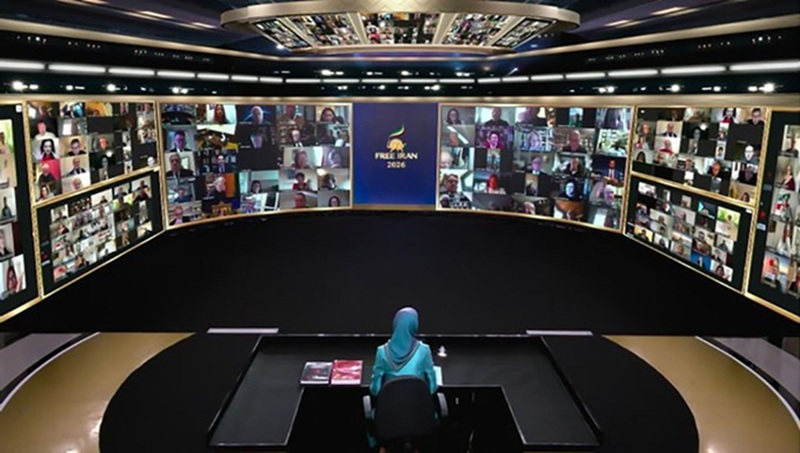
On March 4, 2026, the historic halls of the British Parliament hosted a conference that may well mark a turning point in the modern struggle for freedom in Iran. The event—titled “Iran: Toward a Democratic Republic – Supporting the Transitional Government”—brought together prominent members of both the House of Commons and the House of Lords.
At a time when Iran is facing one of the most critical moments in its contemporary history, the conference reflected a growing awareness among Western lawmakers: the question is no longer whether change will come to Iran, but whether the international community will responsibly support a democratic transition.
Growing International Consensus Around a Transitional Government
The rapid support expressed by 75 British parliamentarians from across the political spectrum—within just 72 hours—sent a clear political signal to both Tehran and the international community.
During the conference, Bob Blackman, co-chair of the International Committee of Parliamentarians for a Democratic Iran, described the announcement of a transitional government as a “courageous and forward-looking step.” His remarks reflected a broader understanding among policymakers that a structured political alternative is essential to prevent instability and chaos in the aftermath of the clerical regime’s collapse.
The proposed transitional government is not presented as a permanent authority. Rather, it is designed as a mechanism to transfer power to its rightful owners—the Iranian people. Its commitment to organizing free elections within six months to establish a constituent assembly represents a key element distinguishing it from other political claims about Iran’s future.
In a political landscape often filled with vague promises, this roadmap offers a concrete institutional process for democratic transformation.
The Ten-Point Plan: A Democratic Blueprint
Another central theme of the conference was the international support for the Ten-Point Plan presented by Maryam Rajavi, the President-elect of the National Council of Resistance of Iran.
The scale of backing for this program is significant. More than 600 British parliamentarians and over 4,000 lawmakers worldwide have endorsed the framework, which outlines fundamental principles for a democratic Iran.
At a time when the Middle East continues to grapple with extremism and instability, the plan emphasizes values that resonate strongly with democratic societies: a non-nuclear Iran, the separation of religion and state, gender equality, and the abolition of the death penalty.
Taken together, these principles represent more than a political platform. They function as a roadmap for rebuilding a country that has endured decades of authoritarian rule.
The choice facing Iran, therefore, is not between competing authoritarian models—it is between dictatorship and democracy.
Rejecting the Legacies of Dictatorship: Neither Shah Nor Sheikh
One of the most notable aspects of the conference was the clear rejection of both forms of dictatorship that have shaped Iran’s modern history.
Speakers drew a firm line between the democratic aspirations of the Iranian people and attempts by monarchist factions to revive the legacy of the former Shah. Bob Blackman noted that despite repeated lobbying efforts—including numerous communications from the son of the former monarch—the true voice of Iran’s struggle for freedom is not found in nostalgic visions of monarchy.
Instead, it resonates in the streets of Iran and in the actions of organized resistance networks challenging the ruling system.
Maryam Rajavi echoed this point in her remarks. She emphasized that the Iranian people have sacrificed more than 100,000 lives in their struggle for freedom and will not return to any form of authoritarian rule. The guiding principle of “Neither Shah nor Mullah” has therefore evolved beyond a political slogan; it has become the defining ethos of Iran’s democratic movement.
Organized Resistance Inside Iran
Another key focus of the conference was the role of resistance networks operating inside the country.
Recent operations by the People’s Mojahedin Organization of Iran (PMOI/MEK) Resistance Units, even in heavily secured areas of Tehran, demonstrate that the struggle against the ruling system is not merely theoretical or symbolic. These actions highlight the existence of organized structures capable of sustaining political resistance under extremely repressive conditions.
According to Rajavi, the death of Ali Khamenei and the regime’s attempts to install another Supreme Leader will not resolve the system’s underlying crisis. The momentum for change, she argued, does not originate from foreign intervention but from the determination of Iranian society itself.
This internal dynamic—organized resistance combined with widespread public dissatisfaction—has increasingly shaken the foundations of the clerical establishment.
The Need for Concrete International Action
The conference did not stop at political statements. British parliamentarians also outlined several concrete measures they believe Western governments should adopt.
Among the proposals discussed were the designation of the Islamic Revolutionary Guard Corps (IRGC) as a terrorist organization, the freezing of its financial assets, and the recognition of the Iranian people’s right to resist repression.
Some lawmakers also called for direct engagement with the National Council of Resistance of Iran and the proposed transitional government as a legitimate democratic alternative.
These recommendations reflect a growing sentiment within Western political circles that decades of appeasement toward Tehran have failed to produce stability or reform.
A Moral and Strategic Responsibility
Ultimately, the conference in the British Parliament highlighted an emerging shift in international attitudes.
For years, the Iranian resistance movement has played a critical role in exposing the regime’s nuclear ambitions and regional activities. Many of those revelations—once dismissed by skeptics—are now widely acknowledged as accurate.
Today, as Iran approaches a potentially transformative moment, the question confronting the international community is increasingly clear: whether to continue policies that have prolonged the life of an authoritarian regime, or to support the Iranian people’s aspirations for democracy.
Backing a transitional government and the Ten-Point Plan is therefore not merely an act of political solidarity. It represents a strategic investment in a more stable Middle East and a democratic Iran.
The future of the country, as many participants at the conference emphasized, will ultimately be written by the Iranian people themselves—those who continue to risk their lives in the streets in pursuit of freedom and a democratic republic.