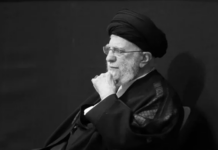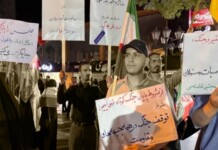
As Iran faces a historic crisis after the death of Ali Khamenei, critics warn that monarchist narratives and foreign-backed lobbying around Reza Pahlavi risk undermining the Iranian people’s struggle for genuine democracy.
As Iran enters a volatile political phase following the death of Ali Khamenei, debate over the country’s future leadership has intensified. Among the most controversial figures seeking to position himself in the emerging political landscape is Reza Pahlavi, the son of the deposed Shah of Iran.
While Pahlavi and his supporters have attempted to portray him as a potential transitional leader for Iran, critics argue that his political campaign represents not a democratic alternative but a revival of a discredited monarchical project that risks dividing the Iranian opposition and distracting from the broader struggle for democratic change.
A Self-Proclaimed Transitional Figure
In recent public appearances and interviews with Western media outlets, Pahlavi has attempted to present himself as a central figure in Iran’s possible political transition. Speaking to U.S. broadcasters such as Fox News and CBS News, he claimed that the weakening of the ruling establishment could accelerate the regime’s collapse and create an opportunity for political change.
Pahlavi has repeatedly suggested that he is working with networks inside Iran to facilitate such a transition. However, analysts and Iran specialists have raised doubts about these claims, noting that the extent of his support inside the country remains unclear and difficult to verify.
Many observers point out that Iranian society, after decades of authoritarian rule, overwhelmingly seeks a democratic republic rather than a return to monarchy.
Questions About Political Credibility
Even within Western policy circles, skepticism about Pahlavi’s role has surfaced. Responding to questions about the exiled prince, Donald Trump reportedly described him as “a very nice person,” but indicated that leadership emerging from within Iran might be more appropriate for the country’s future.
Such comments reflect broader uncertainty about whether a figure who has spent decades abroad can credibly claim to represent the aspirations of the Iranian population.
Critics also argue that Pahlavi’s political positioning relies heavily on lobbying networks and media visibility rather than a structured political movement or organizational base inside Iran.
A Movement Surrounded by Controversy
Another source of concern among analysts is the composition of the political circles surrounding Pahlavi. Some Iran watchers warn that opposition movements in exile are particularly vulnerable to infiltration and manipulation by intelligence services seeking to divide and weaken their rivals.
Fragmentation of opposition forces has long been a strategy used by authoritarian regimes to maintain control. In such an environment, critics say, loosely organized political networks centered around personality-driven leadership can become susceptible to external influence or misinformation campaigns.
These concerns have intensified after the circulation of various public letters and endorsements attributed to groups inside Iran supporting Pahlavi’s proposed transition plan. Analysts question the authenticity and origins of some of these statements, noting that their sources remain difficult to verify.
The Risks of Monarchist Revival
For many Iranians who experienced both the monarchy and the Mullahs regime, the debate is not merely about individuals but about political systems. The monarchy that ruled Iran until 1979 under Mohammad Reza Pahlavi ended after widespread popular protests against authoritarian rule and political repression.
Today, critics argue that efforts to revive monarchist politics risk reopening old divisions while ignoring the central demand voiced repeatedly by protesters inside Iran: the establishment of a democratic and secular republic.
In this context, Pahlavi’s campaign is seen by many activists not as a viable path forward but as a project driven largely by nostalgia among segments of the diaspora rather than by political realities inside the country.
A Critical Moment for Iran’s Future
Iran stands at a historic crossroads. The internal crisis facing the ruling establishment has created renewed debate about the country’s political future and the shape of any possible transition.
For many democracy advocates, the central challenge is ensuring that Iran’s future is determined by its people rather than by competing authoritarian models—whether clerical or monarchical.
Against this backdrop, the growing attention surrounding Reza Pahlavi has sparked warnings that personal ambition and external lobbying could distract from the broader struggle for a truly democratic Iran.
As discussions about Iran’s future intensify, many observers emphasize that any legitimate political transition must ultimately emerge from the will of the Iranian people themselves—not from exiled claimants seeking to reclaim a throne lost nearly half a century ago.