


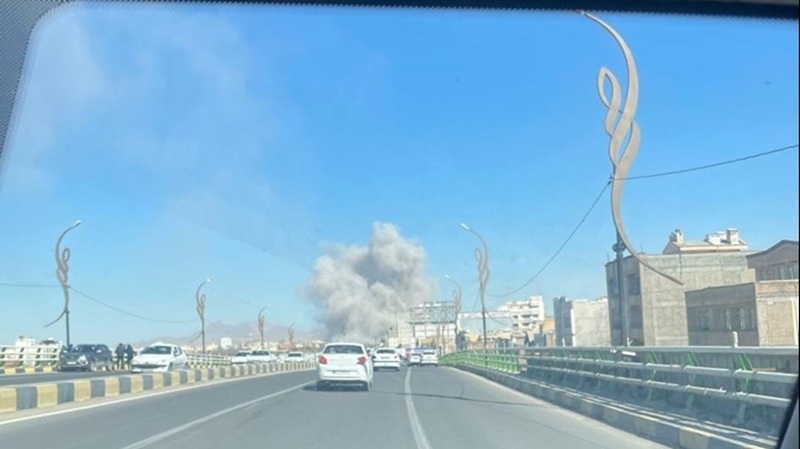

Reports warn that political prisoners and other detainees face severe risks as prison facilities suffer damage, shortages, and overcrowding during intensified military attacks.
Amid intensifying military strikes and bombardments across various parts of Iran, concerns are mounting over the safety of detainees—particularly political prisoners—held in the country’s prison system.
In a recent statement, the National Council of Resistance of Iran (NCRI) warned that keeping prisoners incarcerated under active wartime conditions places their lives in serious danger. The organization described the continued detention of inmates during bombardments as a “double crime,” arguing that prisoners are being exposed simultaneously to the risks of war and the harsh conditions of Iran’s penal system.
According to the statement, inmates across multiple prisons are facing both the threat of nearby military strikes and increasing restrictions imposed by prison authorities. These circumstances have intensified fears among prisoners’ families and human rights advocates about the fate of thousands of detainees.
Crisis Conditions at Greater Tehran Prison
Particular concern has been raised about conditions at Greater Tehran Penitentiary, commonly known as Fashafouyeh Prison. Reports suggest that parts of the facility—including its food storage area—were damaged during recent bombardments.
The destruction has reportedly led to severe shortages of food, medicine, and essential supplies for inmates. Sources indicate that prisoners are currently receiving only one meal per day.
The situation has been further complicated by the reported departure of many prison staff members who fear potential airstrikes. As a result, the provision of basic services for detainees has been severely disrupted. The prison’s internal store has also been closed, leaving inmates without access to even minimal supplies.
Overcrowding After Transfers from Evin Prison
At the same time, reports indicate that approximately 50 prisoners from Evin Prison were suddenly transferred to Fashafouyeh without prior notice.
According to sources familiar with the situation, the transferred prisoners are now being held in a room designed for about 20 individuals, creating extreme overcrowding. Many inmates are reportedly forced to sleep on the floor in unsanitary and cramped conditions.
The statement also noted that prisoners of different categories—including political detainees, ordinary inmates, elderly prisoners, sick individuals, and even minors under the age of 18—are being held together without any form of classification. Such conditions, the organization argued, violate even the most basic international standards of prison management.
Some of the transferred prisoners reportedly did not receive food following their relocation and are now facing severe hunger.
Similar Reports from Other Prisons
Comparable conditions have been reported at Qezel Hesar Prison, where inmates are said to be locked inside their wards for extended periods while bombardments occur nearby. Prisoners reportedly cannot access open areas or seek shelter during attacks.
At the same time, hundreds of members of the special police unit known as Iranian Special Police Unit NOPO have reportedly been deployed inside and around the prison complex.
In western Iran, tensions have also been reported at Mahabad Prison. On March 3, following a bombing strike against a nearby military facility, prisoners reportedly protested after being locked inside their wards during the attack.
According to reports, detainees set fire to blankets in an attempt to demand evacuation or release due to the wartime danger. Security forces reportedly responded by firing tear gas into the prison wards to suppress the protest.
Following the incident, about 120 inmates were transferred on March 4 from Mahabad Prison to Miandoab Prison. They are reportedly being held in two overcrowded quarantine rooms within the facility.
Damage to Karaj Prison and Family Concerns
Another incident occurred on March 7 when part of the wall of Fardis Prison—also known as Kachouei Prison—was damaged during a bombing strike.
The incident heightened anxiety among prisoners’ families, several of whom reportedly gathered outside the prison seeking information about the safety of their relatives.
Calls for International Action
Reacting to these developments, Maryam Rajavi, the President-elect of the Iranian Resistance, warned that prisoners are now facing unprecedented risks under wartime conditions.
She stated that keeping detainees in prison facilities during bombardments exposes them to grave danger and described the situation as a “double crime.” Rajavi urged the international community and global human rights organizations to take immediate action to secure the release of prisoners—particularly political detainees—and to respond urgently to their deteriorating conditions.
The statement concluded with a warning that if the current situation continues, the lives of thousands of prisoners across Iran’s detention system could face serious and immediate threats. It called on international institutions and human rights bodies to intervene in order to protect detainees and ensure their safety.