


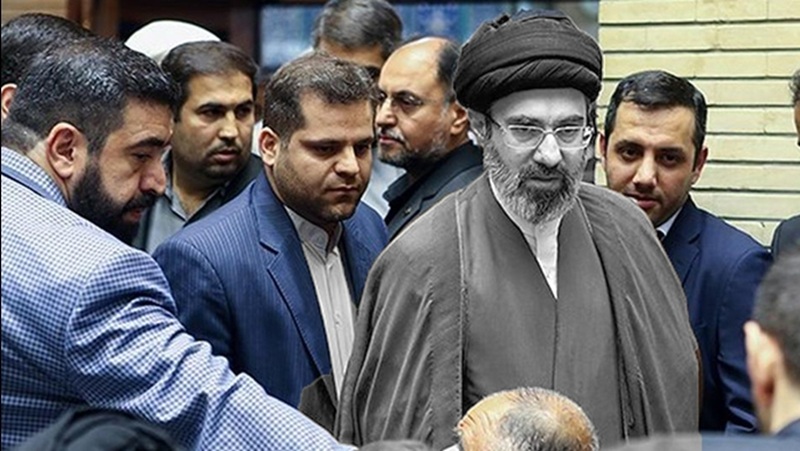

The selection of Mojtaba Khamenei as Supreme Leader signals continuity of repression, intensifying factional conflicts within the regime and widening the gap between the Iranian people and the ruling system.
The emergence of Mojtaba Khamenei as the new Supreme Leader of Iran reflects a continuation of the same policies that defined the rule of his father. For many Iranians, these policies form a long and painful record that stretches from the era of Ruhollah Khomeini to that of Ali Khamenei—an era marked by repression, political exclusion, and repeated cycles of violence against dissent.
The latest chapter in this record was written in January 2026, when thousands of Iranians were reportedly killed during nationwide protests. Against this backdrop, the Assembly of Experts selected Mojtaba Khamenei as the regime’s new supreme authority, effectively elevating him from within the very legacy that shaped the regime’s power structure. The decision highlights the regime’s inability to find a path out of the structural deadlock created by the doctrine of Velayat-e Faqih—the system of clerical rule that concentrates ultimate authority in the hands of a single religious leader.
Following the death of Ali Khamenei, some regime officials attempted to portray the political structure as no longer centered on a single individual. Yet the appointment of Mojtaba Khamenei—both as the political heir to his father and as the new Supreme Leader—undermines that narrative. Rather than demonstrating institutional evolution, the move reinforces the deeply personalized nature of the regime’s most powerful office.
In effect, the transition suggests that even the death of the previous Supreme Leader has not created any meaningful opening for change within the ruling structure. For many Iranians, this reality clarifies the political landscape. The demands that swept across the country during the January 2026 uprising—calls for fundamental political transformation—have only grown stronger in light of the succession. Instead of stabilizing the system, the appointment may further solidify the determination among many Iranians to pursue a different political future through organized resistance and popular mobilization.
At the same time, the internal dynamics of the regime appear poised to shift into a new and potentially volatile phase. During Ali Khamenei’s decades in power, rival factions—including so-called reformists, conservatives, moderates, and hardline loyalists—operated within a framework ultimately controlled by the authority of the Supreme Leader. His presence acted as a central arbiter capable of containing disputes among competing power centers.
With Mojtaba Khamenei now at the top of the hierarchy, that balancing role may become far more difficult to maintain. Unlike his father, he lacks the established authority, symbolic legitimacy, and political capital that previously helped restrain factional rivalries. As a result, the regime’s internal conflicts—long suppressed beneath the surface—may now emerge more openly.
Rather than resolving accumulated tensions within the ruling elite, Mojtaba Khamenei’s rise could amplify them. Political factions that had maintained a fragile equilibrium under Ali Khamenei may increasingly compete for influence, resources, and institutional control. Such competition could deepen existing fractures within the system and expose new vulnerabilities in the regime’s power structure.
Seen in this light, the Assembly of Experts’ decision reveals not strength but the narrowing of options within the ruling establishment. Over the past four decades, the Iranian regime has repeatedly attempted to manage crises by concentrating power more tightly at the apex of the political system. The elevation of Mojtaba Khamenei follows the same familiar pattern.
Yet the social and political landscape in Iran has already changed. Large segments of Iranian society have rejected the legitimacy of the existing structure, and the leadership transition offers no guarantee of stability even from the regime’s own perspective. Instead of signaling continuity and consolidation, the succession may mark the beginning of a new phase of institutional erosion—one in which the distance between state and society becomes deeper and more visible than ever before.
In that widening gap lies the defining political question of Iran’s future: whether a system built on centralized clerical authority can survive mounting societal pressure for democratic change.