



New UN report details deadly protest crackdowns, surge in executions, and widespread internet blackouts aimed at concealing abuses
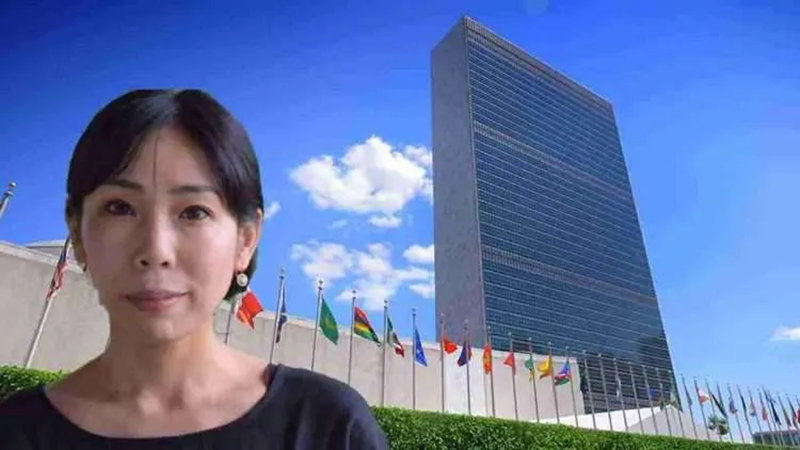
A newly released report by Mai Sato, the United Nations Special Rapporteur on the situation of human rights in Iran, has called for intensified international pressure on the Iranian regime. Presented to the United Nations Human Rights Council, the report paints a stark picture of escalating repression between January 2025 and February 2026.
The findings focus on three primary trends: the violent suppression of nationwide protests, a sharp increase in executions, and widespread internet shutdowns used to obscure state abuses.
Brutal Crackdown on Nationwide Protests
A significant portion of the report examines the wave of protests that began on December 28, 2025, initially driven by economic grievances and the collapse of the national currency. What started in major cities such as Tehran quickly spread nationwide, reaching over 190 cities across all 31 provinces.
According to compiled human rights data, more than 640 protest gatherings were recorded, with at least 27,000 individuals detained.
Sato describes the government’s response as one of the most severe crackdowns in recent years, emphasizing that the scale and intensity of violence appear unprecedented in the current period. Her office reviewed extensive video evidence indicating that security forces used live ammunition against unarmed demonstrators.
The report concludes that the use of force failed to meet internationally recognized standards of necessity, proportionality, and legality.
It also highlights alarming practices such as the arrest of injured protesters from hospitals—an act that violates the principle of medical neutrality—and the widespread use of forced confessions broadcast on state media.
Sato further notes that Iranian officials have consistently labeled protesters with terms such as “rioters” or “terrorists,” warning that such rhetoric risks legitimizing violence and obscuring the largely civilian nature of the demonstrations.
Due to communication blackouts and restricted access to information, determining the exact number of casualties remains difficult. While some official sources have cited figures exceeding 3,000 deaths, independent estimates suggest the toll could be significantly higher.
Surge in Executions as a Tool of Repression
The report also documents a dramatic rise in the use of the death penalty.
According to Sato’s findings, at least 1,639 executions were carried out in 2025—up sharply from approximately 975 in 2024. In January 2026 alone, at least 100 additional executions were recorded.
She warns that the death penalty is increasingly being used as a mechanism to instill fear and suppress dissent.
Notably, only a small fraction of these executions—around seven percent—have been officially disclosed, leaving civil society organizations, journalists, and victims’ families as the primary sources of information.
The report indicates that nearly half of the executions are linked to drug-related offenses, with another large portion tied to murder cases. Sato underscores that under international law, particularly the International Covenant on Civil and Political Rights, capital punishment should be reserved for only the most serious crimes—raising concerns about Iran’s compliance with its obligations.
There are also growing fears that detained protesters may face expedited trials and death sentences, particularly under charges such as “enmity against God,” often processed without fair trial guarantees.
Internet Shutdowns and Concealment of Abuses
A third critical element of the report is the Iranian regime’s extensive use of internet shutdowns during the protests.
According to findings presented to the Human Rights Council, nationwide disruptions began around January 8, 2026, severely limiting access to communication networks.
Sato stresses that these shutdowns have had multiple consequences: restricting the flow of information, isolating families from one another, and concealing the true scale of state violence.
She indicates that blocking internet access has effectively obscured real-time developments on the ground, making independent verification of events extremely difficult. Families have been left in distress, unable to confirm the safety of detained or injured relatives.
Human rights organizations have similarly warned that such communication blackouts enable security forces to operate without public scrutiny. In some cases, disruptions reportedly lasted for more than two weeks.
Call for International Accountability
In her concluding remarks, Sato identifies the convergence of three trends—violent repression, escalating executions, and communication blackouts—as evidence of intensifying state control over Iranian society.
She warns that the use of lethal force against protesters, mass arrests, increased executions, and systemic internet shutdowns collectively constitute serious violations of Iran’s international human rights obligations.
The report calls on the United Nations Human Rights Council and the broader international community to take concrete action, including launching independent investigations into the crackdown, ensuring accountability for perpetrators, and increasing coordinated pressure on Tehran to halt ongoing abuses.