



New measures target IRGC commanders, judiciary officials, and surveillance entities linked to crackdown on January 2026 protests
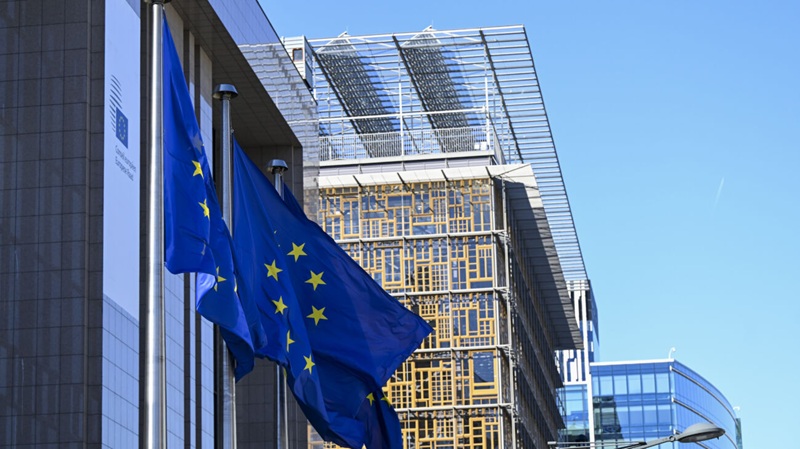
The Council of the European Union announced on March 16, 2026, a new round of sanctions against Iran, targeting 16 individuals and three entities accused of serious human rights violations.
The measures are part of the European Union’s ongoing response to the Iranian regime’s violent suppression of nationwide protests in January 2026, which reportedly resulted in thousands of civilian casualties.
Targeting Key Figures in the Crackdown
According to the Council, those sanctioned include senior officials directly involved in coordinating and executing the repression. Among them is Iran’s Deputy Minister of the Interior for Security and Law Enforcement Affairs, along with several commanders from local branches of the Islamic Revolutionary Guard Corps.
These individuals are accused of playing central roles in the violent crackdown on protesters, particularly during demonstrations that spread across the country earlier this year.
Sanctions on IRGC Units and Paramilitary Coordination Bodies
The EU also imposed sanctions on key military structures involved in suppressing dissent. These include the Mohammad Rasulullah Corps, which coordinates operations between IRGC forces and the Basij militia in Tehran, and the Imam Reza IRGC Corps, a regional branch active in northeastern Iran.
Authorities say these units were instrumental in enforcing a particularly harsh crackdown in regions such as Khorasan Razavi Province.
Judiciary Officials Accused of Repression
The sanctions list also includes members of Iran’s judiciary accused of prosecuting peaceful protesters, civil society activists, journalists, and women’s rights advocates.
According to the EU, some of these officials were involved in extracting forced confessions, violating fair trial standards, and issuing harsh sentences against individuals critical of the government.
Among those targeted is the head of Iran’s prison system, under whose leadership widespread abuses have reportedly taken place. These include allegations of torture, inhumane treatment, arbitrary detention, and the use of the death penalty against juvenile offenders. Reports also cite physical abuse of political prisoners, discrimination against ethnic and religious minorities, and instances of sexual violence against female detainees.
Surveillance and Digital Repression
In addition to security and judicial figures, the EU has sanctioned Naji Research and Development Company, an Iranian technology firm linked to the development of the “Nazer” mobile application.
The app is reportedly used by law enforcement authorities as a surveillance tool to monitor and control citizens. The head of Tehran’s Cyber Police has also been sanctioned for his role in internet censorship, social media control, and the prosecution of individuals over online activity.
Scope and Impact of the Sanctions
With this latest package, EU restrictive measures related to human rights violations in Iran now apply to a total of 263 individuals and 53 entities.
Those listed are subject to asset freezes, and EU citizens and companies are prohibited from providing them with financial resources. Individuals also face travel bans, preventing entry into or transit through EU member states.
The EU has also maintained restrictions on exporting equipment to Iran that could be used for internal repression or telecommunications monitoring.
Continued EU Pressure on Tehran
The legal framework underpinning these sanctions was first introduced in 2011 and has been renewed annually, most recently extended until April 13, 2026.
In recent years, particularly since 2022, the EU has significantly expanded its sanctions regime in response to escalating concerns over human rights in Iran.
Earlier this year, the EU’s High Representative for Foreign Affairs condemned the Iranian authorities’ use of violence, arbitrary detention, and intimidation against protesters. The statement also called for the immediate release of individuals detained for exercising their fundamental rights and urged Iran to uphold freedoms of expression, association, and peaceful assembly.
The European Union reiterated its support for the Iranian people’s aspirations for a future in which their fundamental rights and freedoms are fully respected and protected.