

As war continues and historical cycles repeat, Iran’s future hinges on rejecting both dictatorship and dependency in favor of a national, democratic alternative
As Iran reaches the end of the Persian year 1404, it finds itself at a decisive and perilous turning point—caught in the vortex of war and historical repetition. This is not merely another crisis; it is a defining moment that will determine whether the country continues its descent into conflict and authoritarianism or charts a new course toward freedom and sovereignty.
Iran will not emerge from this sharp historical turn through missiles, bombs, or drones. Military tools have never resolved the nation’s fundamental crises. Instead, the path forward lies in the formation of a cohesive national front—one that is anchored in a clear program and driven by a unified national will. Only such a framework can respond effectively to the complexities of the present moment.
The stakes are not abstract. The demands and achievements of seven major uprisings—from June 20, 1981, to January 2026—must be safeguarded. These movements represent decades of resistance, sacrifice, and political maturation. Preserving their legacy requires more than remembrance; it demands organization, clarity, and decisive action. It also requires vigilance against opportunistic forces—those “bandits at the pass” who seek to exploit crises for their own gain.
At the heart of this moment lies a critical question: what constitutes a genuine alternative?
The answer is inseparable from Iran’s modern history. For at least 150 years, the country’s fate has oscillated between two poles: monarchy and theocracy—what can be described as the dual domination of “Shah and Mullah.” These two forces, often portrayed as opposites, have in reality functioned as complementary mechanisms of control. Each has relied on authoritarianism, suppression, and ideological hegemony to maintain power.
The outcome of this historical cycle has been devastating. One side fostered dependency on foreign powers; the other fueled warmongering and internal repression through manipulation of religious sentiment and mass propaganda. Together, they have acted as a scissor, constraining Iran’s political evolution and dragging it into repeated crises—culminating in today’s dangerous confrontation.
Breaking free from this cycle requires more than rejecting one side in favor of the other. It demands a decisive rupture from both. A genuine alternative must emerge from a historical struggle against this duality, representing a third path: neither Shah nor Mullah.
This “third option” is not theoretical. It is grounded in three fundamental principles: rejection of appeasement toward the ruling clerical establishment, rejection of foreign military intervention, and commitment to regime change led by the Iranian people and their organized resistance. This framework offers an independent path—one that aligns with national interests rather than external agendas or domestic despotism.
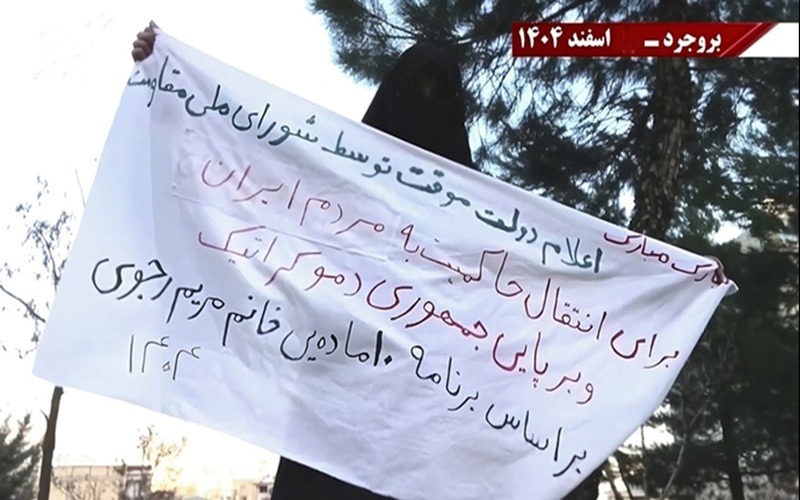
Today, this alternative has taken a more concrete form in the declaration of a provisional government by the organized resistance movement. This initiative reflects an effort to translate decades of struggle into a structured political roadmap—one capable of navigating Iran through its current crisis and into a democratic future.
The urgency of this moment cannot be overstated. The accumulated experiences, awareness, and sacrifices of the past four decades all point to a single imperative: the need for clarity and unity in determining Iran’s future. As global dynamics shift and Iran’s position within them remains unstable, the window for decisive action is narrowing.
This is a call for vigilance. The path to saving Iran lies not in returning to failed models of the past, nor in outsourcing the nation’s fate to foreign powers. It lies in advancing a genuine alternative—one that categorically rejects dictatorship and dependency, and remains firmly rooted in the will of the Iranian people.
The responsibility now falls on all elements of the “neither Shah nor Mullah” front. Their mission is not only to resist but to enlighten—to expand awareness of this third option and to mobilize support for it within Iran and across the diaspora.
Iran’s future will not be decided by chance. It will be shaped by those who recognize the gravity of this moment—and act accordingly.