


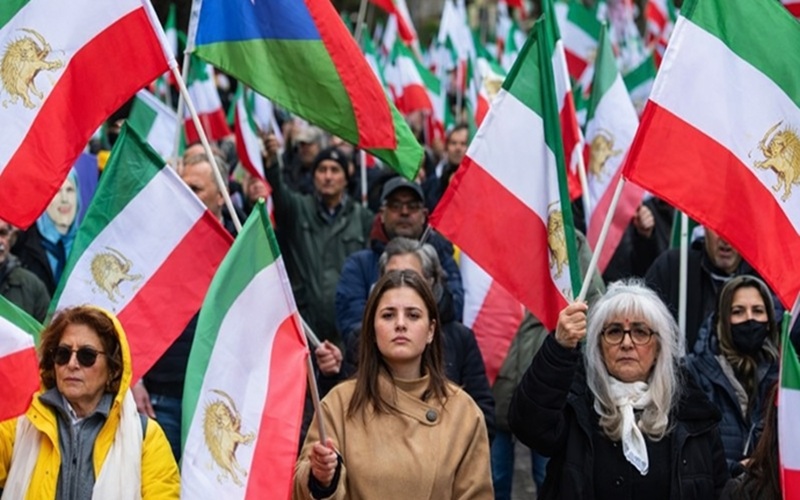

As regional conflict intensifies, a growing narrative argues that decades of appeasement and dictatorship have led to war—and that only organized resistance can bring lasting peace and stability
At a time when Iran and the broader Middle East are engulfed in escalating conflict, a central argument is gaining renewed urgency: the current crisis is not accidental, but the predictable outcome of decades of dictatorship and international appeasement. According to this perspective, the only viable path to peace lies not in negotiation or reform, but in the overthrow of the ruling system through organized resistance and popular uprising.
This view rests on a long record of warnings that, supporters argue, were consistently ignored by the international community. Over the past four decades, the National Council of Resistance of Iran (NCRI) said to have exposed key elements of the regime’s conduct—from the rise of religious fundamentalism as a global threat in the 1990s to the revelation of covert nuclear activities in the early 2000s, as well as its regional interventions and internal repression.
These disclosures, they contend, were not isolated incidents but part of a broader pattern: a system structurally incapable of reform. In this framework, the ruling establishment is seen as inherently expansionist, reliant on repression at home and destabilization abroad to maintain its grip on power.
From this vantage point, repeated diplomatic efforts and concessions by Western governments are characterized not as pragmatic engagement, but as a strategic miscalculation. The policy of appeasement, critics argue, emboldened Tehran’s leadership, allowing it to expand its influence while avoiding meaningful accountability.
The consequences, they say, are now visible in full. A region destabilized by proxy conflicts, a nuclear program that remains a source of global concern, and a domestic environment marked by systemic human rights violations—all are presented as the cumulative result of a failed international approach.
This argument draws a historical parallel to what Winston Churchill once described as the “slumber of the democracies”—a prolonged period of inaction in the face of a growing threat, ending only when conflict became unavoidable. In this interpretation, decades of hesitation and compromise have culminated in the very war that engagement was meant to prevent.
At the same time, proponents of this perspective reject the notion—frequently raised in policy debates—that the absence of the current system would lead to chaos. They argue that it is precisely the preservation of the status quo that has produced instability, both within Iran and across the region.
Equally, they push back against efforts to revive alternative forms of authoritarian rule. Attempts to repackage elements of the former monarchy, they argue, risk repeating the same historical cycle—substituting one form of dictatorship for another. Such approaches are seen not only as politically regressive but as potentially fueling division and internal conflict.
Instead, the Resistance narrative emphasizes a dual rejection of both the current religious system and any return to monarchical rule. It frames the struggle as one for a democratic republic grounded in pluralism, sovereignty, and civil liberties—an outcome they argue can only be achieved through sustained internal resistance rather than external imposition.
In this reading of events, Iran stands at a decisive crossroads. The convergence of war, internal dissent, and international pressure has created conditions that, advocates believe, could determine the country’s trajectory for generations.
Whether this vision gains broader international acceptance remains uncertain. But as conflict deepens and the costs of past policies become more apparent, the debate over Iran’s future—and the means to shape it—is entering a new and consequential phase.