


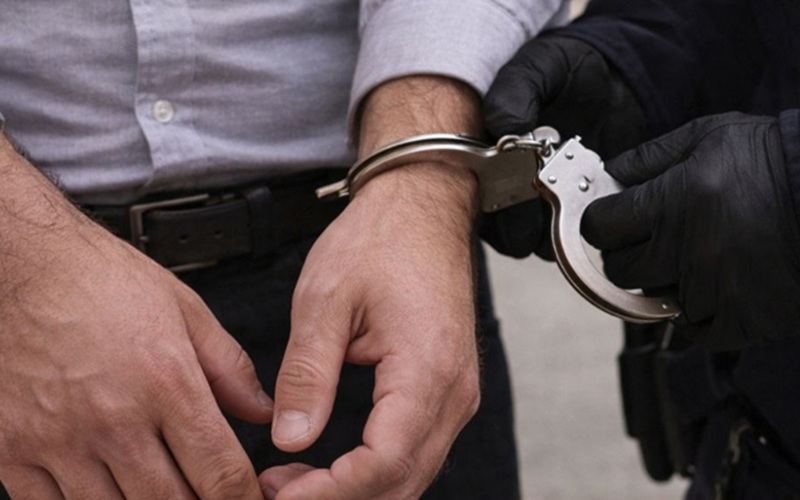

Hundreds detained across the country as authorities intensify crackdown on dissent, information sharing, and protest activity
Reports emerging from Iran indicate that authorities are continuing a sweeping campaign of arrests across the country, even as the nation faces ongoing conflict, executions of protest detainees, and a near-total internet blackout.
According to both state-affiliated media and independent human rights organizations, security forces have detained large numbers of citizens and civil activists in recent days. Official outlets frequently accuse those arrested of charges such as “cooperating with hostile entities,” while rights groups describe a far broader crackdown targeting various segments of society.
The situation is further complicated by severe restrictions on information. Iran has now entered its twenty-fifth consecutive day of widespread internet disruption, leaving most citizens without reliable access to communication platforms. This blackout has significantly limited the flow of information and made independent verification of arrests and related developments extremely difficult.
Despite these constraints, human rights monitors report that the arrests are part of a broader pattern that intensified following the protests of early 2026. In the aftermath of those demonstrations, thousands of individuals were reportedly detained nationwide, with limited transparency regarding their legal status or conditions of detention.
Recent reports suggest that those targeted include political and civil activists, journalists, grieving families seeking justice, members of ethnic and religious minorities, university students, and even medical personnel. In addition to these identifiable groups, hundreds of ordinary citizens have reportedly been arrested without public disclosure of their identities.
Iran regime’s Ministry of Intelligence claimed on March 19 that it had identified and detained 97 individuals it described as agents linked to Israel. Authorities alleged that these individuals were involved in organizing unrest and preparing violent actions, though no names or detailed evidence were released.
State media also reported mass arrests across 26 provinces in the days leading up to the Persian New Year. According to figures cited by human rights sources, at least 220 people were detained in a single wave of operations. Meanwhile, outlets affiliated with the Islamic Revolutionary Guard Corps (IRGC) claimed that more than 100 groups allegedly tied to monarchist networks had been dismantled, though the nature and structure of these groups remain unclear.
Additional arrests were reported in connection with the sharing of images and information. Security-linked media stated that dozens of individuals were detained for allegedly sending photos and videos to Persian-language media outlets abroad. In one province alone, authorities claimed to have arrested 75 people on such charges.
These actions follow explicit warnings from security officials, including Ahmad Reza Radan, who had threatened that individuals responding to protest calls or sharing information would be treated as hostile actors. Judicial authorities have also instructed law enforcement to prosecute anyone accused of documenting or distributing images of sensitive sites, particularly those linked to military activity or recent strikes.
While state institutions argue that such measures are necessary for national security, legal experts inside Iran have noted that photographing in public spaces is not inherently a crime unless it involves restricted locations or demonstrable intent to harm security. Nonetheless, enforcement appears to have expanded well beyond narrowly defined legal boundaries.
Human rights organizations, continue to publish daily updates documenting arrests, casualties, and other developments despite restricted access to information. Their reports suggest that the scale of detentions is significantly larger than officially acknowledged.
There are also increasing reports of intimidation tactics beyond arrests. Citizens have reportedly received threatening text messages accusing them of online activity deemed supportive of opposition media or critical of the government, warning them of potential detention.
At the same time, concerns are mounting over prison conditions across the country. Activists describe overcrowded facilities, lack of medical care, and deteriorating humanitarian conditions, raising alarms about the treatment of detainees during this intensified crackdown.
Taken together, these developments point to a systematic effort by Iranian regime authorities to control both the streets and the flow of information during a period of heightened internal and external pressure. With communication channels restricted and arrests ongoing, the full scope of the situation remains difficult to assess—but the available evidence suggests a rapidly escalating campaign of repression.