


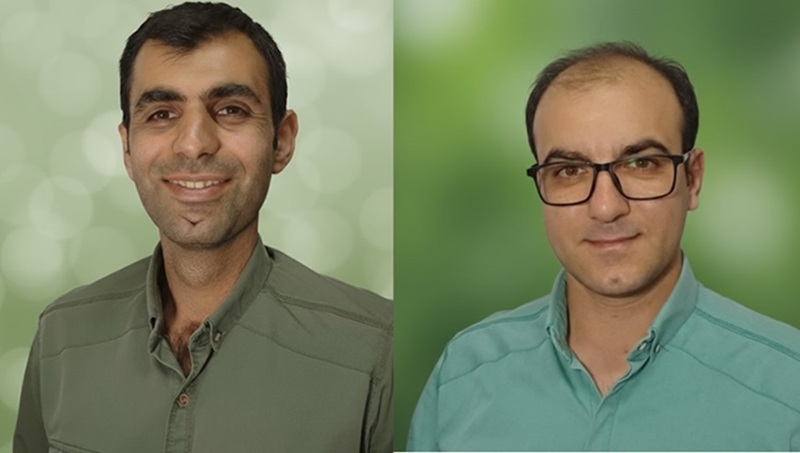

NCRI condemns executions as a sign of regime desperation; calls for urgent international action to halt further killings
In a stark escalation of repression, Iran’s ruling establishment executed two members of the People’s Mojahedin Organization of Iran (PMOI/MEK), Babak Alipour and Pouya Ghobadi, in the early hours of Tuesday, March 31, 2026, at Ghezel Hesar Prison. The executions, confirmed by the Secretariat of the National Council of Resistance of Iran (NCRI), have drawn sharp condemnation from opposition figures and human rights advocates.
Babak Alipour, 34, a lawyer, and Pouya Ghobadi, 33, an electrical engineer, had both previously been detained for their alleged affiliation with the PMOI. Alipour had spent four years in prison following his arrest in 2018, while Ghobadi had reportedly been arrested multiple times prior to his detention in March 2024.
In December 2024, both men were sentenced to death by Judge Iman Afshari of Branch 26 of Tehran’s Revolutionary Court. The charges included “membership in the PMOI” and activities deemed threatening to state security, following months of interrogation reportedly involving torture. Two other PMOI members, Mohammad Taghavi and Akbar Daneshvarkar, were executed just one day earlier.
Iran’s judiciary justified the executions by accusing the men of armed operations and attacks on state institutions, including the Ministry of Intelligence. According to official statements, the charges ranged from participation in “terrorist operations” to the use of projectile weapons and support for efforts to overthrow the system.
However, the NCRI has strongly rejected these accusations, portraying the executed individuals as political prisoners targeted for their opposition to the regime. The organization reported that, in the days leading up to the executions, security forces violently raided Ward 4 of Ghezel Hesar Prison, assaulting inmates and transferring several death-row prisoners—including Alipour and Ghobadi—into solitary confinement. Communication between prisoners and their families was reportedly cut off entirely.
Maryam Rajavi, President-elect of the NCRI, described the executions as a reflection of the regime’s “fear and desperation” in the face of growing public unrest and expanding support for organized resistance. She argued that carrying out such executions during a time of external conflict underscores the regime’s primary concern: internal dissent.
Rajavi warned that the killings would not suppress opposition but instead intensify resistance, stating that those executed would be remembered as enduring symbols of sacrifice and defiance. She characterized them as individuals who remained steadfast under extreme pressure and refused to renounce their beliefs.
Calling the executions a “crime against humanity,” Rajavi urged the international community—particularly the United Nations and human rights organizations—to take immediate and concrete action. Her recommendations included diplomatic measures such as closing Iranian embassies abroad and expelling regime-affiliated operatives.
The executions come amid mounting concerns over Iran’s use of capital punishment as a tool of political control. Rights groups have repeatedly warned that due process is routinely violated in cases involving political prisoners, with forced confessions and closed-door trials forming the basis of many death sentences.
As tensions inside the country continue to rise, the fate of other imprisoned PMOI members remains uncertain, with fears growing that further executions may be imminent.