Lawmakers warn of systemic brutality, criticize EU inaction, and call for recognition of Iranian Resistance
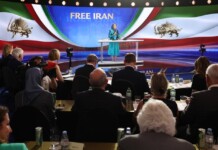
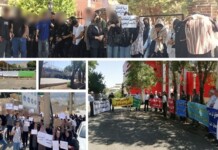
On April 22, 2026, the European Parliament hosted a high-level conference titled “Iran: Take Action to Stop Executions, Where Does the EU Stand?” at a time of acute political turmoil in Iran. The event followed the nationwide uprisings of late 2025 and early 2026, which began in Tehran’s bazaar and quickly evolved into a broad anti-regime movement. Speakers consistently emphasized that the Iranian regime has responded not with reform, but with intensified repression, including a surge in executions targeting political prisoners and protesters.
Opening the conference, Javier Zarzalejos framed the discussion around fundamental democratic principles and the responsibility of Europe to respond. He stressed that “the future of Iran belongs to the Iranian people. It is they, and only they, who must decide their destiny.” At the same time, he underscored that executions are not incidental but systemic, warning that “executions are not part of the ongoing conflict. They are a pattern of repression by the regime. Now, they have become a despicable act of revenge.” His remarks positioned the crisis not merely as a regional issue but as a moral test for the international community.
This broader geopolitical dimension was reinforced by Petras Auštrevičius, who argued that Iran’s internal crisis has far-reaching global implications. He warned that “the situation in Iran is no longer a matter of concern only for [the] Iranians… Peace and security both in the Middle East and in Europe and beyond… are tied to what happens now in Iran.” Highlighting the scale of repression, he noted that “in the space of one month, it executed… 15 political prisoners… eight were members of the People’s Mojahedin Organization of Iran, and seven were young protesters.” He rejected both war and appeasement, concluding that “real change can come only through [the] Iranian people… and from [the] organized Iranian Resistance.”
Francisco Assis delivered one of the most forceful critiques of European inaction, describing the situation as a humanitarian catastrophe. He declared that “tens of thousands of Iranian men and women [were] massacred by a regime that had declared war on its own people,” while condemning “the culture of death that is the hallmark of this regime.” He expressed concern over international silence, stating plainly, “we are concerned by the silence of the international community, and particularly by the silence of the European Union.” Assis emphasized that external military solutions are ineffective, asserting that “airstrikes cannot overthrow the regime, but an Iranian Resistance can.” He further argued that recognizing the Resistance is strategically essential, warning that “by continuing to ignore the Iranian people and their organized Resistance, Europe has deprived itself of its most effective lever.”
Antonio López-Istúriz White focused on institutional dynamics within Europe, drawing a distinction between parliamentary support and governmental hesitation. While acknowledging past inaction, he highlighted progress within the Parliament, noting that “we urged the Council… to proceed without delay with the full designation of the Islamic Revolutionary Guard Corps as a terrorist organization.” He reiterated the stakes in stark terms, stating that “this regime is a threat to our European security and to our values,” and insisted that Europe must move beyond rhetoric toward sustained pressure.
Leoluca Orlando returned to foundational democratic principles, emphasizing legitimacy and sovereignty. He reaffirmed that “the future of Iran belongs to [the] Iranian people, belongs only to [the] Iranian people,” while warning that geopolitical developments risk empowering the regime. He cautioned that “the Iranian regime will try to negotiate [a] cease-fire… getting international complicity to maintain [its] anti-democratic power.” For Orlando, the path forward depends on aligning international policy with the aspirations of the Iranian people rather than short-term diplomatic expediency.
Carlo Ciccioli highlighted the scale of violence during the recent uprisings, pointing to estimates that “the victims of the repression… were about 42,000… some… even speak of 75,000 people killed.” He stressed the unprecedented nature of this brutality, stating that “there is no regime on the entire planet that has killed such a large number… of protesters.” According to Ciccioli, the regime’s survival depends on repression, sending a clear message: “the only path relative to us is your death.” He concluded that shortening the regime’s “agony” is essential to prevent further bloodshed.
Nicolás Pascual de la Parte adopted an unequivocal tone, describing Iran as “the most criminal and bloody regime on earth.” He stressed both moral and strategic imperatives, arguing that “the Iranian people deserve freedom… but… need [the] accompaniment [and] backing of your friends.” He also highlighted the importance of a political roadmap, stating that “the Ten-Point Plan… is the best possible program that we have.”
Anna Strolenberg shifted the focus to human stories, particularly the role of women in the resistance movement. Reflecting on personal encounters, she said, “I have met and talked to women who have a fighting spirit… who really want to see change, even though they [have] lost brothers, mothers, [and] partners.” Her remarks underscored the social dimension of the uprising and the central role of women in demanding change.
Kris Van Dijck expanded the discussion to global responsibility, rejecting isolationist narratives. He argued that “this war is our war… because we are all human beings,” linking moral obligation with economic and political consequences. He also raised concerns about international institutions, questioning “how is that possible that that state is nominated” to UN bodies dealing with human rights.
Herta Däubler-Gmelin emphasized concrete policy priorities, insisting that “this murderous killing machine must be stopped.” She called for immediate diplomatic pressure to halt executions and urged stronger European engagement, while endorsing the Iranian Resistance’s platform as “a good blueprint of how a new democratic… Iran could look.”
Guy Verhofstadt provided a strategic critique of Western policy, arguing that both appeasement and military intervention have failed. He stated that “appeasement policy has led to nothing at all… [and] to further oppression,” while also noting that war has brought instability without resolving the crisis. As an alternative, he proposed “active engagement… with the Iranian people, the opposition… and the organized Iranian Resistance.” He further condemned European silence, stating that “I find it nearly criminal that we say nothing about the executions.”
Across the conference, a consistent theme emerged: the rejection of both external military solutions and passive diplomacy in favor of a people-centered approach. Speakers repeatedly stressed that sustainable change must come from within Iran, supported—but not dictated—by the international community. The convergence of these perspectives signals a growing shift within European political discourse, where support for the Iranian people and their organized Resistance is increasingly seen as both a moral obligation and a strategic necessity.