


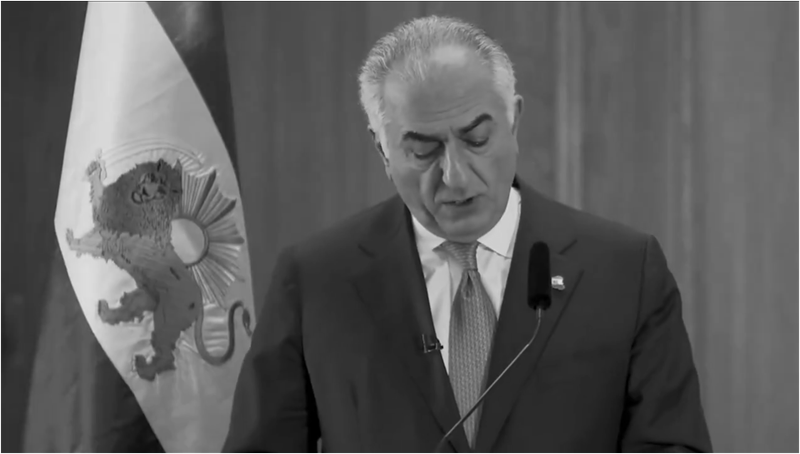

How the sudden emergence of Reza Pahlavi during the January 2026 uprising reshaped the narrative, unified the regime’s fractured base, and derailed a coordinated push for democratic change
In the early weeks of January 2026, the streets of Tehran and Mashhad were thick with more than just winter smog; they were heavy with the scent of a regime in its final throes. The protests were unlike those of previous years. They were disciplined, driven by organized “Resistance Units” and networks that had spent years preparing for this specific moment of systemic collapse. By mid-month, the chants were no longer merely expressions of grief, but tactical demands for a democratic republic. Yet, by January 19, the atmosphere shifted. Suddenly, social media feeds and certain international broadcasts were flooded with images of the son of the deposed Shah, Reza Pahlavi, claiming leadership of a movement he had not built. The question that now haunts the aftermath of that suppressed revolt is a chilling one: How did a movement aimed at a liberated future become entangled in the ghosts of a discarded past, and who truly benefited from that entanglement?
The January 2026 uprising began with a precision that rattled the clerical establishment. For the first time, the internal divisions within the Iranian security apparatus were visible. Reports from within the capital suggested that the Revolutionary Guard was hesitant, unsure of how to suppress a movement that lacked a singular, easily arrestable head but possessed a sophisticated, decentralized organization. The “Resistance Units” were moving step by step, escalating the pressure on the state’s infrastructure. The regime was facing a crisis of unity; many officials were reportedly weighing their options, wondering if the time for a transition had finally arrived.
However, the intervention of Reza Pahlavi on January 18 and 19 changed the calculus for the regime. By asserting himself as the face of the revolution from the safety of the West, Pahlavi provided the regime with the exact “bogeyman” required to unify the regime’s fracturing base. The specter of a return to the Pahlavi monarchy—a system the 1979 revolution was specifically designed to eradicate—acted as a catalyst for the regime’s hardliners. It allowed the state to frame the uprising not as a genuine cry for democracy, but as a foreign-backed plot to restore a defunct throne. This shift in narrative was the “green light” the security forces needed for a massive, bloody crackdown. The internal debates over whether to use lethal force vanished; the regime found its unity in the rejection of the crown.
The tragedy of the 2026 uprising was not just the brutality of the state, but the successful deception of the international community. Through a sophisticated engineering of social media and the dissemination of curated video clips, Western observers were led to believe that the Iranian people were calling for a return to the monarchy. These “monarchy chants,” often amplified by bot networks and fake news accounts, were used to create a “Chalabi-style” alternative—a reference to Ahmed Chalabi, the Iraqi figure who convinced the West he was a ready-made leader before the 2003 invasion. By positioning Pahlavi as a leader-in-waiting who could fill a “power vacuum,” these interests effectively passivized the Iranian public. When people are told that a new dictator is waiting to replace the old one, the revolutionary dynamism—the willingness to die for a fundamental change—evaporates. The question for the youth on the streets became: Why sacrifice everything to replace a turban with a crown?
The reality of the Pahlavi project was laid bare during a recent interview on Swedish television. When asked about the legacy of his father and grandfather, Reza Pahlavi did not offer a nuanced historical critique or a commitment to transitional justice. Instead, he stated he was “proud” of their actions. For those with a sense of history, this was a startling admission. The Pahlavi era was defined by a one-party system and the SAVAK—the notorious secret police whose record of torture and extrajudicial killings remains a dark chapter in Iranian history. By refusing to distance himself from the repression of the past, Pahlavi confirmed the fears of the protesters: that his vision for the future is merely a restoration of the old autocracy.
Furthermore, evidence suggests that the Iranian regime itself has played a sophisticated game of infiltration. By penetrating the inner circles of the monarchist diaspora, the regime’s intelligence services have been able to influence Pahlavi’s rhetoric and timing. In many ways, the son of the Shah has become an unwitting—or perhaps witting—tool of the very regime he claims to oppose. By acting as a “spoiler” to the organized democratic opposition, he ensures that the status quo remains the only viable-looking option to a cautious West.
The remnants of the monarchy are not a serious contender for the future of Iran; they lack the ground-level organization and the domestic legitimacy required to govern a modern, complex society. However, they are a profound problem for the present. The promotion of a “return to the past” acts as a toxin in the campaign for regime change. It creates a false binary between the current theocracy and a previous autocracy, leaving no room for the democratic republic that the majority of Iranians actually desire.
As we look back at the missed opportunity of January 2026, the lesson is clear. The path to a free Iran cannot be paved with the nostalgia of those who lost their grip on power half a century ago. The international community must stop falling for the “Chalabi model” of manufactured leadership and instead look to the organized, democratic forces that are actually doing the work on the ground. Until the “monarchy distraction” is cleared away, the Iranian regime will continue to use the ghosts of the past to haunt the dreams of the future. The struggle for Iran is not a choice between two types of dictators; it is a struggle to end the era of dictators altogether.