

War, structural mismanagement, and political priorities have transformed joblessness into a systemic crisis undermining Iran’s economic and social foundations
Today, unemployment in Iran increasingly resembles an invisible queue—millions of educated young people standing in limbo, with neither realistic prospects for employment nor a clear vision for their future.
What was once considered a conventional economic indicator has evolved into a mechanism of gradual social erosion. Even before the recent war, millions of young Iranians faced a harsh reality: precarious employment, insufficient income, and forced detachment from their fields of expertise. Now, amid intensifying economic and military pressures, this condition has escalated into what can only be described as a form of “economic warfare against society.”
Structural Collapse of the Labor Market
Unemployment in Iran is not cyclical—it is structural. Under the system of Velayat-e Faqih, long-standing policies have systematically weakened productive sectors of the economy. Dependence on unstable revenues, rent-seeking practices, and the suppression of an independent private sector have eroded the labor market’s capacity to absorb skilled workers.
The result is the emergence of a generation that is educated but structurally excluded from meaningful employment.
The crisis deepens further when examining job quality. Tens of thousands of young people have been pushed into temporary, low-wage, and non-specialized roles. This not only reduces overall productivity but also leads to the destruction of human capital. In this sense, unemployment in Iran is not merely the absence of jobs—it represents the systematic dismantling of developmental capacity.
Rising inflation has compounded the problem. As living costs continuously increase, employment itself no longer guarantees survival. Under such conditions, the distinction between unemployment and underemployment begins to disappear. Even those with jobs are increasingly vulnerable to poverty.
At the same time, capital flight and large-scale emigration of skilled labor reflect deep-seated distrust in the country’s economic future. Thousands of young professionals are leaving—not by choice, but out of necessity. This migration is itself evidence of a structural failure to generate sustainable employment.
War and the Acceleration of Job Losses
With the onset of the recent war, unemployment in Iran has entered a new and unprecedented phase. The destruction of industrial infrastructure, production shutdowns, and heightened uncertainty have triggered a massive wave of job losses.
Estimates suggest that between one and four million individuals have lost their jobs—a figure that underscores the scale of the crisis.
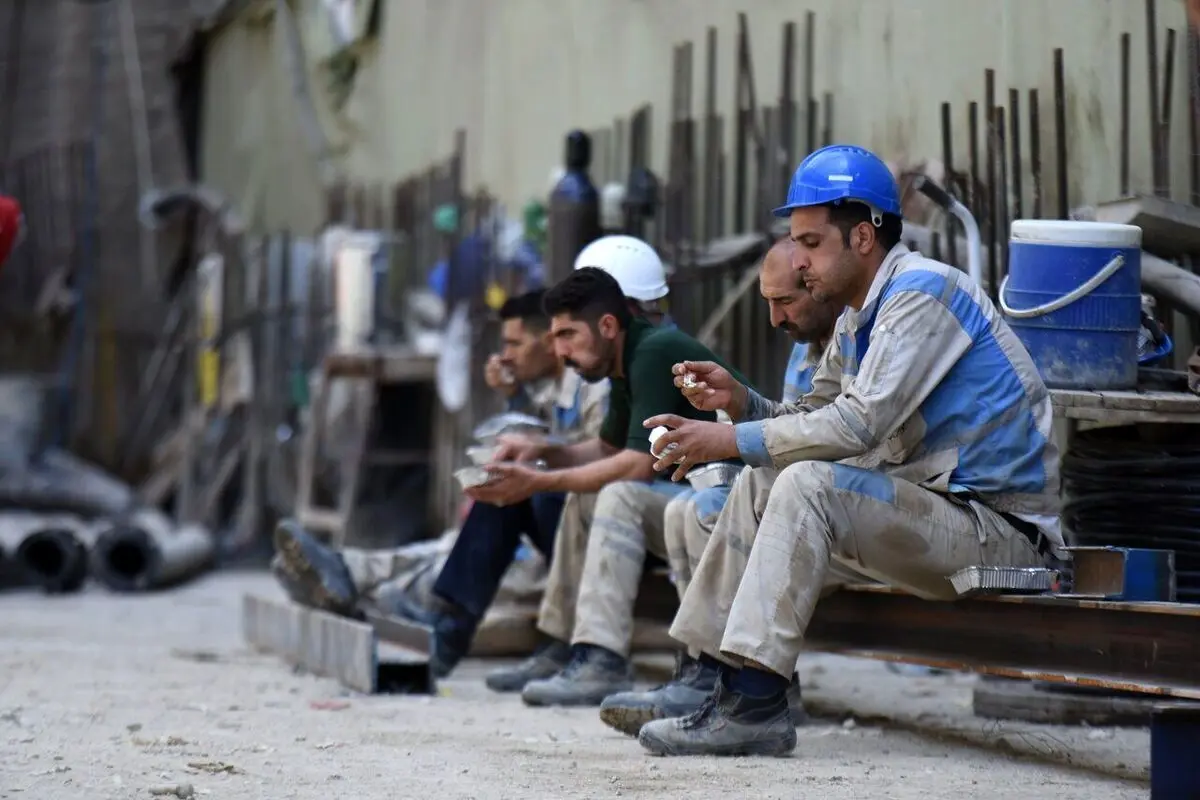
The construction sector, once a key driver of employment, has been nearly paralyzed. Approximately one million construction workers—many without unemployment insurance—have abruptly fallen out of the labor cycle. These workers, often renters, now face acute livelihood crises. In this sector, unemployment is not just economic; it is deeply humanitarian.
Surging construction costs have further intensified the downturn. Damage to steel production facilities and disruptions in material supply chains have driven prices sharply upward. As a result, development projects have stalled, eliminating even more job opportunities. This self-reinforcing cycle continues to reproduce unemployment at scale.
A similar pattern is evident in the industrial sector. Damage to core industries has disrupted supply chains, forcing smaller workshops into closure. Each shuttered production unit eliminates dozens of direct and indirect jobs, turning unemployment into a cascading, system-wide crisis.
The services sector and digital economy have not been spared. Declining demand, infrastructural disruptions, and widespread psychological insecurity have led to the closure of numerous businesses. Even large firms have resorted to layoffs. This trend highlights how unemployment in Iran has permeated all sectors of the economy.
Meanwhile, the social safety net remains critically inadequate. Many unemployed individuals are excluded from benefits due to the absence of formal contracts. Even those eligible for support receive insufficient assistance. This gap exposes the stark mismatch between societal needs and the state’s capacity—or willingness—to respond.
Unemployment as a Political Outcome
What distinguishes unemployment in Iran from a typical economic downturn is its direct connection to the country’s political structure. Non-transparent decision-making, ideological priorities, and the persistent neglect of sustainable development have left the economy highly vulnerable to recurring shocks. The recent war has merely accelerated an already entrenched trajectory.
Widespread unemployment is the direct outcome of policies that divert resources away from productive investment and toward non-productive or strategic objectives. This reality underscores a critical point: the employment crisis is not accidental—it is the logical consequence of systemic inefficiency.
A Crisis Beyond Economics
Ultimately, unemployment in Iran has become a symbol of broader economic and social failure. A generation once viewed as the country’s future has been pushed to the margins. This trajectory threatens not only economic stability but also social cohesion.
If current trends persist, Iran faces the prospect of a society where work, security, and hope for the future become increasingly scarce commodities. Unemployment is no longer just an economic issue—it is a manifestation of a deeper crisis embedded within the very foundations of the Iran regime.