
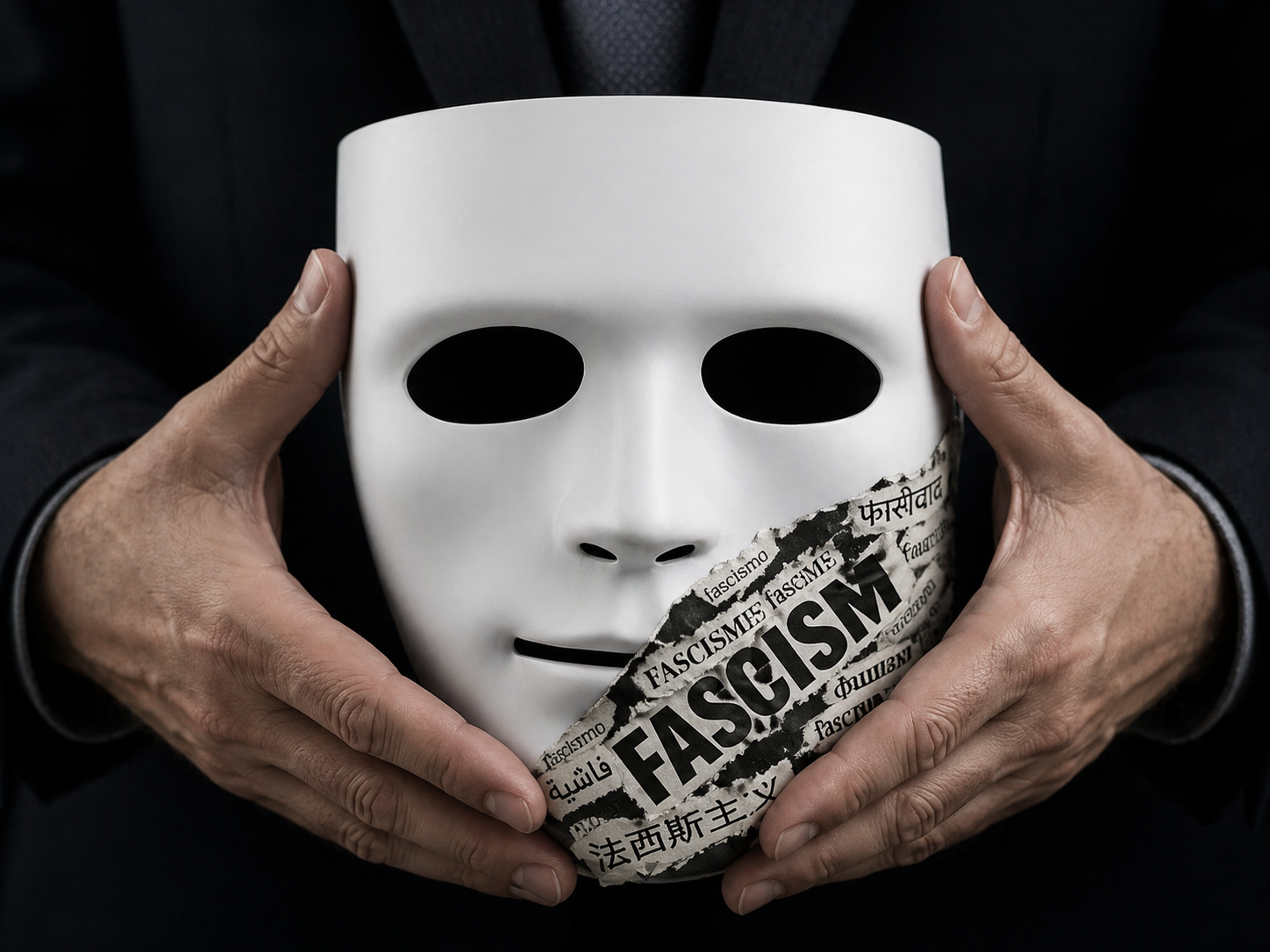

How nostalgia, crisis, and political passivity are being weaponized to reshape “homeland” into an instrument of control
In today’s Iran, amid deep economic strain, political disillusionment, and a profound crisis of trust, a particular political current has been steadily reframing itself as a “solution”: the movement centered around Reza Pahlavi. What makes this trend significant is not its strength, but the specific pattern it follows—one that bears the surface features of authoritarian and semi-fascist politics, without possessing their structural depth or historical coherence.
This current does not present a detailed political program, nor does it emerge from sustained engagement with the realities inside Iran. Instead, it relies on a familiar triad: fear of the future, humiliation rooted in past failures, and a polished nostalgia for a reconstructed past. These elements are not accidental—they are the core psychological drivers through which simplified political narratives gain traction in societies under pressure.
At the center of this narrative lies a subtle but critical transformation of the concept of “homeland.” In this framework, the homeland is no longer understood as a living society composed of citizens with rights, agency, and diversity. It is reduced instead to territory—land, borders, and a space to be reclaimed and controlled. This shift is not merely rhetorical; it signals a regression from modern citizenship to a hierarchical, quasi-feudal imagination of power, where authority flows from the top and the population becomes subordinate to it.
In such a model, people are no longer stakeholders in their country’s future. They are redefined as followers, instruments, or—if they dissent—obstacles. The nation itself is stripped of its pluralism and reduced to a uniform, obedient body. Patriotism, in this logic, ceases to be a shared responsibility toward collective well-being and becomes instead a tool for legitimizing centralized authority.
However, unlike classical authoritarian movements of the 20th century, this current lacks the fundamental characteristics that made those forces historically consequential. It has no active leadership rooted in struggle, no coherent organizational structure, and no demonstrated willingness to bear the costs of political transformation. Rather than building power from within society, it attempts to position itself as the beneficiary of processes it neither initiates nor sustains.
This is where the notion of “semi-fascism” becomes analytically useful. What we are witnessing is not a fully formed authoritarian movement, but an opportunistic adaptation of its most superficial elements: the glorification of order, the simplification of complex crises, and the instrumental use of nostalgia. It is, in essence, a political shortcut—one that promises rapid resolution without engaging with the structural realities of change.
The consequences of this approach are not neutral. By promoting the illusion of a “quick solution,” this current diverts attention from the real dynamics of transformation: grassroots organization, collective action, and the willingness to incur costs. By appropriating the symbols of struggle without participating in it, it risks distorting the trajectory of change itself.
Moreover, its implicit reliance on external support further deepens a pattern of dependency. When the focus shifts from internal capacity to external intervention, what emerges is not national empowerment but a reconfiguration of pressure—one that ultimately reproduces itself at the expense of society.
This makes the distinction between genuine forces of change and opportunistic actors critically important. Real transformation does not emerge from nostalgia, slogans, or expectations for external rescue. It is built through organization, persistence, and sacrifice—through a reassertion of society’s agency over its own future.
The broader lesson is clear. Authoritarian tendencies—whether fully developed or in hybrid forms—gain ground when societies lose confidence in their own capacity and begin searching for saviors. At that point, even the concept of homeland is hollowed out, reduced to an instrument of power rather than a reflection of collective life.
The defining question, therefore, is not about the past or its idealized images. It is about how the homeland itself is understood: as territory to be controlled, or as a society of people whose rights, dignity, and participation define its meaning. The line between these two interpretations is the line between freedom and domination, between citizenship and subjugation, and ultimately, between a future built forward and a past imposed backward.