


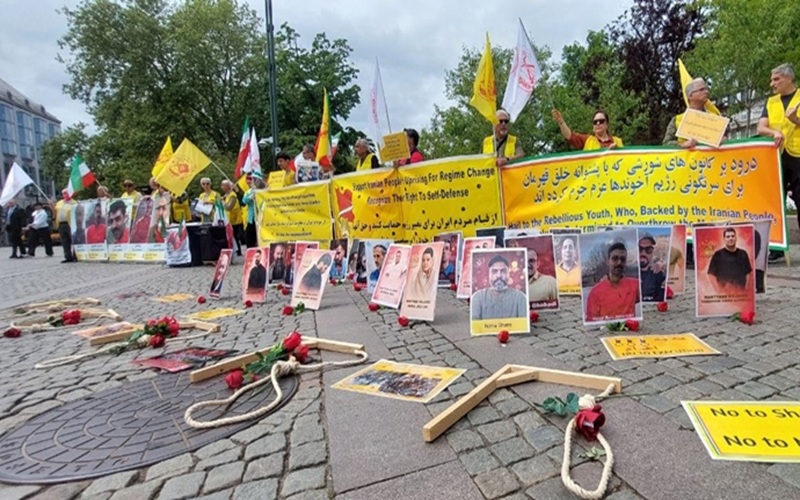

The Iranian regime has intensified its crackdown on political prisoners, supporters of the opposition, and their families, combining threats, intimidation, property confiscation, and renewed death sentences in an apparent effort to deter growing public unrest.
As Iran faces mounting social and economic crises, authorities have intensified their campaign of repression against political prisoners, supporters of the Iranian opposition, and their families. According to statements issued by the National Council of Resistance of Iran (NCRI), the regime has expanded its use of intimidation, arbitrary summonses, psychological pressure, and death sentences in an apparent attempt to prevent social unrest and future nationwide uprisings.
The latest measures come amid an ongoing wave of executions and increasing concerns among human rights organizations about the deteriorating situation inside Iranian prisons.
Families of Political Prisoners Targeted by Intelligence Ministry
According to the NCRI, the Ministry of Intelligence has recently increased pressure on relatives of political prisoners and supporters of the Iranian opposition movement, particularly families associated with the People’s Mojahedin Organization of Iran (PMOI/MEK).
On May 24, intelligence agents summoned family members of political prisoner Marzieh Farsi, who is currently imprisoned in Tehran’s Evin Prison. They were reportedly subjected to hours of interrogation, threats, insults, and psychological pressure.
Interrogators allegedly warned the family against maintaining contact with other political prisoners’ families or with supporters of the Iranian Resistance.
The NCRI reported that similar actions have been taken during recent weeks against the families of political prisoners and opposition supporters, including relatives of Sediqeh Moradi, Azar Karvandi, and the family of executed MEK member Akbar Daneshvarkar.
According to the statement, intelligence officials threatened these families with confiscation of inherited property, seizure of assets, and forced displacement. They also allegedly warned that other family members could face arrest if they failed to comply with official demands.
Pressure to Participate in Regime’s Show Trial
The NCRI further stated that security officials are attempting to coerce relatives of opposition members into participating in the regime’s ongoing mass trial against the MEK and 104 members of the Iranian Resistance.
According to the report, interrogators demanded that family members attend the proceedings and publicly denounce the opposition in interviews with state-controlled media.
Those refusing to cooperate were reportedly threatened with property confiscation and additional arrests targeting their relatives.
Human rights advocates have long criticized the proceedings as politically motivated and lacking basic judicial standards.
Death Sentence Reissued Against Political Prisoner Zahra Tabari
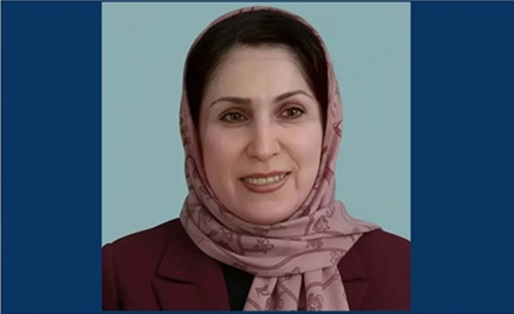
At the same time, regime authorities have moved forward with another controversial case involving political prisoner Zahra Tabari, who has once again been sentenced to death by the Revolutionary Court in Rasht.
The death sentence was recently communicated to Tabari after a second judicial review upheld the original ruling.
Tabari, a 68-year-old electrical engineer and holder of a master’s degree in sustainable energy from Sweden, was arrested in April 2025 following a raid by security forces on her home in Rasht.
She had previously been arrested in 2022 and sentenced to 18 months in prison.
According to the NCRI, Tabari was first sentenced to death in November 2025 by Branch One of the Revolutionary Court in Rasht on charges of “rebellion against the state” through alleged membership and activities related to the PMOI/MEK.
The organization stated that the initial conviction followed what it described as a ten-minute show trial conducted via video conference, during which Tabari was denied access to a lawyer of her own choosing.
International Outcry Fails to Halt Sentence
Following widespread international condemnation, Iran’s Supreme Court referred the case for review in what critics described as a symbolic gesture rather than a substantive legal reconsideration.
The case was subsequently assigned to another branch of the Revolutionary Court in Rasht, which ultimately reaffirmed the death sentence on April 14, 2026.
The renewed ruling has heightened concerns among human rights organizations about the growing use of capital punishment against political detainees in Iran.
Growing International Concern
The NCRI argues that the simultaneous escalation of pressure on political prisoners’ families and the reaffirmation of death sentences reflect a broader strategy aimed at intimidating society and preventing organized dissent.
The opposition coalition has called on the United Nations, the UN High Commissioner for Human Rights, relevant UN special rapporteurs, the European Union, and democratic governments worldwide to take urgent action.
It specifically urged international bodies to condemn the regime’s treatment of political prisoners and their families and to intervene to save the lives of detainees currently facing execution, including Zahra Tabari.
As Iran continues to grapple with economic hardship, social discontent, and increasing public frustration, human rights groups warn that the regime’s reliance on repression and intimidation is deepening concerns about the state of fundamental freedoms and due process within the country.