


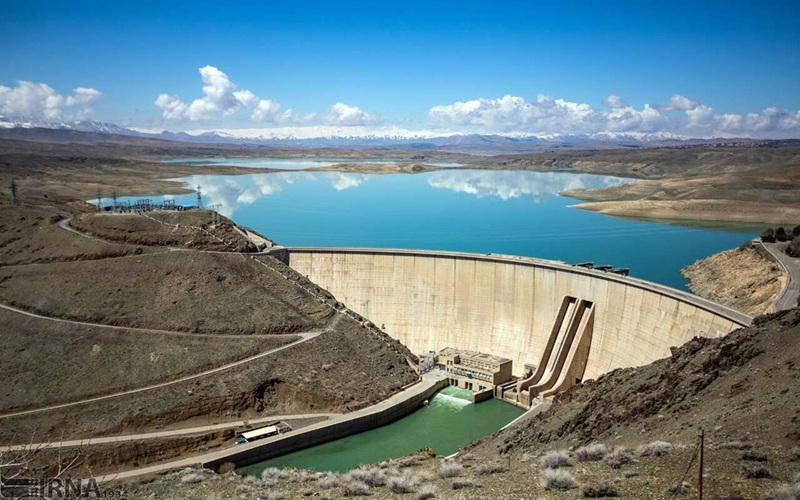

Six Consecutive Years of Drought Expose the Failure of the Regime’s Water Policies While Millions Face Growing Water Insecurity
Tehran, home to more than 15 million people in its greater metropolitan area, is facing one of the most severe water crises in its history. While officials blame declining rainfall and climate change, experts increasingly point to decades of poor governance, unsustainable development, and failed water management policies by the Iranian regime as the primary drivers of a disaster that now threatens the country’s political, economic, and environmental stability.
The warning signs have been visible for years. Yet instead of addressing the structural causes of water scarcity, authorities have relied on temporary measures, expensive water-transfer projects, and repeated calls for public conservation. Today, six consecutive years of drought have exposed the limits of those policies.
Sixth Straight Year of Drought
Hossein Akbariyan, managing director of Tehran Water and Wastewater Company Region One, announced that Tehran is experiencing its sixth consecutive year of drought.
Although rainfall during the current year has improved compared to the previous year, precipitation remains below long-term averages. More importantly, last year was reportedly the driest water year in more than six decades, leaving the reservoirs supplying Tehran with critically low reserves at the beginning of the current cycle.
Officials continue to emphasize “water literacy” and urge citizens to reduce consumption. Authorities have also warned high-consumption users that restrictions and penalties may be imposed.
However, many experts argue that focusing primarily on household consumption ignores the deeper causes of the crisis.
A Capital Running Out of Water
Recent reports indicate that Tehran, along with the provinces of Qom, Semnan, and Markazi, is experiencing some of the most severe drought conditions in the country. Among them, Tehran appears to be in the most precarious position.
As Iran’s largest population center, the capital suffers from a dangerous imbalance between water supply and demand. Years of rapid urban expansion, population growth, and resource-intensive development have dramatically increased pressure on already limited water resources.
According to assessments cited by domestic media, Tehran has the lowest per-capita availability of renewable water resources among all Iranian provinces.
Even massive infrastructure projects and water transfers from surrounding regions have failed to solve the problem.
Governance Failures Behind the Crisis
State-affiliated media have acknowledged that natural factors alone cannot explain the scale of the water emergency.
Reports point to weak governance, the absence of a unified water management authority, poor policy implementation, and chronic institutional inefficiency as major contributors to the crisis.
These admissions reflect a broader pattern seen across many sectors of the Iranian economy and public administration. Long-term planning has often been sacrificed in favor of short-term political considerations, while environmental sustainability has been neglected.
The result is a system that reacts to crises rather than preventing them.
Groundwater Depletion Reaches Dangerous Levels
Under normal conditions, approximately half of Tehran’s water supply comes from reservoirs and half from underground aquifers.
During prolonged drought periods, however, the balance shifts dramatically. As water inflows to reservoirs decline, authorities increasingly rely on groundwater extraction. In recent years, underground sources have provided nearly 60 percent of Tehran’s water needs.
This dependence comes at a heavy cost.
Overextraction has caused groundwater levels to fall sharply, contributing to land subsidence across large parts of Iran. In some regions, the damage is irreversible.
Environmental experts warn that once aquifers collapse, they can lose much of their storage capacity permanently, creating long-term threats to water security.
Water Transfers: Solving One Crisis by Creating Another
For years, the regime has relied on inter-basin water transfer projects as a solution to Tehran’s growing demand.
But critics argue that these projects merely shift the crisis from one region to another.
According to water specialists cited in domestic reports, transferring water to Tehran has imposed severe environmental costs on the provinces and regions supplying that water.
The transfer of water from the Latyan and Mamloo dams, for example, has reportedly contributed to significant groundwater decline in the Varamin Plain. Reduced water availability has also affected local wetlands, accelerating ecological degradation.
Similarly, water diverted from the Lar Dam originates from resources connected to Mazandaran Province. Ironically, despite receiving relatively high levels of rainfall, parts of Mazandaran now face water supply challenges and land subsidence of their own.
Experts also warn that water transfers from Taleghan have reduced the capacity to address water shortages in the Qazvin Plain.
Rather than solving scarcity, these projects often redistribute environmental damage across the country.
Thirty-Five Million Iranians Facing Water Stress
The crisis extends far beyond Tehran.
In May, Isa Bozorgzadeh, spokesperson for Iran’s water industry, announced that approximately 35 million people across the country are experiencing water shortages or water stress.
This figure highlights the national scale of the problem.
Iran is currently confronting one of the most severe water emergencies in its contemporary history. Average annual rainfall has fallen below 250 millimeters, while many rivers, lakes, wetlands, and reservoirs have experienced dramatic declines.
The drying of major water bodies and depletion of underground reserves have become recurring features of the country’s environmental landscape.
Tehran’s Population Growth Has Outpaced Its Resources
One of the most striking observations from recent analyses is that Tehran may simply have exceeded its environmental carrying capacity.
Experts argue that sustainable development requires evaluating available resources before expanding population centers and infrastructure. In Iran’s case, however, the opposite often occurred.
Urban expansion, industrial growth, and population concentration continued despite clear warnings about water limitations.
As one domestic analysis bluntly concluded, authorities first pursued development and only afterward searched for the resources needed to sustain it.
Today, the consequences of that approach are becoming increasingly visible.
A Crisis Decades in the Making
The regime frequently calls on citizens to conserve water and adopt more efficient consumption habits. While conservation is undoubtedly important, it cannot compensate for decades of flawed planning, fragmented governance, environmental neglect, and unsustainable resource management.
The water crisis facing Tehran is not simply the result of drought. Drought may have accelerated the emergency, but the foundations of the crisis were laid over many years through policy failures and institutional shortcomings.
Without fundamental reforms in water governance, population planning, environmental protection, and resource management, Tehran’s water shortages are likely to worsen.
For millions of Iranians, the question is no longer whether a water crisis exists. The question is how much more severe it will become before meaningful action is taken.
The sixth consecutive year of drought has exposed a reality that can no longer be ignored: Tehran is not merely suffering from a lack of rainfall—it is confronting the consequences of decades of failed water policy under the Iranian regime.