
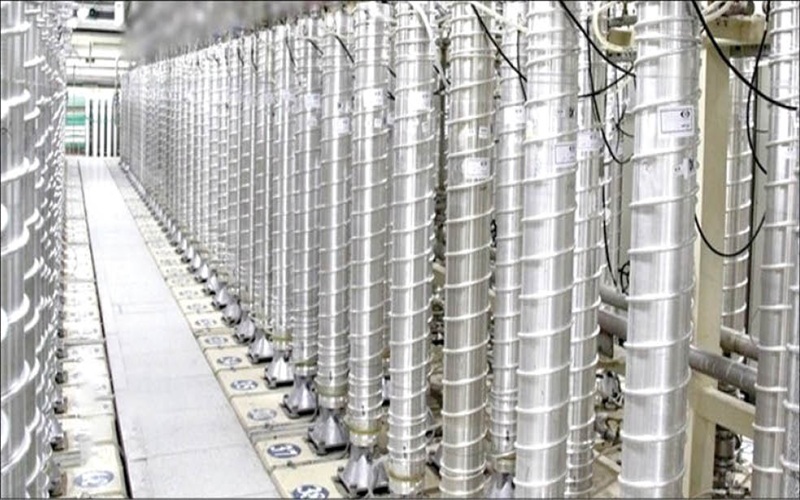

A state-linked media outlet openly advocates nuclear weapons as strategic policy, reinforcing concerns that Tehran’s leadership views nuclear capability as a tool for preserving its rule rather than ensuring regional stability.
A commentary published by Fars News Agency, a media outlet affiliated with Iran’s Islamic Revolutionary Guard Corps (IRGC), has reignited concerns about Tehran’s long-term nuclear ambitions by arguing that the regime has “no choice” but to build a nuclear weapon.
Although the agency later attempted to distance itself from the article by describing it as an opinion piece published in its interactive section, the publication reflects an increasingly visible trend within Iran’s political establishment: the public normalization of arguments in favor of nuclear weapons as an instrument of state policy.
The article also highlights a broader reality. For years, senior officials and influential figures within the regime have increasingly suggested that acquiring nuclear weapons would provide the regime with strategic security and deter external pressure. Such rhetoric raises important questions about regional stability, international security, and the future direction of Iran’s nuclear program.
Nuclear Weapons Presented as a Strategic Necessity
Published under the headline “There Is No Alternative but Building the Bomb,” the commentary argues that the regime must acquire nuclear deterrence during what it describes as a transition toward a new global order.
According to the article, only a nuclear capability could remove military options from the table and create the conditions for negotiations from what it calls a “proper position.”
The commentary further claims that nuclear deterrence would establish a strategic balance with the United States and Israel. While acknowledging that such deterrence would not eliminate conflict entirely, it argues that it could keep future wars within “manageable” limits.
This reasoning closely mirrors traditional deterrence theory but applies it to a regime that has simultaneously expanded its ballistic missile capabilities, supported armed proxy groups across the Middle East, and repeatedly challenged international nuclear monitoring efforts.
A Growing Shift in Official Rhetoric
For years, Iranian regime authorities have insisted that the country’s nuclear program is exclusively peaceful and that a religious decree, or fatwa, issued by the then Supreme Leader Ali Khamenei prohibits the production of nuclear weapons.
Yet public statements from senior officials increasingly appear to contradict that narrative.
Over recent years, politicians, military advisers, parliamentary members, and figures close to the leadership have repeatedly discussed changing Iran’s nuclear doctrine or openly acknowledged the country’s technical ability to produce a nuclear weapon.
Among the most notable recent remarks:
- Hamzeh Safavi, the son of senior adviser Yahya Rahim Safavi, stated that the regime had pursued nuclear weapons ambitions for four decades and argued that International Atomic Energy Agency (IAEA) documents, the Turquzabad revelations, and the Amad Project demonstrated this trajectory.
- Foreign Minister Abbas Araghchi suggested earlier this year that the future of Khamenei’s nuclear fatwa would ultimately depend on the country’s new Supreme Leader.
- Former senior adviser Ali Shamkhani, before his death during the recent conflict, stated that if he again served as defense minister, he would seek the development of nuclear weapons as a means of deterrence.
- More than seventy members of parliament previously called for revising the Supreme Leader’s nuclear fatwa to permit the production and storage of nuclear weapons.
Collectively, these statements suggest that discussion of nuclear armament has become increasingly mainstream within influential circles of the Islamic Republic.
International Concerns Continue to Grow
These developments come as international inspectors continue seeking greater transparency regarding Iran’s nuclear activities.
Following the recent ceasefire agreement between the regime and the United States, International Atomic Energy Agency Director General Rafael Grossi emphasized that restoring inspections of Iran’s nuclear facilities remains an urgent priority. Particular attention has focused on determining the location and status of Iran’s highly enriched uranium stockpiles.
Earlier this month, the IAEA Board of Governors again called on Tehran to cooperate fully with inspectors, grant access to all nuclear sites, and account for its stockpile of more than 440 kilograms of uranium enriched to 60 percent purity.
Grossi had previously warned that Iran’s existing stockpile, if further enriched, could theoretically provide enough fissile material for multiple nuclear weapons.
While Tehran continues to deny seeking nuclear arms, the combination of expanding enrichment capabilities, reduced international oversight, and increasingly explicit domestic advocacy for nuclear weapons continues to deepen international concern.
Beyond War and Appeasement
The renewed calls for nuclear weapons underscore a broader challenge facing the international community.
Military confrontation may temporarily damage nuclear infrastructure, but it does not resolve the political dynamics that have repeatedly driven the regime to expand its strategic capabilities. Likewise, decades of diplomatic engagement and concessions have not fundamentally altered the regime’s regional behavior, missile development, domestic repression, or nuclear trajectory.
As a result, many observers argue that the debate should not be framed solely as a choice between war and continued appeasement.
A more durable path to regional stability lies in addressing the source of the crisis: the policies of a governing system that has consistently linked its own survival to military escalation, ideological confrontation, and strategic leverage.
Supporting the Iranian people’s aspirations for democracy, recognizing their right to seek political change free from repression, and increasing pressure on those responsible for human rights violations and regional destabilization represent an alternative approach that distinguishes between the Iranian nation and the ruling establishment.
Such a policy seeks neither military conflict nor accommodation with authoritarian rule. Instead, it recognizes that lasting peace and the elimination of the nuclear threat ultimately depend on the emergence of a government that derives its legitimacy from the consent of its citizens rather than from coercion, repression, or the pursuit of strategic deterrence through nuclear capability.