Diplomacy that ignores executions, political prisoners, and the demands of the Iranian people risks legitimizing repression instead of promoting stability.
As international attention once again turns toward negotiations with Tehran, a familiar argument has resurfaced: should nuclear diplomacy and regional security be treated separately from Iran’s human rights record?
Experience suggests they cannot.
Any agreement designed to produce lasting stability while overlooking the systematic repression taking place inside Iran is built on an unstable foundation. Diplomacy may address immediate security concerns, but it cannot produce durable results if it ignores the state’s continuing assault on its own citizens.
This has long been the central argument advanced by the Iranian democratic opposition, which has consistently called on democratic governments to condition relations with Tehran on measurable improvements in human rights, including an end to executions. Increasingly, however, this position is no longer confined to the opposition. International human rights organizations and United Nations experts are reaching similar conclusions.
The reason is straightforward.
Human rights abuses in Iran are not isolated violations that exist alongside government policy; they are integral to how the Mullahs’ regime governs. Executions, arbitrary arrests, torture, and political imprisonment are not exceptions to the system—they are among its principal instruments of control.
The scale of repression illustrates the problem.
In the past week alone, 48 prisoners were reportedly executed—an average of nearly seven executions every day. Among them were two women, while many of the others were young Iranians whose lives had already been shaped by economic hardship and social marginalization before entering the criminal justice system.
At the same time, new prison sentences have continued to target labor activists, lawyers, political prisoners, and members of religious minorities.
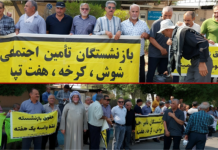
A labor activist received 42 months in prison for defending workers’ rights. Political prisoner Taqi Salimi reportedly died under suspicious circumstances in Amol Prison after being detained during the nationwide protests. Lawyer Javad Alikordi was sentenced to 18 years in prison after organizing a memorial for his brother, who had been killed. Elsewhere, security forces arrested dozens of Sunni citizens during overnight raids in Khuzestan Province.
These are not disconnected incidents.
Together they reflect a political system that continues to rely on fear, imprisonment, and capital punishment to suppress dissent while simultaneously seeking international legitimacy through diplomacy.
Against this backdrop, one of the most remarkable forms of resistance has emerged from inside the country’s prisons.
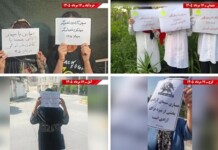
For more than two years, imprisoned activists participating in the “No to Execution Tuesdays” campaign have maintained weekly hunger strikes to protest the expanding use of the death penalty. The movement recently entered its 126th consecutive week, with prisoners in Kerman Prison joining the campaign.
Its endurance carries political significance beyond prison walls.
In a recent statement, participating prisoners declared that the human rights of the Iranian people are “not negotiable” and pledged to continue defending freedom, equality, and the abolition of the death penalty regardless of the personal cost.
That message deserves attention.
The campaign demonstrates that even those facing the regime’s harshest repression insist that human rights cannot become a bargaining chip in international negotiations. Their position raises an obvious question: if those risking their lives inside Iran refuse to separate diplomacy from human rights, why should foreign governments do so?
This question is increasingly being echoed by international institutions.
Amnesty International has warned that any agreement between Western governments and Tehran must not become a shield protecting those responsible for serious human rights violations from accountability. According to the organization, a sustainable agreement must place justice, accountability, reparations for victims, and the protection of fundamental rights at its core. Otherwise, negotiations risk reinforcing the culture of impunity that has characterized the Islamic Republic for decades.
The organization also reported that since the recent conflict began, Iranian authorities have intensified domestic repression, carrying out thousands of arbitrary arrests and dozens of executions while international attention remained focused on regional developments.
United Nations experts have expressed similar concerns.
UN Special Rapporteur Mai Sato, together with twelve independent UN experts, recently welcomed the cessation of hostilities while warning that the Iranian people themselves have largely been absent from discussions about the country’s future.
Their observation points to an important democratic deficit.
Over the past several years, millions of Iranians have participated in nationwide protests demanding fundamental political and legal change. Yet negotiations concerning Iran continue to focus primarily on governments, nuclear programs, and regional security, often without meaningful consideration of the aspirations repeatedly expressed by the Iranian population.
This expands the discussion beyond conventional human rights.
It becomes a question of political representation.
The right to life cannot be separated from the right to political participation. The right to freedom of expression cannot be separated from the right of citizens to shape the future of their own country. Any diplomatic framework that overlooks these principles addresses only part of the crisis.
The growing emphasis placed on human rights by international organizations reflects an important shift.
Increasingly, the debate is no longer limited to whether Tehran complies with its international obligations. It also concerns whether any agreement can be considered legitimate if it ignores the demands of the people most directly affected by its consequences.
That is a question democratic governments should not dismiss.
Diplomacy remains an essential instrument of international relations. But diplomacy that overlooks systematic repression does not resolve the underlying sources of instability. It merely postpones them.
A durable agreement with Iran requires more than nuclear commitments or regional understandings. It requires accountability for human rights abuses, protection of fundamental freedoms, and recognition that the voices of the Iranian people are indispensable to any discussion about the country’s future.
Without those elements, any agreement may achieve temporary political objectives. It is unlikely to achieve lasting peace or genuine stability.