
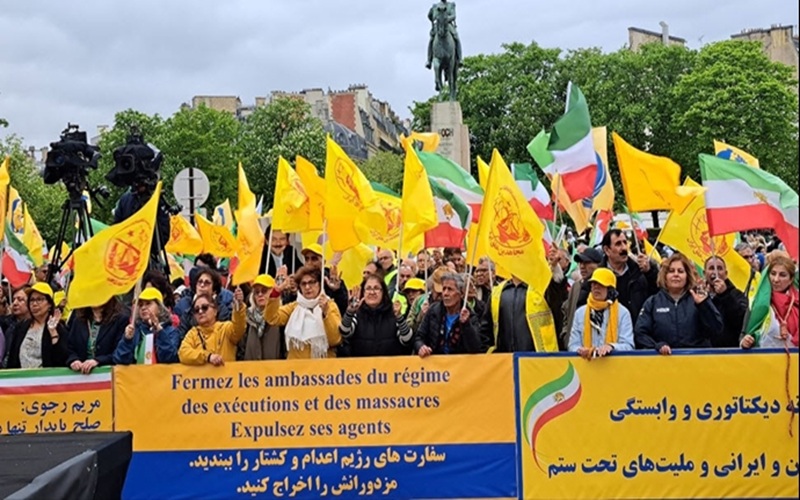

As the Iranian regime loses credibility at home and abroad, growing international support for the National Council of Resistance of Iran reflects a broader recognition that a democratic alternative must possess organization, legitimacy, and a viable vision for the future.
For decades, debates about Iran’s future have revolved around a single question: what makes a political alternative truly credible? Removing a dictatorship is only the beginning of political transformation. The far more difficult challenge is presenting a movement capable of replacing authoritarian rule with a democratic system that enjoys both domestic legitimacy and international confidence.
History demonstrates that successful democratic transitions do not emerge from slogans or spontaneous protests alone. They require organized leadership, a coherent political strategy, a practical roadmap for governing after dictatorship, and recognition from the international community that such an alternative is capable of delivering stability, democracy, and respect for human rights.
These are the standards by which any opposition movement must ultimately be judged.
Three elements have consistently defined every successful political alternative. First is a disciplined and organized movement capable of sustaining resistance under prolonged repression. Second is the existence of both objective and subjective conditions within society that make political change possible. Third is international legitimacy—an increasingly indispensable factor in an interconnected world where political transitions are influenced not only by domestic dynamics but also by global diplomacy and public opinion.
For the Iranian Resistance, represented by the National Council of Resistance of Iran (NCRI) and the People’s Mojahedin Organization of Iran (MEK), international legitimacy has never been viewed as a substitute for domestic support. Rather, it has been regarded as the natural outcome of decades of political sacrifice, organizational resilience, and a consistent commitment to democratic principles. Recognition abroad cannot simply be declared; it must be earned through perseverance, credibility, and the ability to withstand sustained political and military pressure.
The annual Free Iran conference held in Paris once again illustrated how this process continues to evolve. Beyond being a gathering of supporters, the event highlighted a growing international consensus among lawmakers, former government officials, and political leaders that Iran’s organized democratic opposition represents a serious political actor with a defined vision for the country’s future.
One recurring theme throughout the conference was that the NCRI’s democratic platform distinguishes it from both the ruling theocracy and proposals that seek merely to replace one form of authoritarianism with another. Several European parliamentarians argued that a credible alternative must guarantee equal rights for all citizens regardless of gender, ethnicity, religion, or political belief, describing the NCRI’s platform as one that meets those democratic standards.
American lawmakers likewise emphasized that international support ultimately belongs not to organizations alone but to the Iranian people who continue to challenge repression inside the country. Speakers praised the courage of Iranian women and men who risk imprisonment, torture, and execution while demanding fundamental freedoms, stressing that their struggle for dignity and liberty deserves sustained international solidarity.
Other participants pointed to the movement’s long record of resistance despite decades of repression. They argued that the regime’s persistent efforts to eliminate organized opposition demonstrate precisely why it continues to regard such movements as its principal political threat. Rather than weakening the Resistance, years of persecution have reinforced its political legitimacy in the eyes of many international observers.
Several speakers also highlighted the importance of presenting a concrete democratic roadmap rather than simply opposing the current regime. They expressed confidence that a clearly articulated political program—including commitments to free elections, separation of religion and state, gender equality, judicial independence, and respect for human rights—offers a realistic framework for Iran’s democratic future.
Attention was also drawn to the role played by Resistance Units inside Iran and members of Ashraf 3, who were described as the organizational backbone of the broader movement for democratic change. International supporters argued that sustained internal organization remains essential if political transformation is to move beyond protest and evolve into genuine democratic transition.
Perhaps the strongest message emerging from the conference was the growing willingness among international political figures to openly engage with the organized Iranian Resistance. Rather than treating it merely as an opposition voice, participants increasingly portrayed the movement as a legitimate interlocutor in discussions about Iran’s future. Support for the NCRI’s democratic platform and calls for broader international dialogue reflected a belief that any sustainable solution to Iran’s crisis must include those who have consistently advocated democratic governance.
This growing recognition carries significance beyond symbolism. International legitimacy cannot create democratic change by itself, nor can foreign governments determine Iran’s political future. That responsibility belongs exclusively to the Iranian people. However, international recognition can help ensure that democratic aspirations are no longer marginalized by policies of appeasement or by narratives suggesting that no viable alternative exists.
The experience of democratic transitions elsewhere shows that organized resistance, public legitimacy, and international credibility are not competing sources of strength—they reinforce one another. As Iran’s political crisis deepens, the central question facing the international community is no longer whether change will eventually come, but whether democratic forces prepared for that moment will receive the political recognition they have spent decades earning.
For many participants in the Paris conference, the answer has become increasingly clear: a democratic future for Iran requires more than opposition to dictatorship. It requires a credible alternative that has demonstrated organization, endurance, and a commitment to democratic values. In their view, those qualities are precisely what have enabled Iran’s organized Resistance to gain steadily expanding international recognition.