
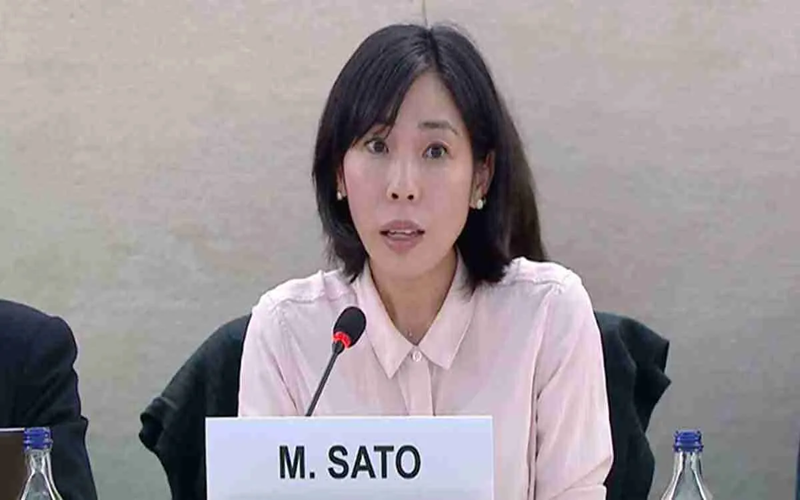

UN Special Rapporteur Mai Sato warns that the US-Iran memorandum prioritizes geopolitical objectives while overlooking the rights and suffering of millions of Iranians, raising fears that any future agreement could entrench repression rather than promote accountability.
Based on an exclusive interview published by Geneva Solutions on July 1, 2026.
As Washington and Tehran move toward broader negotiations following their preliminary ceasefire agreement, the United Nations’ top independent expert on Iran has issued a stark warning: any diplomatic breakthrough that ignores the human rights crisis inside Iran risks reinforcing the very conditions that have fueled years of repression.
In an interview published by Geneva Solutions, Mai Sato said the recently signed memorandum of understanding (MoU) between the United States and the Iranian regime places strategic and security concerns above the rights and welfare of the Iranian people.
“The Iranian people are barely visible in the framework,” Sato said. “It serves geopolitical interests while leaving the Iranian people behind.”
Human Rights Missing From the Agreement
The preliminary agreement, designed to reduce military tensions and establish a framework for future negotiations, focuses primarily on military disengagement, reopening maritime trade routes, and nuclear-related commitments.
According to Sato, however, it fails to address the country’s worsening human rights situation.
Earlier this month, Sato led a joint statement signed by thirteen additional UN human rights experts welcoming diplomatic efforts to end hostilities while criticizing the agreement as “incomplete” because it omitted meaningful human rights protections.
She warned that any final agreement that ignores these issues could simply restore the conditions that existed before the conflict—or even embolden further repression through continued impunity.
“The human rights situation was already critical before the war,” Sato said. “An agreement that doesn’t address it risks enabling further repression through a continued lack of accountability.”
Repression Continues Despite the Ceasefire
While international attention has focused largely on military developments, Sato stressed that Iran’s internal crackdown has continued throughout the conflict.
According to the UN expert, thousands of people have reportedly been detained, tortured, or otherwise subjected to repression since the outbreak of hostilities. She also noted that at least 156 executions have taken place since the war began.
Beyond political repression, Sato described worsening humanitarian conditions across the country, citing soaring food prices, delayed wage payments, growing unemployment, and widespread displacement following attacks on civilian infrastructure.
“The damage spans civil, political, social, economic and cultural rights alike,” she said.
Human Rights Must Become Part of Diplomacy
Although she acknowledged that reports surrounding the negotiations suggested human rights were never a central topic, Sato said that should not diminish international concern.
She recalled that early statements from U.S. President Donald Trump briefly referenced the plight of the Iranian people before the issue disappeared from subsequent negotiations.
“I’m not surprised,” she said. “But that doesn’t mean I’m not concerned.”
Sato expressed hope that future negotiations would include specific human rights commitments rather than limiting discussions to security and nuclear issues.
Concrete Measures the UN Wants to See
Looking ahead, the Special Rapporteur outlined several immediate steps she believes should be incorporated into any lasting agreement.
These include:
- A moratorium on executions.
- The release of arbitrarily detained prisoners.
- Protection of civic space.
- Guaranteed open access to the internet.
- Greater accountability for human rights violations.
She emphasized that the nationwide protests that erupted across Iran at the end of 2025 should not be forgotten during diplomatic negotiations.
“The Iranian people spoke up and asked for fundamental change,” she said.
Reconstruction Alone Is Not Enough
The memorandum does include provisions for establishing a reconstruction fund, but Sato questioned whether economic assistance alone can address the country’s broader human rights crisis.
She noted that although the agreement avoids terms such as “reparations” or “restitution,” such a fund could still help victims and rebuild civilian infrastructure destroyed during the conflict.
At the same time, she cautioned that Iran’s economic hardship cannot be attributed solely to war or sanctions.
“Domestic policy decisions have also played a part,” she said.
International Scrutiny Continues
Sato confirmed that she has maintained communication with representatives of the Iranian regime throughout her mandate as UN Special Rapporteur. She also said she has contacted U.S. authorities regarding alleged violations committed during the conflict but has not received a response.
Later this year, Sato is expected to present a comprehensive report to the UN General Assembly, documenting alleged human rights violations committed during and after the conflict.
Her central message remains clear: diplomacy that focuses exclusively on geopolitical calculations while overlooking the rights of ordinary Iranians risks producing an agreement that ends armed conflict without addressing the deeper crisis inside the country.
As international negotiations continue, Sato argues that lasting stability will depend not only on military de-escalation but also on ensuring that the voices and rights of the Iranian people are no longer excluded from the negotiating table.