


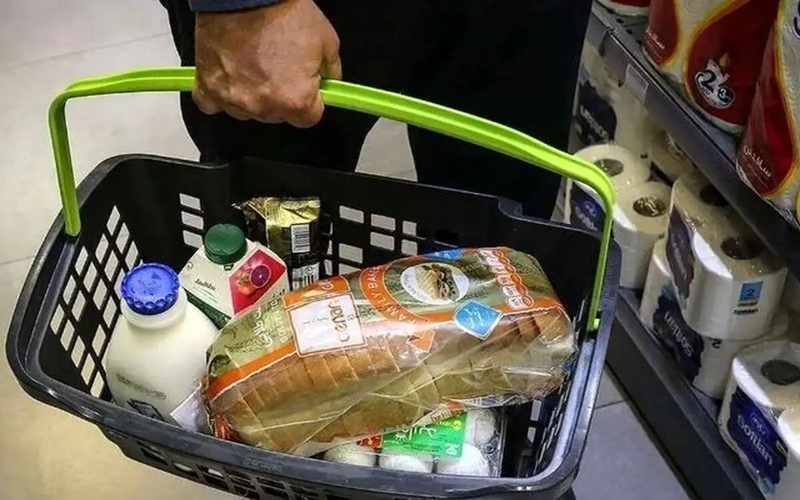

Soaring food prices, a failing subsidy system, and shrinking purchasing power are forcing millions of Iranians to cut essential expenses, exposing an economic crisis the regime can no longer disguise.
For years, inflation and economic hardship have steadily eroded living standards in Iran. Today, however, the crisis has reached a point where even many middle-class families struggle to afford the most basic necessities. Bread, dairy products, rice, meat, eggs, and cooking oil—once considered essential items that every household could reasonably purchase—have become increasingly out of reach for millions of people.
Reports from across the country paint a picture of a society under mounting economic pressure, where survival has replaced stability and where ordinary families are making painful choices between food, medicine, and housing. Despite repeated government promises of relief, the daily reality suggests that the regime has failed to contain a crisis that continues to deepen.
Basic Food Is Becoming a Luxury
The rising cost of food remains one of the clearest indicators of Iran’s worsening economic conditions.
Even bread, traditionally the most affordable staple of the Iranian diet, is becoming more expensive. Many bakeries that previously sold subsidized bread have reportedly abandoned the government subsidy program because of disruptions in flour allocations, rigid price controls, and insufficient financial support. As more bakeries move to market pricing, consumers are paying increasingly higher prices for one of their most essential foods.
The dairy market illustrates another growing problem. Consumers increasingly face both higher prices and smaller package sizes—a phenomenon often described as “shrinkflation.”
For example, a 400-gram package of cheese that sold for around 1.5 million rials only a week earlier now reportedly costs approximately 1.8 million rials, despite containing significantly less usable product.
Other staple foods have experienced similarly dramatic increases.
According to market reports, prices have reached approximately:
- Rice: 5.1 million rials per kilogram
- Chicken: 3.5 million rials per kilogram
- Eggs: 3.65 million rials per tray
- Five-kilogram cooking oil: 22 million rials
- Lamb: 18 million rials per kilogram
Even foods once regarded as inexpensive sources of protein—including beans, split peas, and tomato paste—have become prohibitively expensive for many households.
The result is that preparing even a few simple meals now requires expenditures that many families cannot afford.
The Middle Class Is Losing Ground
The economic downturn is no longer confined to Iran’s poorest citizens.
Many families that once considered themselves financially secure now find their incomes insufficient to cover even basic living expenses.
The three greatest concerns for ordinary Iranians today are food, rent, and medicine.
People say that their friends, relatives, and neighbors gradually eliminate nearly every non-essential expense from their lives. Clothing purchases have been postponed, travel abandoned, entertainment eliminated, and educational spending reduced. Yet even after these sacrifices, many households still cannot meet the costs of their most basic needs.
Wages are effectively paid in a currency that continues to lose value, while the prices of many essential goods increasingly reflect international market conditions.
The economic pressure has broken people. Young people have become increasingly frustrated, hope is disappearing, and society is approaching a breaking point.
A Subsidy Program That Is Failing Those It Was Meant to Help
The regime continues to present its electronic food voucher program as evidence that it is protecting vulnerable families.
On July 6, during the funeral ceremonies for former Supreme Leader Ali Khamenei, the Ministry of Cooperatives, Labour and Social Welfare announced that additional electronic food voucher payments had been deposited into eligible household accounts, with further distributions scheduled later in the month.
Yet the experiences of many recipients tell a different story.
The value of the subsidy has failed to keep pace with rapidly rising food prices. At the same time, delays in government reimbursements have reportedly caused many participating stores to stop accepting the vouchers altogether.
Until recently several stores accepted the electronic vouchers. But recently multiple retailers refused. They told the government still hadn’t paid previous reimbursements, so they no longer accept the vouchers.
Now it has become increasingly common to see people selling their food vouchers below face value simply to obtain cash for urgently needed medications.
The contrast between costly state ceremonies and the inability of many citizens to purchase basic food has become, for some Iranians, a powerful symbol of the regime’s misplaced priorities.
Inflation Continues to Accelerate
Official economic data underscores the severity of the crisis.
According to Iran’s Statistical Center, annual food inflation reached 134 percent in June 2026, marking the fifth consecutive month in which food inflation remained above 100 percent—the highest level recorded since the publication of Iran’s modern inflation statistics.
Among the categories experiencing the largest increases were:
- Oils and fats: 278 percent
- Meat: 172 percent
- Bread and grains: 139 percent
Under the government’s own classification system, any food item whose price more than doubles within a year enters what officials define as a “crisis threshold.”
Reports indicate that more than 80 percent of food products have now crossed that benchmark.
Even lawmakers within the regime have acknowledged the inadequacy of existing support measures. A deputy chairman of Parliament’s Social Commission recently argued that electronic food voucher payments should increase by at least 600,000 tomans in order to preserve minimum food security.
For many families, however, even that increase would offer only temporary relief. But people dismissed the proposal as detached from reality. Even if they tripled the vouchers, they would only cover the cost of three or four simple meals.
Beyond Hunger
The economic crisis extends far beyond the dinner table.
As food consumes an ever-larger share of household income, healthcare has become increasingly unaffordable.
Many medicines are no longer effectively covered by insurance because of unpaid government debts to insurers, leaving elderly patients unable to continue treatment. People have simply stopped taking their medications because they can’t afford them.
The question is, if the middle class has reached this point, what has happened to those who were already poor?
This question reflects a broader fear increasingly expressed inside Iran—that poverty itself is becoming normalized.
Reports of shrinking family meals, worsening malnutrition, rising evictions, abandoned medical treatments, and growing numbers of households falling below the poverty line have become routine. Yet despite mounting evidence of social distress, the regime has shown little indication that it is prepared to address the structural causes of the crisis.
As millions of Iranians struggle simply to afford food, medicine, and shelter, the country’s economic emergency is no longer measured only by inflation statistics. It is increasingly reflected in the everyday decisions families are forced to make merely to survive.