


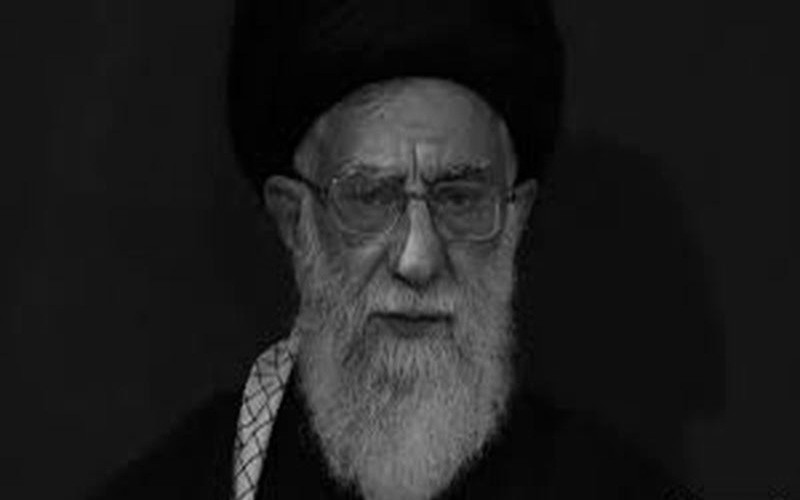

From the Mashhad uprising in 1992 to the nationwide protests of 2025, decades of demonstrations have repeatedly been answered with lethal force, mass arrests, and systematic repression, according to human rights reports and historical records.
More than three decades of Ali Khamenei’s leadership have been marked not only by recurring waves of public unrest but also by an increasingly severe pattern of state repression. Since assuming the position of Supreme Leader in 1989, successive protest movements—sparked by economic hardship, political grievances, environmental crises, and demands for fundamental freedoms—have frequently been met with armed crackdowns, mass arrests, internet shutdowns, and allegations of serious human rights violations.
The following overview traces the evolution of Iran’s major protest movements between 1992 and 2026, highlighting how localized demonstrations gradually transformed into nationwide challenges to the regime.
The First Major Uprising: Mashhad, 1992
The first significant social uprising of Khamenei’s leadership occurred in Mashhad in May 1992.
Initially triggered by forced home demolitions in the Kouye Tolab neighborhood and worsening economic conditions, protests rapidly escalated into confrontations with government institutions. Demonstrators reportedly seized control of parts of the city for several hours before security forces—including the Islamic Revolutionary Guard Corps (IRGC), Basij militia, and police—intervened with live ammunition.
Iranian authorities never released official casualty figures. Independent estimates have ranged from several dozen to more than one hundred fatalities, while numerous participants were reportedly executed in the aftermath.
Qazvin, 1994: Regional Protest Turns Political
In August 1994, demonstrations erupted in Qazvin over administrative boundary changes. Although initially local in nature, the protests quickly evolved into broader anti-government demonstrations.
Clashes intensified as protesters attacked government buildings, banks, and police stations. According to various reports, security forces responded with gunfire. Independent sources estimated that at least 33 people were killed, with many more injured.
Eslamshahr, 1995: Economic Anger Explodes
Rapid inflation, rising transportation costs, water shortages, and deteriorating living standards fueled one of Iran’s largest urban protests of the 1990s.
Residents of Eslamshahr, south of Tehran, protested against soaring bus fares and broader economic hardship. Government forces reportedly deployed military helicopters during the four-day crackdown.
While no official death toll was published, independent estimates placed the number of fatalities between 50 and 70.
The 1999 Student Protests
The attack on Tehran University’s student dormitories in July 1999 became one of the defining moments of Iran’s post-revolutionary political history.
Sparked by the closure of the reformist newspaper Salam, demonstrations spread from university campuses to several Iranian cities.
The killing of student Ezzat Ebrahim-Nejad became the most widely recognized symbol of the crackdown, although student organizations reported additional deaths and thousands of arrests.
Ethnic Protests in Khuzestan and Azerbaijan
Between 2005 and 2006, separate waves of unrest emerged in Iran’s minority regions.
In Khuzestan, protests followed the publication of a controversial document allegedly proposing demographic changes in the province. Reports indicated that dozens of demonstrators were killed.
The following year, widespread demonstrations swept Tabriz, Urmia, and other Azerbaijani cities after a newspaper published a cartoon widely viewed as insulting Iran’s Azerbaijani population. Security forces reportedly killed several protesters and arrested hundreds.
The Protests of 2009
Following the disputed 2009 presidential election, Iran experienced its largest political protests since the 1979 revolution.
Millions of Iranians questioned the announced election results, accusing authorities of electoral fraud. The movement evolved into a broad challenge to the political establishment.
Human rights organizations documented at least 72 deaths, while thousands were detained. The Kahrizak Detention Center, where detainees were subjected to torture and abuse, became an enduring symbol of state repression during this period.
December 2017: From Economic Protest to Political Revolt
What began as demonstrations over rising prices in Mashhad quickly spread to more than 140 cities.
Unlike previous protests, demonstrators openly challenged the Supreme Leader and the political system itself.
Human rights groups estimated that at least 45 people were killed and thousands arrested during the nationwide crackdown.
November 2019: The Deadliest Crackdown
The government’s sudden decision to sharply increase fuel prices triggered one of the bloodiest episodes in the history of the regime.
Within hours, protests spread to more than 200 cities.
Following public support by Ali Khamenei for restoring order, security forces reportedly used live ammunition against demonstrators.
Amnesty International documented at least 324 deaths, while Reuters, citing sources inside Iran, reported that approximately 1,500 people may have been killed. Reports from Mahshahr described mass shootings of protesters.
The events of November 2019 remain one of the darkest chapters in Iran’s modern history.
Environmental and Economic Protests Continue
Between 2021 and 2022, demonstrations increasingly reflected deepening economic and environmental crises.
In Khuzestan, severe water shortages sparked widespread protests that spread into neighboring provinces.
Farmers in Isfahan later demonstrated over chronic water mismanagement, with security forces reportedly using shotguns and pellet rounds to disperse crowds.
Rising food prices in 2022 also triggered demonstrations across dozens of cities after the government removed key subsidies.
The 2022 Nationwide Uprising
The death of Mahsa Amini while in the custody of Iran’s morality police ignited the largest nationwide protest movement in the history of the regime.
The protests rapidly spread throughout the country, drawing participation from students, workers, women, ethnic minorities, and young people across nearly every province.
According to numerous human rights organizations, more than 750 people were killed and over 30,000 arrested during the crackdown. Reports also documented widespread torture, expedited trials, and death sentences against several protesters.
Although security forces eventually suppressed the demonstrations, the movement fundamentally altered Iran’s political landscape and remains a defining moment in contemporary Iranian history.
The 2026 Nationwide Protests
Another major wave of nationwide unrest emerged in January 2026 amid soaring inflation, economic collapse, currency depreciation, and widespread public dissatisfaction.
According to the source material, demonstrations spread to approximately 195 cities across Iran. Authorities reportedly responded with mass deployments of security forces, extensive internet disruptions, and widespread arrests.
The text cites varying estimates regarding casualties, reflecting differing assessments among various sources. It alleges that the most severe violence occurred following speeches by Ali Khamenei in mid-January, when security forces allegedly intensified their response to protesters. Independent verification of the highest casualty estimates remains contested, illustrating the ongoing difficulty of documenting events amid government restrictions and limited transparency.
A Pattern Across Three Decades
Despite the diverse causes behind these protest movements—from economic hardship and regional grievances to demands for civil liberties—the state’s response has displayed remarkable consistency.
Human rights organizations have repeatedly documented allegations of excessive use of force, arbitrary detention, torture, and restrictions on freedom of expression during successive waves of unrest.
Because Iranian authorities have rarely published comprehensive casualty figures, the precise number of people killed during protests under Ali Khamenei remains disputed. Nevertheless, independent human rights groups broadly agree that the cumulative toll reaches into the thousands.
Viewed together, these episodes reveal an enduring pattern in which political, economic, and social crises have repeatedly been addressed through coercive security measures rather than structural reforms—leaving the underlying grievances unresolved while contributing to continued cycles of unrest.