Coordinated activities across Zahedan promoted the Iranian Resistance’s vision of a democratic republic while rejecting both monarchical and clerical dictatorship.
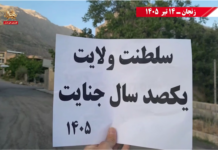
The Resistance Units continued their campaign of political activities in Zahedan on July 10, expanding their outreach across the city with slogans and messages advocating democratic change while rejecting both Iran’s current theocratic rule and a return to monarchical dictatorship.
The coordinated campaign coincided with the regime’s funeral ceremonies for Ali Khamenei, a period marked by heightened security across the country. Despite the intensified surveillance, Resistance Units displayed posters, banners, and messages reflecting the political platform of the Iranian Resistance and emphasizing the slogan “Neither Shah nor Mullahs” as the foundation for Iran’s future.
The activities underscored a central theme repeatedly advanced by the Resistance: that Iran’s future lies neither in the restoration of the former monarchy nor in the continuation of clerical rule, but in the establishment of a democratic republic based on the will of the people.
Promoting the Vision of a Democratic Republic
Throughout Zahedan, Resistance Units distributed and displayed messages from Resistance leaders emphasizing national sovereignty, freedom, and democratic governance.
Among the messages attributed to Massoud Rajavi were calls for ending more than a century of dictatorship in Iran and opening a new chapter founded on freedom and a democratic republic.
The campaign also highlighted the principle of “Neither Shah nor Mullahs,” presenting it as a rejection of every form of dictatorship and foreign dependence, while advocating an independent, democratic, and nationally sovereign Iran.
Other messages encouraged Iranians to continue organized resistance against authoritarian rule and stressed that freedom would ultimately be achieved through the determination of the Iranian people.
Maryam Rajavi’s Messages Highlight Democratic Change
The campaign also featured messages from Maryam Rajavi, President-elect of the National Council of Resistance of Iran (NCRI), emphasizing the role of the Iranian people in bringing about political change.
Her statements focused on three central themes:
- The rejection of religious dictatorship through the slogan “Neither Shah nor Mullahs.”
- The responsibility of the Iranian people and the organized Resistance to achieve the overthrow of the ruling regime.
- The establishment of a democratic republic as the foundation for Iran’s future peace, freedom, and stability.
By prominently displaying these messages, the Resistance Units sought to reinforce the political alternative advocated by the NCRI during a period of heightened national attention.
Rejecting Both Dictatorships
A defining feature of the campaign was its clear rejection of both clerical rule and any return to the former monarchy.
Among the slogans displayed throughout Zahedan were declarations that condemned dictatorship regardless of whether it appeared in religious or monarchical form. Other messages criticized what organizers described as attempts to use the funeral ceremonies for Ali Khamenei to legitimize the succession of Mojtaba Khamenei and reinforce hereditary rule within the system of Velayat-e Faqih.
According to the Resistance Units, the funeral ceremonies represented not only a state-organized security operation but also an effort to consolidate power around a new leadership while discouraging public dissent.
Continuing Resistance in a High-Security Environment
The Zahedan campaign forms part of the Resistance Units’ continuing nationwide activities, which combine symbolic public messaging with political outreach despite persistent security pressures.
Zahedan has remained one of the most politically active cities in Iran in recent years, witnessing repeated demonstrations and sustained public opposition despite extensive crackdowns by security forces.
The latest campaign illustrates how Resistance Units continue to use public spaces to challenge the regime’s official narrative while presenting what they describe as a democratic alternative centered on popular sovereignty, political pluralism, and the separation of religion from the state.
Coming only one day after widespread Resistance Unit operations carried out during Ali Khamenei’s funeral, the Zahedan activities reflected the continuity of the movement’s nationwide campaign.
Rather than allowing the regime’s carefully managed ceremonies to dominate the political landscape, Resistance activists sought to keep public attention focused on their longstanding message: the rejection of both clerical dictatorship and monarchical rule, and the aspiration for a free and democratic republic in Iran.