


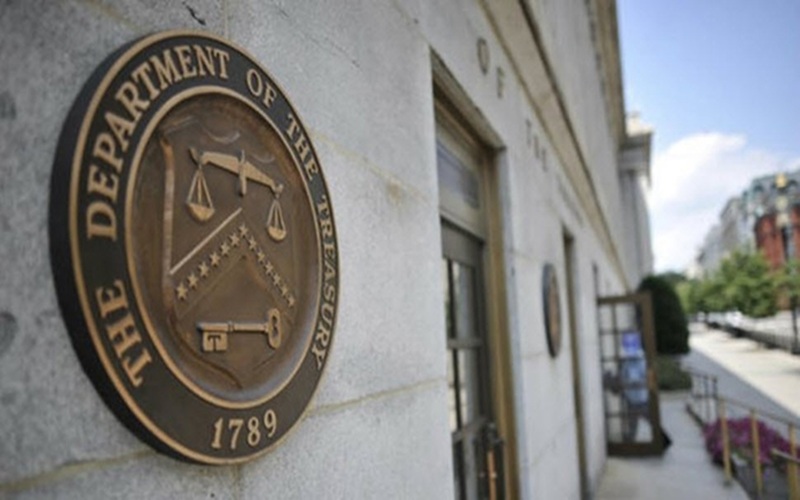

New Treasury measures target a global corruption network linked to Mojtaba Khamenei, shadow banking operations, and exchange houses accused of moving billions for sanctioned Iranian institutions.
The United States has unveiled one of its most significant sanctions packages this year against the Iranian regime’s financial infrastructure, targeting individuals and companies accused of facilitating corruption, sanctions evasion, and the enrichment of senior regime figures.
Announced on July 10 by the U.S. Department of the Treasury’s Office of Foreign Assets Control (OFAC), the measures focus on a vast financial network allegedly controlled by Iranian businessman Ali Ansari, along with several exchange houses and front companies accused of moving billions of dollars on behalf of sanctioned Iranian banks.
According to the Treasury Department, the sanctions aim to disrupt financial channels that have enabled regime elites—including Mojtaba Khamenei, the new Supreme Leader—to accumulate overseas wealth while ordinary Iranians continue to face economic hardship, soaring inflation, and declining living standards.
Treasury: Public Wealth Diverted to Regime Elites
In announcing the sanctions, U.S. Treasury Secretary Scott Bessent accused Iran’s leadership of enriching itself while the country’s political and economic crisis deepens.
“The so-called Supreme Leader is hiding in seclusion while his regime crumbles,” Bessent said. “Treasury will continue using every tool at its disposal to isolate him and other regime elites from the global financial system. We will preserve these assets for the Iranian people.”
The Treasury alleges that Ali Ansari institutionalized large-scale embezzlement inside the regime, using his close ties to powerful officials to divert public resources into an international investment empire benefiting both himself and influential figures within the ruling establishment.
A Global Investment Network
According to OFAC, Ansari built an extensive overseas portfolio through shell companies and complex financial structures spanning multiple jurisdictions.
Authorities allege that his holding company, Smart Global Limited, registered in Saint Kitts and Nevis, acquired real estate and commercial assets across Germany, Luxembourg, Spain, the United Kingdom, Cyprus, the United Arab Emirates, and other countries.
While many of these assets are formally held under Ansari’s control, U.S. officials contend that they ultimately benefit Mojtaba Khamenei, members of his family, senior officials connected to the Supreme Leader’s Office, and the Islamic Revolutionary Guard Corps (IRGC).
The Treasury further alleges that Ansari’s influence was built during his leadership of Ayandeh Bank, which was dissolved after accumulating massive debts resulting from loans issued to companies connected to Ansari himself. According to U.S. authorities, the bank’s collapse imposed significant costs on Iran’s already fragile economy while allowing politically connected insiders to accumulate enormous wealth abroad.
Shadow Banking and Exchange Houses
Beyond Ansari’s network, the sanctions also target three major Iranian exchange houses that U.S. officials say have become central components of Iran’s shadow financial system.
According to OFAC, these firms have processed hundreds of millions—and collectively billions—of dollars in foreign currency transactions on behalf of sanctioned Iranian banks.
The designated exchange houses include:
- Mohammad Darbani and Partners Exchange General Partnership Company
- Lavasani and Partners General Partnership Company
- Mohsen Khandan and Partners General Partnership Company
Treasury officials say these companies maintained substantial foreign currency reserves for sanctioned banks while employing extensive layers of shell companies to obscure the true beneficiaries of international financial transactions.
Several executives and controlling partners of these firms were also individually sanctioned.
Front Companies Used to Evade Sanctions
The sanctions package further targets companies allegedly used to disguise financial transactions connected to the regime.
Among them are Hong Kong-based CDM Trading Limited and UAE-based Naba Alzaki Raw Materials Trading LLC, which U.S. authorities say functioned as front companies facilitating financial operations for Iranian exchange houses.
According to Treasury officials, these entities formed part of an elaborate network designed to conceal the identities of sanctioned Iranian institutions participating in international transactions.
Corruption Amid Economic Crisis
The latest sanctions underscore a recurring criticism made by many Iranian activists and economists: while millions of citizens struggle with inflation, unemployment, currency depreciation, and declining purchasing power, politically connected elites continue to accumulate enormous fortunes.
The Treasury’s allegations describe a system in which public resources were redirected through state-controlled financial institutions into private international assets benefiting a narrow circle of regime insiders.
These accusations come as Iran continues to face severe economic pressures, including persistent inflation, banking instability, and growing public dissatisfaction fueled by years of corruption and economic mismanagement.
Expanding Financial Pressure
The sanctions were imposed under multiple executive authorities targeting Iran’s financial sector, the Supreme Leader’s network, and entities linked to terrorism financing.
Under the measures, all property and financial interests of the designated individuals and entities subject to U.S. jurisdiction are blocked. U.S. persons are prohibited from conducting transactions with them, while foreign financial institutions that facilitate significant transactions for sanctioned parties may themselves face secondary sanctions.
The Treasury indicated that these actions are part of a broader campaign to dismantle Iran’s shadow banking system and prevent regime officials from using complex international financial structures to evade sanctions.
For Tehran’s ruling establishment, the latest measures represent another attempt to restrict access to overseas assets and financial networks. For many Iranians, however, the allegations reinforce longstanding concerns that while the country faces profound economic hardship, those closest to the centers of power continue to profit through opaque financial systems operating far beyond the reach of public scrutiny.