


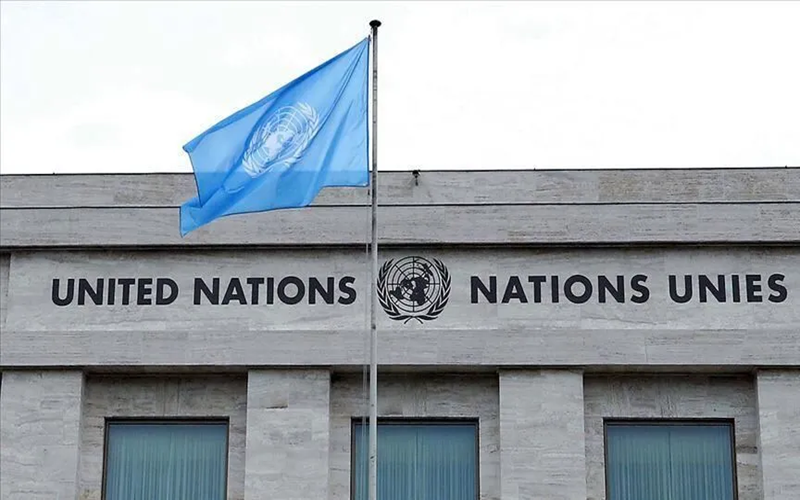

UN human rights experts condemn death sentences imposed on 12 young protesters, citing unfair trials, coerced confessions, and escalating repression following the January 2026 uprising.
GENEVA – United Nations human rights experts have called on the Iranian regime to immediately halt executions and overturn the death sentences imposed on 12 young protesters arrested during the January 2026 nationwide uprising. In a statement released on July 27, the experts condemned what they described as grave violations of international human rights standards, warning that the regime is using capital punishment as a tool to intimidate society and silence dissent.
The statement follows the execution of two protesters on July 19 and growing fears that the remaining defendants could face imminent execution after being sentenced in secret proceedings before the Revolutionary Court.
Secret Trial Raises Serious Human Rights Concerns
The UN experts criticized the sentencing of 12 defendants in a single closed hearing, arguing that the proceedings failed to meet even the most basic standards of a fair trial.
“Sentencing 12 people to death in one hearing, in a closed courtroom and without clarity as to each defendant’s individual responsibility violates established fair trial standards,” the experts said.
According to the statement, the young men—ranging from their late teens to early twenties—were arrested following protests on January 8, 2026, in Shahid Alikhani Square in Isfahan. Authorities accused them of involvement in the deaths of four security personnel, as well as arson and vandalism.
However, the UN noted that the exact charges remain unclear because Revolutionary Court hearings are conducted behind closed doors and verdicts are not made public.
Allegations of Enforced Disappearances and Coerced Confessions
The experts expressed alarm over reports that several of the defendants were arbitrarily detained, subjected to enforced disappearance, and ill-treated while in custody.
They also highlighted concerns over televised confessions allegedly extracted under coercion.
One of the defendants, Shervin Bagherian Jebeli, had only recently turned 18 when he was arrested. Within days of his detention—and before any trial—the regime’s state television broadcast footage showing him confessing to violence against security personnel during interrogation.
The UN experts questioned whether he had access to legal counsel of his choosing and noted that he appeared not to understand the meaning of the capital charge of moharebeh (“enmity against God”), raising further concerns about the fairness of the judicial process.
“Confessions obtained under coercion must never be admitted as evidence, and broadcasting them before trial violates the presumption of innocence,” the experts emphasized.
They warned that Jebeli’s case reflects a broader and deeply troubling pattern in which death sentences are imposed following proceedings that fall far short of international legal standards.
Executions Continue Despite International Condemnation
According to the UN experts, at least 24 individuals have already been executed in 2026 in connection with the January protests.
Many of those sentenced were young people who had exercised their fundamental rights to freedom of expression, peaceful assembly, and participation in public life, including demonstrators associated with the “Woman, Life, Freedom” movement.
The experts argued that the current legal framework effectively criminalizes peaceful dissent.
“As national laws currently stand, it is impossible to take part in any protest critical of the State without risking reprisals and persecution. This cycle will only be broken when civic space opens up and freedom of peaceful assembly and expression is guaranteed.”
“Repression Only Breeds Further Dissent”
The UN experts said the regime’s strategy appears aimed at instilling fear throughout society in an effort to discourage future protests.
“The rationale appears clear: instill fear across society, deter future demonstrations, and silence dissent. Yet repression only breeds further dissent.”
Despite the risks, they observed that Iranians continue to demand change through peaceful means.
The statement specifically referenced the ongoing “No to Executions Tuesdays” campaign, in which prisoners across dozens of prisons have staged weekly hunger strikes against the escalating use of the death penalty. It also highlighted the continuing sit-in strike by prisoners in Ghezel Hesar Prison, describing these actions as peaceful expressions of opposition to executions.
UN Calls for Immediate Moratorium on Executions
The experts urged the Iranian authorities to establish an immediate moratorium on executions as a first step toward abolishing the death penalty.
They stressed that such a moratorium should ensure full compliance with international human rights law, including fair trial guarantees and limiting capital punishment to only the most serious crimes under international standards.
“Executions only add to the violence and grief Iranians have endured,” the experts concluded.
The UN experts also confirmed that they remain in contact with the Iranian authorities regarding these human rights concerns, while urging the regime to end its reliance on executions as an instrument of repression and to uphold its international legal obligations.