


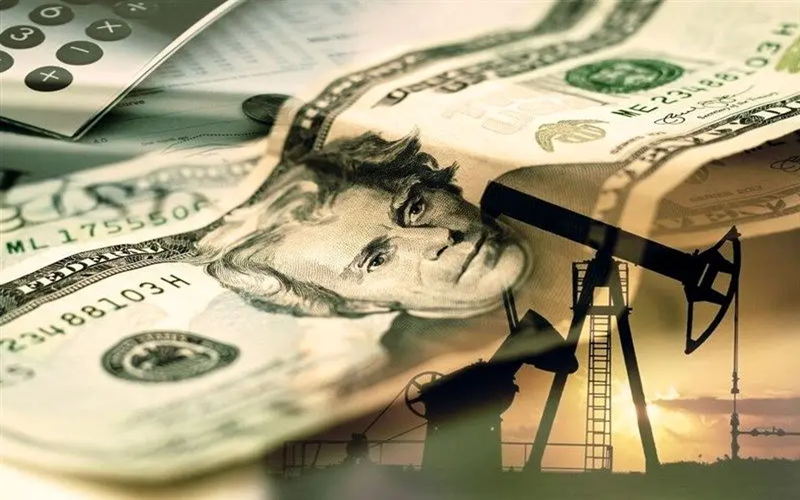

Iranian officials acknowledge that billions of dollars in oil revenue have disappeared through secret “trustee” networks, exposing the scale of corruption behind the regime’s sanctions-evasion system.
Officials Admit Billions of Dollars Have Disappeared
For years, senior Iranian regime officials dismissed international sanctions as ineffective while portraying them as an opportunity for economic resilience. At the same time, a privileged network of sanctions profiteers amassed enormous fortunes through opaque financial channels established to circumvent banking restrictions.
Now, even the regime’s own officials are acknowledging the staggering scale of corruption.
According to recent statements by Zabihollah Khodaeian, head of the State Inspectorate Organization, at least $11 billion belonging to Iran remains in the hands of so-called “trustees”—intermediaries entrusted with handling overseas financial transactions—and more than $1.6 billion of that amount has reportedly been misappropriated.
His remarks offer one of the clearest official admissions yet that billions of dollars in national wealth have disappeared through the very networks the regime created to bypass international sanctions.
The Hidden Business of Sanctions Evasion
As sanctions increasingly restricted the regime’s access to the international banking system, the regime relied on a network of individuals and shell companies known as “trustees” to conduct oil sales and move money outside formal financial channels.
Legally, a trustee is an individual or institution entrusted with managing assets on behalf of another party. In practice, however, these intermediaries became key actors in the regime’s sanctions-evasion apparatus.
Their role was to receive payments for oil exports and other international transactions before secretly transferring the proceeds back to Iran, allowing authorities to conceal the government’s involvement.
Because these operations functioned outside transparent banking systems and relied largely on personal relationships and political connections, they evolved into a vast network vulnerable to corruption, embezzlement, and abuse.
Officials Reveal Massive Financial Losses
Khodaeian disclosed that, in one case alone, a trustee received $200 million but never returned the money before leaving the country.
He further admitted that the regime had placed enormous trust in these intermediaries, only to discover that many had exploited the system for personal enrichment.
According to Majidreza Hariri, chairman of the Iran-China Chamber of Commerce, at least 15 trustees have fled Iran after taking billions of dollars in national assets.
Meanwhile, Ali Salehi, Tehran’s prosecutor, announced that authorities have opened 59 criminal cases involving managers of trustee companies. He said 22 suspects have been imprisoned, while international Interpol Red Notices have reportedly been requested for 15 individuals who have left the country.
A System Built on Secrecy
The regime’s own explanations highlight the contradiction at the heart of the scandal.
The trustee system was deliberately designed to avoid international scrutiny by moving money through unofficial channels beyond the reach of sanctions. Transactions frequently relied on informal agreements rather than conventional banking documentation.
This raises fundamental questions about how prosecutors intend to prove ownership of the missing funds or demonstrate criminal wrongdoing before international legal authorities.
Khodaeian himself acknowledged another practice known as “empty accounting,” in which officials report that money has been transferred to a trustee or intermediary, and the recipient confirms receipt, even though the funds never reach an account accessible to the Iranian economy.
If similar practices occurred in the cases involving the missing trustees, legal experts question whether authorities possess sufficient documentary evidence to establish how much money was transferred, who controlled it, or whether criminal misappropriation can be proven under international legal standards.
International Investigations Expose the Network
Independent investigations have long pointed to the existence of a sophisticated global network managing Iran’s sanctioned oil exports.
A report by The Economist described the regime’s clandestine oil trade as being controlled by a relatively small group of approximately 200 intermediaries, many of whom reportedly hold dual nationality or residency abroad.
According to the report, the network facilitates the movement of tens of billions of dollars annually through hidden bank accounts and complex financial arrangements around the world—describing the system as a vast “hidden treasure.”
The identities of several individuals and companies involved have also appeared in sanctions announcements issued by the United States and European governments.
Among those identified is Hossein Shamkhani, son of former senior regime official Ali Shamkhani, who has been linked to an international network of shipping and trading companies allegedly involved in facilitating Iranian oil exports.
Companies identified in sanctions documents include Admiral Shipping Group, Milavous Group, Ocean Leonid Investments, and the Petrochemical Commercial Company, all of which have allegedly played roles in the regime’s sanctions-evasion operations.
Corruption Embedded in the Sanctions Economy
The admissions by senior officials underscore what critics have long argued: the regime’s sanctions-evasion system has evolved into an entrenched economy of secrecy, patronage, and corruption.
Rather than protecting national resources, the opaque mechanisms established to circumvent sanctions have enabled politically connected intermediaries to operate with minimal oversight while billions of dollars in public wealth disappeared.
The latest disclosures suggest that the greatest beneficiaries of the sanctions economy have not been ordinary Iranians, who continue to face inflation, poverty, and economic hardship, but a small network of insiders who profited from the regime’s shadow financial system.