


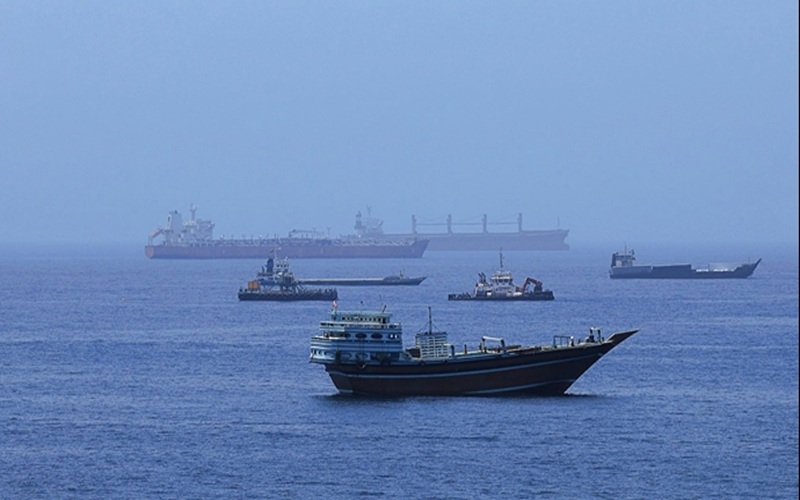

Washington warns that Iran may soon exhaust its remaining oil shipments to China, threatening a critical source of foreign currency and intensifying pressure on the regime’s already strained economy.
Iran’s regime is facing a growing squeeze on one of its most important sources of foreign currency, as new oil shipments are sharply restricted and previously loaded cargoes move toward their final deliveries in China.
U.S. Treasury Secretary Scott Bessent said Iran could deliver its last remaining oil shipments to China within the next two weeks, after which Tehran may have little left to trade. According to Bessent, approximately 15 million barrels of Iranian oil that had already been loaded remain in transit.
The development comes as broader Middle Eastern oil exports recover from wartime disruptions, highlighting the specific pressure facing Iran’s oil trade.
New Iranian Oil Shipments Have Slowed Sharply
Data from commodity and energy analytics firm Kpler showed that crude exports from major Middle Eastern producers reached approximately 12.8 million barrels per day in September, the highest level since the beginning of the war.
Exports through the Strait of Hormuz also recovered to around 7.4 million barrels per day, approaching more than 90 percent of their prewar level.
However, the recovery is largely being driven by other Gulf producers. Regional exports remain approximately six million barrels per day below their February level, before the war began.
For Iran, the distinction between oil already loaded and genuinely new exports is crucial. Iranian oil that left the country before restrictions intensified is gradually being unloaded at Chinese ports. Those cargoes had already been sold. Their delivery does not represent a new source of oil revenue for Tehran, even though payment may only be completed after delivery.
This means the regime could continue receiving money from earlier shipments for some time while simultaneously facing a dramatic contraction in new oil sales.
The Real Pressure Is Access to Foreign Currency
The economic significance of the crisis therefore extends beyond the number of Iranian tankers moving through regional waterways.
Even if Iranian oil exports do not fall completely to zero, a reduction from roughly two million barrels per day to only several hundred thousand barrels would represent a major loss of foreign-currency income.
The regime has previously used a range of methods to circumvent sanctions, including its so-called shadow fleet, intermediary companies, ship-to-ship transfers, and discounted oil sales. These mechanisms can prevent exports from reaching an absolute zero.
But circumventing sanctions becomes increasingly difficult when the volume of available oil sales and access to the resulting payments are both constrained.
The key question is consequently not simply whether Iran can physically sell some oil, but whether the regime can receive and freely access the foreign currency generated by those sales.
Oil Shock Could Spread Across the Economy
A prolonged decline in oil revenue would put pressure on the regime through several interconnected channels.
First, reduced access to foreign currency would increase pressure on the rial. A weaker rial raises the cost of imported consumer goods, raw materials, industrial components, and machinery.
Those higher import costs eventually feed into domestic prices.
Second, lower oil revenue would worsen pressure on the government budget. If the regime attempts to compensate for declining oil income through the banking system or expansion of the monetary base, additional inflationary pressure could follow.
The result is a potentially reinforcing cycle: weaker oil revenues reduce the supply of foreign currency, pressure on the rial increases, imports become more expensive, and inflation rises. Higher inflation, in turn, can increase demand for foreign currency and place further pressure on the national currency.
For Iranian households, the consequences would ultimately be measured not by the number of oil tankers crossing the Strait of Hormuz, but by the rising cost of food, housing, medicine, and basic services—and by how much purchasing power remains from monthly income.
A Crisis That Could Intensify Over Time
A sharp reduction in oil exports would not bring Iran’s entire economy to a standstill. Services, industry, agriculture, and non-oil exports would continue operating.
But oil remains a major source of government revenue and foreign currency. If restrictions on Iranian oil exports persist for months, the pressure would increasingly extend into imports, industrial production, public finances, and household consumption.
The regime may still be able to move some barrels through sanctions-evasion networks. The more immediate danger, however, is the exhaustion of previously sold cargoes and the shrinking pipeline of new sales.
In that scenario, the oil crisis becomes a broader financial crisis: less oil revenue means less foreign currency, greater pressure on the rial, higher inflation, and declining purchasing power.
For a regime already confronting severe economic pressures, the loss of reliable oil income could therefore become an increasingly important constraint on its ability to finance government operations and absorb the consequences of its broader policies.