


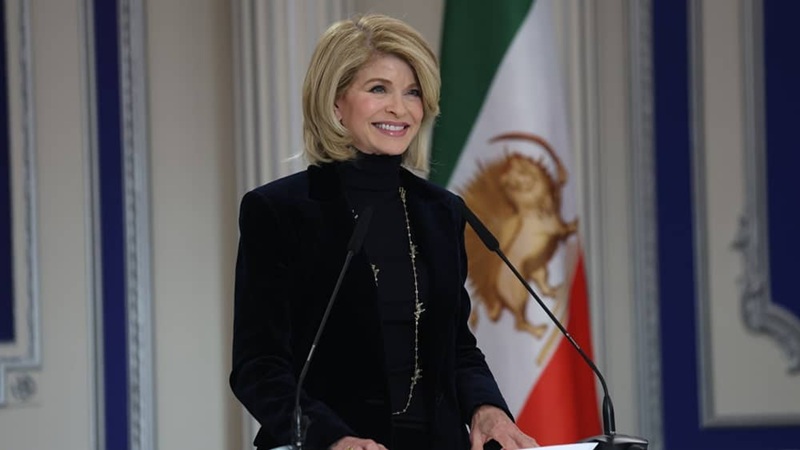

In a RedState guest editorial, former U.S. Ambassador to Denmark Carla Sands argues that sustained pressure on Tehran must be paired with support for Iran’s organized democratic opposition.
A new opinion piece published by RedState argues that Western governments have a historic opportunity to support democratic change in Iran by maintaining pressure on the ruling regime while recognizing the country’s organized opposition as the viable alternative.
In the guest editorial, Carla Sands, the former U.S. ambassador to Denmark (2017–2021), contends that recent developments have exposed the regime’s growing vulnerabilities and that international policy should shift away from appeasement toward stronger political backing for Iran’s democratic opposition.
“Support the Democratic Opposition”
Writing in RedState, Sands argues that sustained international pressure alone is insufficient unless it is accompanied by support for the Iranian people’s organized resistance.
“To keep pressure on the Iranian regime, support the democratic opposition.”
She describes the ruling establishment as increasingly fragile after nearly five decades in power, arguing that it has relied on systematic repression at home while destabilizing the wider Middle East through its regional policies.
According to Sands, recent events have demonstrated that attempts to reach lasting agreements with Tehran have repeatedly failed, making continued pressure essential.
Criticism of Restrictions on the Paris Rally
A central focus of Sands’ editorial is the decision by French authorities to halt a major rally organized by the National Council of Resistance of Iran (NCRI) in Paris shortly before tens of thousands of participants were expected to attend.
She argues that preventing the gathering undermined an important opportunity for the international community to demonstrate support for the Iranian people.
“Such actions threaten to undermine an historic opportunity for the international community to help the Iranian people and the organized, democratic opposition movement to break the regime’s hold on power once and for all.”
Sands also contends that Tehran’s opposition to such events reflects its concern over the growing influence of the organized resistance movement.
Escalating Repression Inside Iran
The former ambassador points to the regime’s continued use of executions and death sentences against political opponents as evidence of its fear of organized dissent.
She specifically highlights the execution campaign and the issuance of death sentences against members of the People’s Mojahedin Organization of Iran (PMOI/MEK), describing these measures as part of a broader effort to suppress opposition following nationwide protests.
“The regime’s cruel acts of repression are meant to silence dissent, but the people and especially the youth of Iran refuse to be intimidated.”
Sands argues that the government’s intensified crackdown demonstrates not strength but increasing insecurity in the face of persistent domestic resistance.
Rejecting Both Appeasement and Military Intervention
The editorial maintains that the fundamental struggle in Iran is between the ruling theocracy and a population seeking democratic change—not between foreign governments and Tehran.
According to Sands, this creates an alternative path that avoids both continued appeasement and direct foreign military intervention.
She argues that the NCRI’s political platform offers a roadmap for democratic transition without requiring outside military involvement or foreign-directed regime change.
Maryam Rajavi’s Ten-Point Plan
Sands devotes significant attention to Maryam Rajavi’s Ten-Point Plan, presenting it as a democratic framework for Iran’s future.
She writes that the proposal calls for:
- Free and fair elections.
- Freedom of religion, expression, assembly, and the press.
- Gender equality.
- Environmental protection.
- Peaceful international relations.
- The dismantling of Tehran’s nuclear weapons ambitions.
- A free-market economy aimed at addressing Iran’s deep economic crisis.
“Under Maryam Rajavi’s leadership, the NCRI offers a viable democratic alternative.”
Sands argues that these principles distinguish the opposition’s platform from both authoritarian rule and military solutions.
Warning Against Restoring Monarchy
The editorial also rejects proposals that present former Crown Prince Reza Pahlavi as Iran’s principal alternative.
Sands argues that such proposals overlook the democratic aspirations demonstrated during multiple nationwide uprisings and fail to reflect the demands expressed by many protesters inside Iran.
Instead, she contends that Western governments should recognize the organized democratic opposition already operating within the country.
A Call for a New Western Strategy
Concluding her article, Sands urges the United States and its allies to seize what she describes as a rare opportunity to support democratic change in Iran.
She argues that recent military and political developments have significantly weakened the ruling establishment and that Western governments should now align their policies with the aspirations of the Iranian people.
“The opportunity remains to open the door to peace, stability, and freedom.”
The opinion piece, “To Keep Pressure on the Iranian Regime, Support the Democratic Opposition,” was written by Carla Sands and published by RedState on July 29, 2026. It presents the case that sustained international pressure, coupled with political support for Iran’s democratic opposition, offers the most effective path toward a democratic future for the country.