


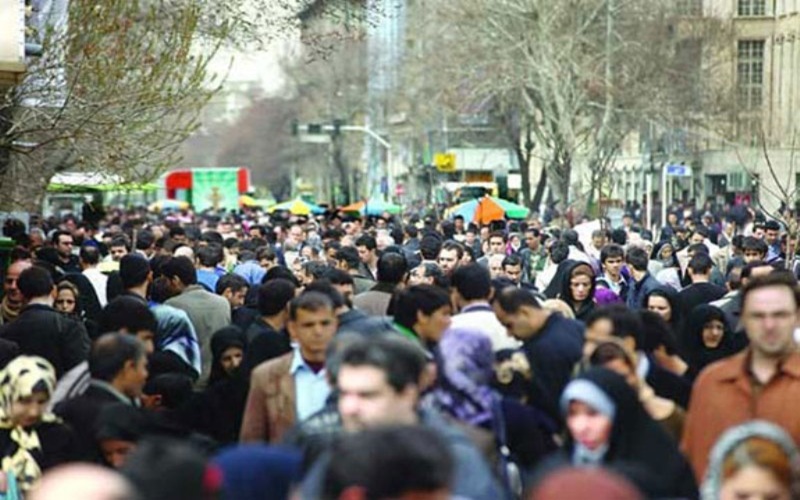

Skyrocketing inflation, shrinking purchasing power, and structural economic failures are pushing nearly half of Iran’s population toward poverty, with even full-time workers increasingly unable to make ends meet.
Poverty in Iran is no longer confined to the unemployed or marginalized. Increasingly, it has become the reality of millions of working families who find that even holding multiple jobs is not enough to cover basic living expenses. As inflation continues to erode purchasing power and the economy remains mired in structural crisis, a growing share of the population is being pushed below the poverty line.
From ride-hailing drivers working late into the night after their regular jobs to rural households struggling with drought and collapsing agricultural incomes, the country’s economic deterioration has become a nationwide crisis affecting both urban and rural communities.
Multiple Jobs No Longer Guarantee Financial Security
One of the clearest signs of Iran’s worsening economic conditions is the explosion of second and third jobs among employed workers.
According to official figures from Iran’s largest ride-hailing platforms, Snapp had more than 8.5 million registered drivers by early July 2026, while Tapsi reported around 1.4 million drivers. Combined, nearly 10 million people are registered on the two platforms.
More than 86 percent reportedly use ride-hailing as a second or even third source of income.
The trend reflects a painful reality: millions of Iranians with full-time employment are forced to work additional hours simply to compensate for the collapse in their purchasing power.
Inflation Continues to Devour Household Income
The country’s prolonged inflation crisis remains the principal driver of expanding poverty.
According to official data from Iran’s Central Bank, annual inflation reached 61.4 percent in July 2026, while year-on-year inflation climbed to nearly 84 percent.
Such sustained price increases have steadily eroded wages and savings, leaving households increasingly unable to afford basic necessities.
Food prices have risen particularly sharply, disproportionately affecting low-income families, whose budgets are largely devoted to essential goods.
Poverty Is Approaching Half the Population
Recent projections from the Iranian Parliament Research Center paint an increasingly alarming picture.
The center estimates that:
- Absolute poverty stood at approximately 15 percent in 2006.
- It rose to around 30 percent by 2021.
- It is projected to reach 41 percent in 2026.
- If current trends continue, 45.5 percent of Iran’s population could be living below the poverty line by 2028.
In practical terms, nearly one out of every two Iranians could soon be unable to meet minimum living expenses.
Income distribution data published by the Statistical Center of Iran further suggest that six of the country’s ten income deciles already live below the poverty line, while only the wealthiest two deciles remain clearly above it.
The burden is falling most heavily on lower-income households, which are experiencing higher inflation than wealthier groups because food accounts for a much larger share of their spending.
Rural Iran Faces an Even Deeper Crisis
While urban poverty continues to expand, conditions in rural areas have become even more severe.
The Parliament Research Center projects that more than half of Iran’s rural population could fall below the poverty line by 2028.
The World Bank has similarly estimated that roughly 52 percent of rural residents already live in absolute poverty, with environmental degradation and declining agricultural productivity accelerating the trend.
Years of drought, water shortages, land subsidence, and climate change have severely damaged agricultural production, leaving many farming communities unable to sustain their livelihoods.
At the same time, rural residents face significantly higher food inflation than urban households.
Official statistics indicate that point-to-point food inflation reached approximately 108 percent in rural areas, compared with around 85 to 90 percent in cities.
Essential Living Costs Continue to Rise
Food and housing have become the two largest financial burdens for Iranian households.
The share of household spending devoted to food has steadily increased over recent years as families devote a growing portion of their income simply to feeding themselves.
Meanwhile, nutritional standards have deteriorated.
Official statistics show that average daily calorie consumption declined from approximately 2,431 calories per person in 2017 to 2,182 calories by 2021, suggesting that many households are reducing food intake rather than absorbing ever-higher prices.
Housing costs have also surged.
The proportion of household expenditures allocated to housing has risen steadily, particularly in major cities where rents have increased dramatically. As more income is devoted to rent and food, spending on education, healthcare, and recreation has been forced to decline.
Economists warn that reduced investment in education risks creating a cycle of intergenerational poverty, limiting opportunities for children growing up in low-income families.
Millions Depend on Government Assistance
The expanding scale of poverty is also reflected in the growing number of people relying on government welfare programs.
Officials report that:
- Iran’s Welfare Organization provides assistance to approximately 8 million people, representing around 9 percent of the country’s population.
- The Imam Khomeini Relief Committee supports roughly 5.2 million individuals across more than 2.5 million households.
Despite steadily increasing welfare budgets, poverty has continued to worsen.
The government’s social support allocations have expanded significantly in recent years, yet inflation has consistently outpaced assistance programs, reducing their effectiveness.
The Growing Class of the “Working Poor”
Perhaps the most significant transformation in Iran’s social landscape is the emergence of a large class of “working poor.”
These are individuals who maintain full-time employment—often supplemented by additional jobs such as driving for ride-hailing platforms—yet remain unable to escape poverty.
The phenomenon illustrates that employment alone no longer guarantees economic security.
Instead, structural inflation, stagnant wages, and declining productivity have eroded the traditional relationship between work and financial stability.
Structural Problems Continue to Drive the Crisis
Economists attribute Iran’s worsening poverty to a combination of long-term structural weaknesses.
These include decades of chronic inflation, declining investment, international sanctions, weak economic management, and environmental crises affecting agriculture and water resources.
Recent military tensions have added further pressure by increasing economic uncertainty, discouraging investment, and placing additional strain on public finances and foreign currency reserves.
Although successive budgets have allocated enormous sums to social assistance, experts argue that these measures have failed to address the underlying causes of poverty.
A National Crisis Beyond Employment
Poverty in Iran has evolved into a comprehensive national crisis that no longer distinguishes between cities and villages, employed and unemployed, or skilled and unskilled workers.
Urban residents increasingly face unaffordable housing, soaring living costs, and declining purchasing power, while rural communities struggle with environmental collapse and shrinking agricultural incomes. Migration from villages to the outskirts of major cities has accelerated, transferring poverty rather than eliminating it.
The result is rising informal settlements, declining productivity, greater pressure on public services, and growing risks of social unrest.
As inflation continues to outpace wages and structural economic problems remain unresolved, analysts warn that poverty is likely to deepen further without fundamental reforms. For millions of Iranians, holding multiple jobs has become not a path to prosperity, but merely a struggle to survive.