


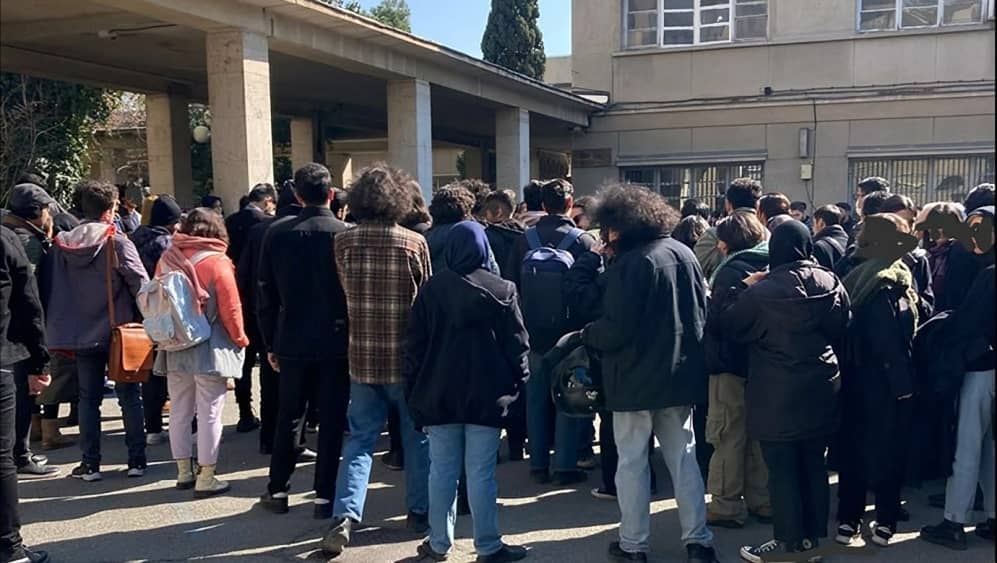

New details raise serious questions about the Amir Kabir Newsletter and the Network Behind the ‘Lion and Sun Associations’
An investigation spanning several months has found that the Amir Kabir Newsletter circulated a wide range of reports from universities across Iran while evidence reviewed in the investigation points to troubling contacts and channels of communication between individuals involved with the publication and people linked to Iran’s intelligence and security apparatus.
According to the information reviewed in this investigation, the newsletter’s portrayal of itself as an Iran-based source reporting from inside Iran’s student protest movement during the 2026 uprising was misleading. Significant parts of its operation were in fact based outside the country. Questions have also emerged around individuals involved in managing or promoting the publication, including allegations concerning possible contacts with people linked to Iranian security structures.
The review also reveals highly questionable conduct by a network calling itself the Lion and Sun Associations, which promoted Reza Pahlavi and monarchist politics.
The Amir Kabir Newsletter reported demonstrations, arrests and campus unrest with the immediacy of an outlet embedded inside Iran’s universities, giving readers the impression that its reporters and sources were operating from within the protest movement itself.
At the same time, the publication aggressively promoted a very different narrative about Iran’s campuses. It repeatedly amplified reports of monarchist activity and circulated claims of growing support for Reza Pahlavi. Taken together, its coverage created the impression that a major political transformation was under way inside Iranian universities: that large numbers of students had embraced monarchism and were calling for the restoration of the Pahlavi dynasty.
The significance of these findings goes beyond the newsletter’s political messaging. During the 2026 uprising, it presented itself as part of the student information ecosystem inside Iran — soliciting eyewitness reports, photographs and videos, publishing purportedly local information, and acting as a central amplifier for a rapidly expanding network of self-described monarchist groups calling themselves “Lion and Sun Associations,” which have been the subject of allegations and suspicions concerning links to Iranian security forces.
The network being reactivated
As Iranian universities reopen and signs of renewed student protest begin to emerge, the same network is becoming active again.
On 29 September 2026, the Amir Kabir Newsletter published a joint statement attributed to 26 Lion and Sun University associations. The groups openly expressed support for Reza Pahlavi and for the restoration of the monarchy.
تأکید «انجمنهای شیروخورشید دانشگاههای ایران» بر حمایت از شاهزاده رضا پهلوی و اصول چهارگانه او همزمان با شدت گرفتن اعتراضات دانشجویی؛ «۲۶ انجمن شیروخورشید دانشگاههای ایران» در بیانیهای مشترک امروز، سهشنبه ۷ مهر ۱۴۰۵، حمایت خود را از شاهزاده رضا پهلوی و اصول چهارگانه اعلامشده از سوی او تجدید کردند و خواستار همبستگی برای گذار از جمهوری اسلامی شدند. صادرکنندگان این بیانیه، «تمامیت ارضی، جدایی دین از حکومت، برابری شهروندان در پیشگاه قانون و حق مردم برای انتخاب نوع نظام سیاسی» را مبنای همراهی خود با رضا پهلوی عنوان کرده و بر پایبندی به این اصول تأکید کردهاند. این انجمنها در بیانیه خود، رهبری شاهزاده رضا پهلوی در دوران گذار از جمهوری اسلامی را «تنها راه برای تضمین سعادتمندی ایرانیان» توصیف کردهاند. آنان همچنین بر ضرورت همبستگی برای استقرار دولتی ملی و دستیابی به ایرانی آزاد، آباد و قانونمدار تأکید کردهاند. انجمنهای شیروخورشید دانشگاههای ایران ابتکار جمعی از دانشجویان ایراندوست است که با وجود کشتار گسترده ایرانیان در روزهای ۱۸ و ۱۹ دیماه، همزمان با چهلم جانباختگان اعلام موجودیت کردند. این انجمنها نقش بزرگی را در «حماسه اسفندماه ۱۴۰۴» در دانشگاهها ایفا کردند. متن کامل این بیانیه به شرح زیر است: به نام نامی جاویدنامان، آنان که سند آزادی ایران را با خون خود امضا کردند ما امروز بر قلهٔ روزهایی ایستادهایم که هر ثانیهاش با رنج، ایستادگی و فریاد آزادیخواهی و دادخواهی یک ملت برای ترسیم آیندهای متفاوت گره خورده است. آنچه بر ما و این سرزمین گذشت، نه غباری است که به باد فراموشی سپرده شود و نه دردی است که بتوان با سکوت و مصلحتاندیشی از کنار آن گذشت. در نیمقرن گذشته، حاکمیت فرقهای جمهوری اسلامی با چنگاندازی بر سرزمین ما و با تکیه بر ساختار تمامیتخواه و استبدادی خود، نه تنها ایران بلکه خاورمیانه و جهان را دچار ناپایداری و ناامنی کرده است. هرچند که دستگاه پروپاگاندای این رژیم، مذبوحانه تلاش میکند تا چهرهٔ زشت خود را بپوشاند، اما کارنامه جنایتهای این حکومت خونریز، از سرکوبهای وحشیانه و کشتار هولناک هزارانهزار شهروند بیدفاع تنها در چند روز، تا یورش به حریم دانشگاهها، بازداشت دانشجویان میهنپرست و اعدام صدها تن از هممیهنانمان، هرگز از حافظهٔ تاریخی ملت ایران پاک نخواهد شد. اکنون که با هلاکت ضحاک زمانه، سایهٔ شوم او از سر ایران کم شده، ما «انجمنهای شیروخورشید دانشگاههای ایران» به نمایندگی از وجدان بیدار جنبش دانشجویی کشور، پیمان ناگسستنی خود را با اصول چهارگانهٔ شاهزاده رضا پهلوی که شامل «تمامیت ارضی، جدایی دین از حکومت، برابری شهروندان در پیشگاه قانون و حق مردم برای انتخاب نوع نظام سیاسی» است، تجدید میکنند. ما، ضمن امیدواری به استفاده مسئولانه جامعهٔ جهانی از رویکردی مسئولانه و با تأکید بر اراده ملت ایران، رهبری شاهزاده رضا پهلوی برای دوران گذار از جمهوری اسلامی را تنها راه برای تضمین سعادتمندی ایرانیان میدانیم و بر ضرورت همبستگی، برای استقرار دولتی ملی و قرارگیری در مسیر ایرانی آزاد، آباد و قانونمدار پای میفشاریم. راه جاویدنامان ما و طنین پرشکوه شعارهایشان، مسیری است که تا روز آزادسازی ایران در آن میمانیم. در این مسیر پرمخاطره، باکی نیست اگر خودفروختگانی دونمایه و نادانانی که دوست و دشمن را تمیز نمیدهند، به آرمان جاویدنامان خیانت کنند و در پی انحراف از مسیر برآیند. هیچکس در هیچ جایگاه و مقامی، حق ندارد فراموش کند که مردم ایران در خیابانها چه فریاد زدند و برای کدام ایده یا شعار، سینههایشان را سپرِ گلوله کردند. ما با خون ریختهشدهٔ هممیهنانمان معامله نمیکنیم. ما مشعل این راه را روشن نگاه خواهیم داشت و تا تحقق کامل آزادی، نگهبان خون جاویدنامانی خواهیم بود که به دست مزدوران این رژیم جعلی، بر زمین ریخت. پاینده ایران جاوید شاه
— Amirkabir NewsLetter خبرنامهٔ امیرکبیر (@autnews_org) September 29, 2026
The evidence examined in this investigation shows a striking pattern. Within a very short period of time, organizations using almost identical names, symbols and pro-monarchy political language appeared across dozens of Iranian universities. Many of their declarations and statements were distributed not through established student organizations, but through newly created Telegram channels and were repeatedly amplified by the Amir Kabir Newsletter. Student activists began raising serious concerns about these groups almost immediately after they appeared, questioning their role inside the protests and, in some cases, alleging that their activities were interfering with student mobilization rather than supporting it.
The sudden emergence of the Lion and Sun Associations
The so-called Lion and Sun Associations appeared with remarkable speed across Iranian universities in February 2026. Within the space of only one or two days, a series of newly created Telegram channels began appearing one after another, each claiming to represent a “Lion and Sun Association” at a different university. These channels used nearly identical names, symbols and strongly pro-monarchy political language, creating the appearance of a rapidly expanding nationwide student network. The first such channel, claiming to represent the Lion and Sun Association of Amir Kabir University, announced its existence on 19 February 2026, as universities reopened, and was described in material published by the Amir Kabir Newsletter as the “first organized university organization in support of Iran’s National Lion and Sun Revolution.” Similar channels then appeared in quick succession for universities across the country. The speed, uniformity and near-simultaneous emergence of these channels quickly drew the attention of student activists and raised questions about whether they reflected genuine, independently formed student organizations or a centrally amplified online network.
Three days later, on 24 February 2026, during the fourth day of university protests, a group of student activists gathered in a Clubhouse room to discuss the demonstrations, their continuation and developments taking place inside the universities. The Lion and Sun Associations became one of the central subjects of that discussion.
One activist participating in the discussion said that just as the student movement was becoming increasingly active, Lion and Sun Associations suddenly appeared at some universities. The activist described their behavior as deeply suspicious, arguing that although they presented themselves as opposition groups, their actions were in practice obstructing student protests.
At Amir Kabir University, the activist said members of the association intervened in plans for a demonstration, which was largely reduced to a sit-in. At the University of Tehran, the protest reportedly stopped after around 1 p.m., while members of the Lion and Sun Association urged students to remain silent and refrain from chanting. Similar behavior, the activist said, had also been observed at Iran University of Science and Technology.
The concern was straightforward: if a group presents itself as opposed to the Islamic Republic but helps restrict or halt student protests, its role warrants closer examination. Students were therefore urged not to trust organizations that had appeared so suddenly without first investigating “what is happening behind the scenes.”
این بخش از صحبتهای دانشجویان را با دقت بشنوید: انجمنهای شیروخورشید که در دانشگاهها مشغول تشکیلاند، در حال سرکوب سایر دانشجویان دگراندیش هستند / خبرنامه امیرکبیر اکاذیبنامه است. ویدیوی کامل اتاق گفتوگوی دانشجویان پیشرو را در پست کوتشده پیدا کنید. https://t.co/j0QtvDQ09V
— Kambiz Ghafouri (@KambizGhafouri) February 24, 2026
Pro-Pahlavi Slogans, Student Pressure and the Lion and Sun Associations
The same discussion also focused on the sudden prominence of slogans supporting Reza Pahlavi and the restoration of the monarchy inside university protests.
This was notable because pro-monarchy slogans had not traditionally been a defining feature of university protests. One of the prominent slogans heard during the 2026 uprising and earlier nationwide protests was “Death to the oppressor, be it the Shah or the Supreme Leader,” explicitly rejecting both the former monarchy and the current clerical establishment.


A female student activist said she had spoken that day with students at the University of Tehran, Iran University of Science and Technology and Shahid Beheshti University. According to her account, republican students were being prevented from making themselves heard, while chants supporting Pahlavi and the restoration of the monarchy were being encouraged.
More seriously, she said members of the Lion and Sun Associations were collecting the names and details of politically active students and, at some universities, passing that information to university security authorities.
She also described a case at the University of Gilan, where a student agreed to participate in a nighttime demonstration but refused to chant slogans supporting Reza Pahlavi or the monarchy. According to the account presented in the Clubhouse discussion, the student was then threatened that his name and personal information would be published or reported if he did not cooperate.
The activist summarized the pressure in stark terms: support Pahlavi, or remain silent.
The Amir Kabir Newsletter itself was directly criticized during the same 24 February Clubhouse discussion.
One participant said: “The Amir Kabir Newsletter has published so much false news over the past month or two that I am exhausted by it. I don’t know how to explain to society that this is not a newsletter; it is a publication of falsehoods.”
The student specifically pointed to the outlet’s prominent coverage of slogans such as “Javid Shah” — “Long Live the Shah” — and “Pahlavi, return.”
From “Lion and Sun” Associations to Death Threats: Allegations of a Security-Run Network
The allegations surrounding the Lion and Sun Associations went far beyond political propaganda. Student activists participating in the 24 February discussion accused individuals operating under the name of these associations of actively interfering with university protests, suppressing alternative slogans and collecting the names and personal details of politically active students. According to their accounts, in some universities this information was then passed to university security authorities. Some activists went further, alleging that the associations themselves were being directed or manipulated by elements connected to Iran’s security apparatus.
Another development made those suspicions considerably more serious. Within days of the sudden appearance of Telegram channels claiming to represent Lion and Sun Associations at universities across Iran, the same online ecosystem began circulating declarations under the names “Immortal Guard” (Garde Javidan) and “SAVAK.” These names deliberately invoked institutions associated with Iran’s former monarchy. Almost immediately, accounts using these identities began issuing explicit threats against other students and political opponents. Two examples of these Telegram posts are reproduced below.
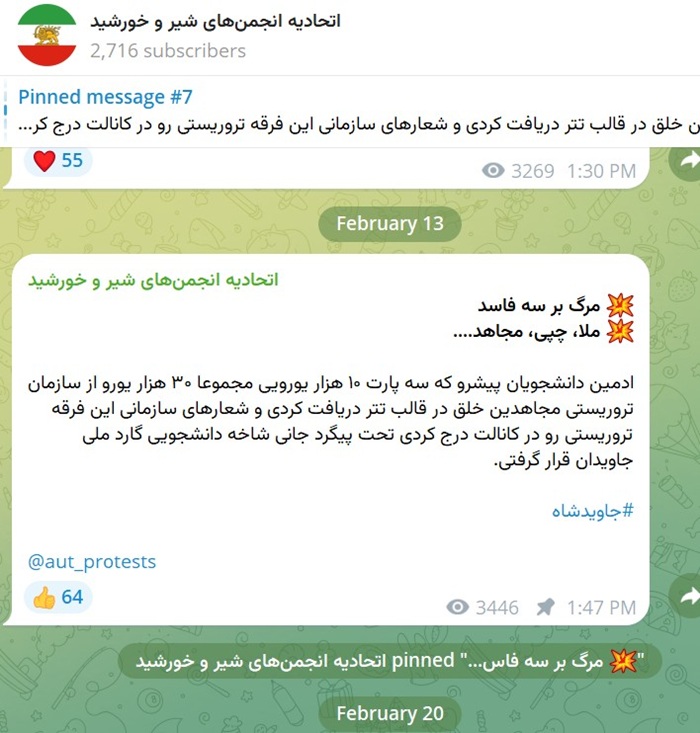
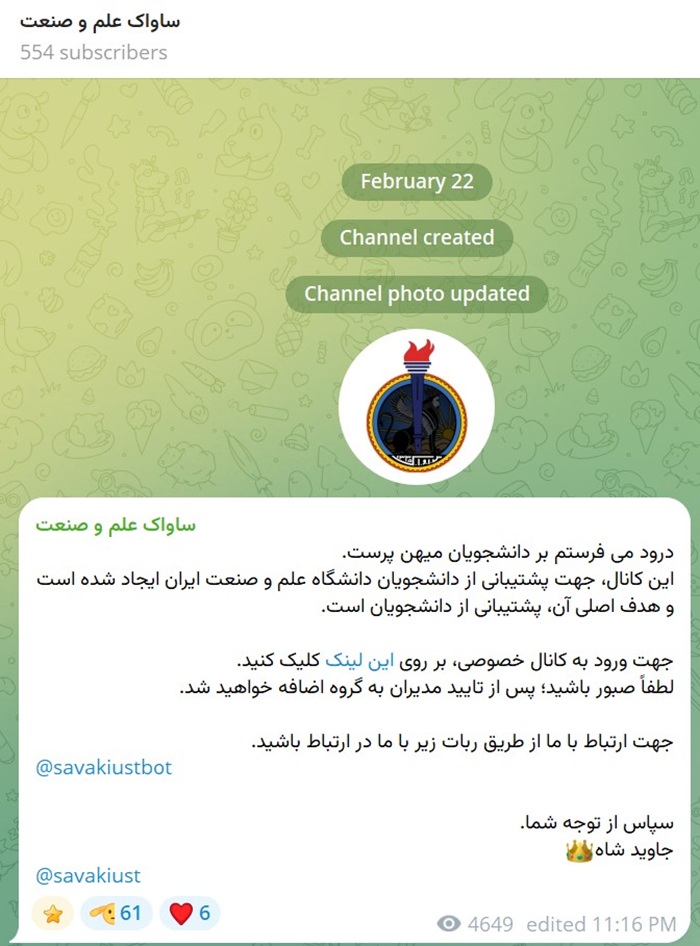
The significance of these threats was not simply their violent language. To activists who had already accused the Lion and Sun network of passing students’ identities to university security, the appearance of threatening “SAVAK” and “Immortal Guard” accounts reinforced suspicions that the network could be serving a dual purpose: intimidating politically active students while presenting that intimidation as an internal conflict between monarchist students and other sections of the student movement.
Under this interpretation, security-linked actors could suppress or frighten student activists while obscuring the role of the state itself. Violence, threats and efforts to silence dissent could instead be attributed to supposedly independent pro-monarchy students, creating the appearance of a confrontation between rival opposition factions rather than between students and the security apparatus.
This is the most serious allegation surrounding the network: that the sudden proliferation of Lion and Sun channels, followed by accounts invoking “SAVAK” and the “Immortal Guard,” was not simply an organic wave of monarchist student organizing but may have provided cover for intimidation and disruption of the broader student movement.
Controversies surrounding the publication and its management
The controversies surrounding the current Amir Kabir Newsletter go beyond its political coverage. One of the first concerns is the publication’s use of the historic Amir Kabir Newsletter name itself.
The original Amir Kabir Newsletter was a student publication associated with Amir Kabir University and became well known during Iran’s student movement in the late 1990s and the following decade. The publication currently operating under that name is not the original newsletter, but a later operation that adopted a name already carrying considerable recognition and credibility within Iran’s student movement.
This became particularly significant because the current newsletter also presented itself as a student publication linked to Amir Kabir University and as a source reporting from inside Iran. Together, the historic name and the way the outlet presented itself created the impression that its reporting and political messaging originated directly from within Iran’s university environment.
The evolution of its editorial line raised further questions. In its earlier years, the newsletter’s Telegram channel focused largely on conventional university and student-welfare issues, including education, accommodation, food, examinations and campus security. Following the 2022 protests, however, its coverage became increasingly political, with greater emphasis on student arrests, disciplinary committees, the Basij, suspensions and expulsions, compulsory hijab and protest activity.
A much more dramatic political shift became visible in late 2025 and especially during 2026. Monarchist terminology and messaging — including “Lion and Sun Revolution,” “Prince Reza Pahlavi,” “Javid Shah,” “Give the order, Prince,” “Aryamehr,” “National University” and “Payandeh Iran” — began appearing prominently in its content.
The controversy deepened further as questions were raised about the reliability and possible consequences of some of the newsletter’s reporting.
On 31 December 2025, the Amir Kabir Newsletter published a call for a protest attributed to students at the University of Kurdistan. Kurdish organizations subsequently challenged the authenticity of the call, describing it as fake and suspicious. According to those organizations, the announcement could have functioned as a dangerous security trap, potentially drawing students into an unauthorized gathering where they could be identified and arrested.
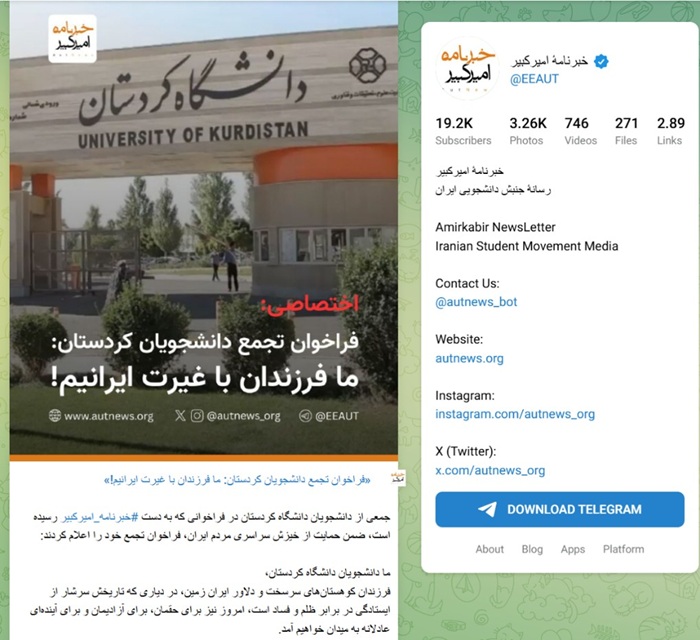
The incident added another layer to the concerns surrounding the newsletter: an outlet already facing questions over its identity, management and increasingly monarchist political line was now also being accused by Kurdish groups of circulating a purported student protest call that could have exposed students inside Iran to serious security risks.
خبرنامه امیرکبیر (ارتباطی به خبرنامه امیرکبیر سال ۸۸ ندارد) وسط اعتراضات اخیر در قالب FAKE NEWS یک دام امنیتی خطرناک هم برای دانشجویان کوردستان پهن کرد. اگر سرعت عمل نهادهای دمکراتیک کوردستان در راستیآزمایی و تکذیب بلافاصله نبود، چنین تلهای میتوانست جانهای زیادی را بگیرد. https://t.co/XFc6LGtJdH pic.twitter.com/bKxmuCfcI6
— Kaveh Ghoreishi (@KavehGhoreishi) January 27, 2026
At approximately the same time, numerous activists and social-media users began warning about the Amir Kabir Newsletter itself and raising suspicions about possible connections to security forces.
On 1 January 2026, Mahmood Amiry-Moghaddam, director of Iran Human Rights, published a detailed account concerning the Amir Kabir Newsletter.
He wrote that after public discussion had begun about the nature of the newsletter — and after some activists had described it as suspicious — he received a threatening message whose language resembled that used by the Islamic Republic’s security institutions.
The sender, he said, appeared particularly angry at suggestions that the Amir Kabir Newsletter might be connected to security bodies.
Amiry-Moghaddam, a physician and human-rights activist based in Norway, stressed that the Amir Kabir Newsletter under discussion had no connection to the Amir Kabir Newsletter active during the earlier period of Iran’s student movement, despite using the same name.
According to Amiry-Moghaddam, roughly two months after the peak of the Woman, Life, Freedom protests, someone connected to the newsletter contacted him and proposed cooperation with Iran Human Rights.
He did not respond to the request.
He said that an intermediary subsequently pressed him to nominate the Amir Kabir Newsletter for human-rights awards through Iran Human Rights. He found both the manner in which the request was made and the persistence behind it unusual, and declined to do so.
در پی مطرح شدن برخی اظهارنظرها درباره ماهیت «خبرنامه امیرکبیر» و بهویژه پس از آنکه این خبرنامه از سوی برخی فعالان بهعنوان رسانهای مشکوک معرفی شد، پیامی با لحنی تهدیدآمیز و شبیه ادبیات نهادهای امنیتی جمهوری اسلامی برای من ارسال شد. این پیام از سوی فردی فرستاده شد که بهوضوح از…
— Mahmood Amiry-Moghaddam (@iranhr) January 1, 2026
In May of the following year, according to Amiry-Moghaddam, a Norwegian human-rights award organization contacted him regarding a nomination of the Amir Kabir Newsletter that had supposedly been submitted by him.
He told the organization that he had never nominated the newsletter.
He then raised the matter directly with the person responsible for the newsletter. That person denied knowledge of what had happened and promised to investigate.
Amiry-Moghaddam said he never subsequently received an explanation.
Iranian journalist and political activist Kambiz Ghafouri, based in Finland, issued an even more direct warning on 31 December 2025.
He wrote on X: “Important warning: Amir Kabir Newsletter is a security line in the hands of highly suspicious individuals. Do not fall into its trap — and if you do, do not say tomorrow that you were not warned.”
هشدار مهم: خبرنامه امیرکبیر خط امنیتی و دست افراد بسیار مشکوک است. به دامش نیافتید یا اگر افتادید، فردا نگویید که نمیدانستیم.
@autnews_org https://t.co/HrbMy7DG2I— Kambiz Ghafouri (@KambizGhafouri) December 31, 2025
Ali Ramezani, manager of the Amir Kabir Newsletter responded publicly, saying that he would file a legal complaint against Ghafouri in Finland for accusations made against the newsletter.
According to the report, no subsequent information emerged showing that such legal proceedings were pursued. Ghafouri continued raising the issue on X, while Ramezani eventually blocked his account.
One particularly striking feature is the pattern of replies appearing beneath posts defending Ramezani and the Amir Kabir Newsletter. A number of these responses came from accounts identified by observers as regime-linked cyber accounts, including profiles using monarchist names, imagery and avatars while posting through the Iran Android application. Their replies frequently used the same kind of abusive and vulgar language associated by activists with pro-regime and security-linked online networks.
On 1 January 2026, Ghafouri published another message saying that since his warning he had received threatening messages on his telephone written in what he described as security-service language.
از زمان انتشار این توییت پیامهای تهدیدآمیز با ادبیات امنیتی به تلفن من ارسال شد. خیلیها نمیخواهند باور کنند که این مجموعه با سواستفاده از نام خبرنامه امیرکبیر قدیمی، بدون کوچکترین ارتباطی با آن، به امنیتیها وصل است.
یاد امثال شیرین نجفیها که در لباس مخالفت با رژیم زمها را… https://t.co/pioFAbWSeA— Kambiz Ghafouri (@KambizGhafouri) January 1, 2026
He wrote that many people did not want to believe that the group using the historic Amir Kabir Newsletter name, despite having no connection to the original publication, was connected with security networks.
Ali Ramezani and the unanswered questions surrounding the newsletter
The current manager of the Amir Kabir Newsletter is Ali Ramezani. He had studied electrical engineering at Amirkabir University of Technology in Tehran and was described in contemporaneous reports as a student, graduate and researcher affiliated with the university.
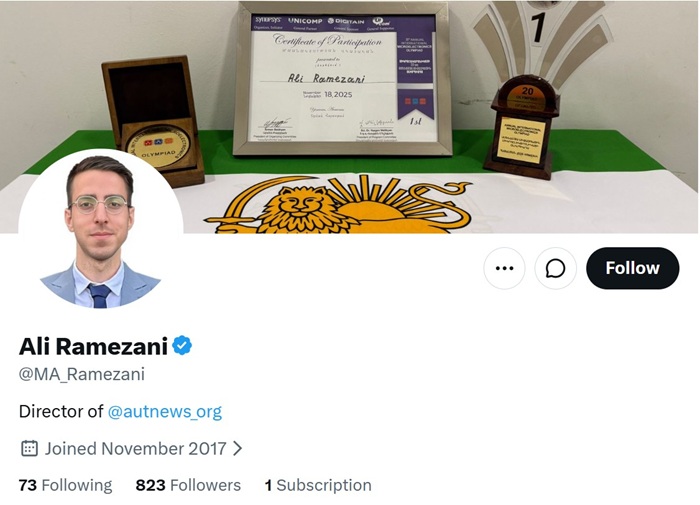
Ramezani was arrested at his family home on the evening of 16 October 2023 by forces of Iran’s Ministry of Intelligence and transferred to Ward 209 of Evin Prison.
He faced charges including “assembly and collusion against internal and external security” and “propaganda against the Islamic Republic.”
Branch 26 of Tehran’s Revolutionary Court subsequently sentenced him to three years and seven months in prison.
There is no clear public account explaining how Ali Ramezani went from serving a multi-year prison sentence in Iran to leaving the country altogether. It remains unclear when he was released, under what conditions he left prison, whether his sentence was formally suspended or interrupted, and how he was subsequently able to depart Iran.
What is known is that Ramezani eventually reached Armenia and later moved to Canada. But the sequence between imprisonment and departure remains opaque.
By late 2025, however, he was unquestionably outside Iran.
On 5 December 2025, York University in Toronto published a profile identifying Ali Ramezani as a graduate student and research assistant at the university.
What makes Ramezani’s case particularly striking is the speed with which he appears to have moved from a multi-year security sentence to freedom and then departure from Iran. In comparable cases, students imprisoned for political activism, protest-related activity or other security charges have often remained behind bars for years, with some denied even a single day of prison leave.
Against that background, Ramezani’s relatively rapid transition from imprisonment to Armenia and then to Canada stands out.
Iran’s intelligence services have used a range of methods involving detention, controlled release and the subsequent movement of individuals abroad. Iranian activists have therefore questioned whether Ramezani’s unexplained release and departure should be examined within that broader pattern.
Whether Ali Ramezani himself belongs to such a category remains one of the questions being raised by Iranians examining the circumstances of his release, departure and subsequent political activity.
Telling chronology
At the moment when university protests were expanding in February 2026, a network of organizations with almost identical names, symbols and political language suddenly appeared at universities across Iran.
Only three days after this process began, student activists were already warning about their behavior.
Those students spoke about protests being halted or restricted, students being instructed to remain silent, alternative slogans being suppressed, pressure being exerted to chant in favor of Pahlavi, and the collection of activists’ names for transmission to university security.
Their central accusation was that the activities of these associations were suppressing the student movement rather than strengthening it.
During the same discussion, the Amir Kabir Newsletter was identified as a publication heavily amplifying monarchist slogans and accused by participating students of spreading false information.
At the same time, the political vocabulary of the newsletter itself was undergoing a dramatic shift towards the Lion and Sun, Reza Pahlavi and terminology associated with the Pahlavi monarchy.
There was also a fundamental discrepancy in the identity it presented to its audience. While portraying itself as a student newsletter operating from inside Iran and connected with Amir Kabir University, its manager was living in Canada and its central management was outside the country.
The historic name, the appearance of an internal student publication and the claim to represent developments from within Iranian universities provided the outlet with a credibility that obscured the reality of where it was being directed.
The accounts subsequently published by Mahmood Amiry-Moghaddam, Kambiz Ghafouri and other activists added another layer to the questions surrounding the publication.
And now, as universities reopen once again, the same newsletter has returned with the same narrative.
On 29 September 2026, it publicized the joint statement of “26 Lion and Sun university associations”, renewed their support for Reza Pahlavi and highlighted what it described as the important role these organizations played during the previous student protests.
The sequence closely resembles the pattern seen in February 2026.
This is why the 29 September statement cannot be examined simply as another routine political declaration by a student organization.
The Amir Kabir Newsletter and the Lion and Sun Associations have to be examined in the context of a pattern extending back approximately a year: the simultaneous emergence of a centrally amplified network during periods of student unrest; attempts to impose a particular political line on university protests; reports of pressure on students and the collection of activists’ identities; the use of the identity and credibility of a domestic student publication while its management operated from abroad; and persistent questions raised by student activists, journalists and human-rights figures about the network operating behind them.
The central question therefore remains: What is the real mission of the Amir Kabir Newsletter and the Lion and Sun Associations inside Iran’s universities, and what is their relation with Iran’s security forces?