


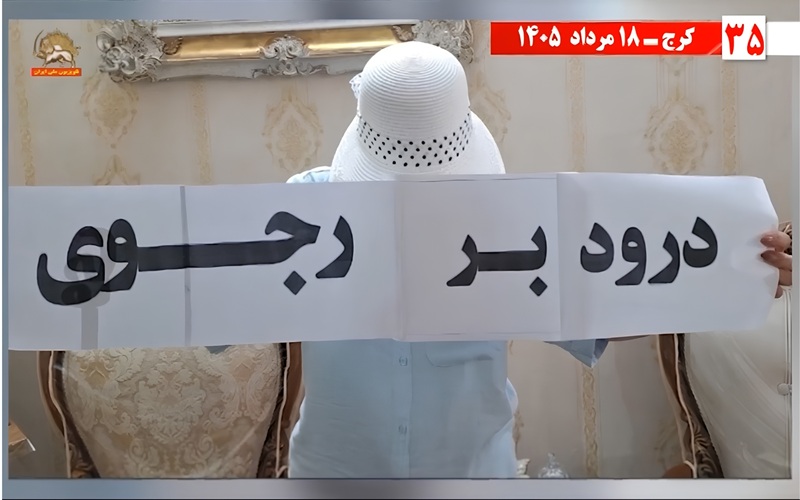

Resistance Units carried out 50 coordinated activities in cities across Iran, displaying banners, distributing leaflets, writing slogans, and staging photo actions in support of Simay-e Azadi and the struggle for a democratic republic.
Resistance Units carried out 50 activities in cities across Iran in support of the 30th solidarity campaign for Simay-e Azadi, according to reports from the network.
The activities included installing banners and leaflets, writing slogans on walls, and organizing photo actions. They were reported in Tehran, Mashhad, Karaj, Tabriz, Urmia, Kermanshah, Sanandaj, Arak, Qom, Hamedan, Borujerd, Iran Shahr, and Parand.
The campaign featured messages rejecting the ruling system and hereditary rule while expressing support for organized resistance and the establishment of a democratic republic.
Slogans against the regime and its ruling structure
Several of the reported actions directly targeted the regime’s ideological and political foundations.
In Tabriz, Qom, and Kermanshah, Resistance Units displayed or wrote slogans rejecting the principle of velayat-e faqih, the system of clerical rule that forms the foundation of the regime’s political structure.
In Tehran and other cities, activists also displayed the slogan:
“Death to the oppressor, whether Shah or Supreme Leader.”
The slogan reflects the rejection expressed by the Resistance Units toward both monarchical rule and the current clerical system.
Other activities targeted former Supreme Leader Ruhollah Khomeini and current regime leadership, while expressing support for the Iranian resistance.
Messages supporting organized resistance
A prominent theme of the campaign was support for organized resistance as the means of bringing political change to Iran.
In Tehran, activists installed a leaflet stating that the regime would be overthrown by the Iranian people through organized uprisings, Resistance Units, and the Army of Freedom.
In Mashhad, wall writings included messages describing the armed resistance as the path to liberation, while other activities highlighted the role of organized resistance in achieving freedom.
In Sanandaj, photo actions featured a message attributed to Massoud Rajavi stating that the Army of Freedom is the path to freedom.
Similar messages appeared in Hamedan, Kermanshah, Arak, and Iran Shahr, where activists displayed leaflets, banners, or wall writings expressing support for the National Liberation Army of Iran and the organized resistance.
Support for Simay-e Azadi and its solidarity campaign
The activities were part of a broader campaign supporting the 30th solidarity drive for Simay-e Azadi, which the Resistance Units described as an important independent source of information and a platform for the Iranian opposition.
The campaign was not confined to a single city or region. Activities were reported across major urban centers, including Tehran and Mashhad, as well as cities in western, northwestern, central, and southeastern Iran.
In Tehran, activists installed materials referring to the gathering of Iranians in Italy, with messages including:
“No to executions, yes to a democratic republic.”
Other leaflets emphasized the role of organized popular uprisings and Resistance Units in bringing about political change.
Rejecting both the monarchy and clerical rule
Another recurring theme was the rejection of both forms of rule that the Resistance Units characterize as incompatible with a democratic future for Iran.
The slogan “No to the crown, no to the turban” appeared alongside messages supporting the resistance and opposing the regime.
In Mashhad, Tehran, and Kermanshah, activists used the slogan “Death to the oppressor, whether Shah or Supreme Leader,” while other actions explicitly rejected the principle of velayat-e faqih.
These messages present the campaign as part of a broader political position favoring a democratic republic rather than either monarchical or clerical rule.
Banners, leaflets and photo actions across Iran
The reported activities demonstrate the geographic spread of the campaign.
In Tehran, Resistance Units carried out numerous actions, including banners, leaflets, wall writings, and photo actions. Messages included support for the resistance leadership, opposition to the regime, and statements concerning the role of organized uprisings.
Mashhad also saw numerous activities, including collective actions, wall writings, and photo displays. Messages focused on the Army of Freedom, opposition to the regime, and rejection of both the crown and the turban.
In Karaj, activists installed banners and conducted photo actions supporting the resistance and its Resistance Units.
In Sanandaj, photo actions highlighted the Army of Freedom and opposition to Khomeini and the current regime leadership.
Other reported activities took place in Urmia, Arak, Qom, Hamedan, Kermanshah, Tabriz, Borujerd, Parand, and Iran Shahr.
Among the messages displayed were calls for freedom and independence, opposition to executions, support for a democratic republic, and solidarity with the organized resistance.
A continuing campaign inside Iran
The 50 reported actions form part of a continuing campaign in which Resistance Units use public spaces to circulate political messages despite the risks associated with dissent inside Iran.
The choice of banners, leaflets, wall writings, and photo actions allows activists to communicate directly with the public while drawing attention to political issues that are heavily restricted in state-controlled media.
The latest campaign also connects several themes: support for Simay-e Azadi, opposition to executions and repression, rejection of both clerical and monarchical rule, and calls for organized popular resistance.
For the organizers and participants, the actions are intended to demonstrate that despite extensive repression, political opposition remains active across different parts of Iran.
The breadth of the reported activities—from Tehran and Mashhad to Sanandaj, Kermanshah, Tabriz, Arak, Hamedan and Iran Shahr—underscores the nationwide character that the campaign seeks to project as the 30th Simay-e Azadi solidarity campaign continues.