


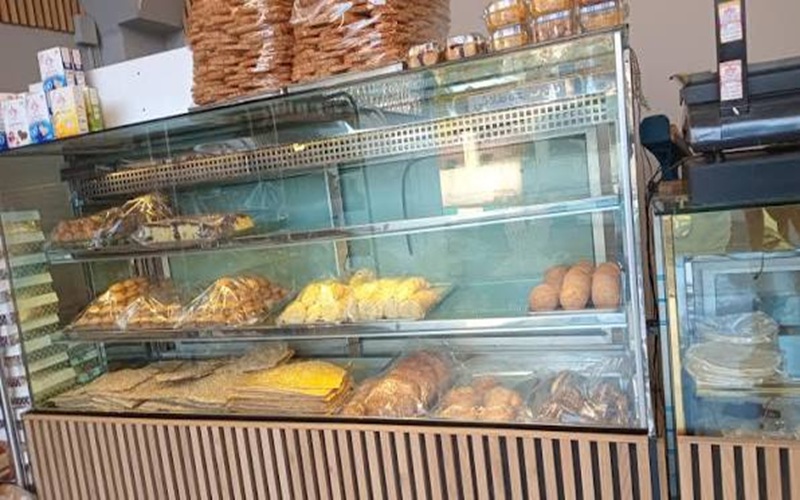

Unofficial bread price hikes in Tehran are adding to the pressure on working families already struggling with soaring food costs, stagnant wages, and the impact of higher gasoline prices.
For millions of working families in Iran, the country’s economic crisis is increasingly being measured not in financial statistics but in the food they can no longer afford. A recent report by the state-run ILNA news agency warned of sharp, unofficial increases in bread prices in Tehran, noting that even the once-basic combination of bread and cheese is becoming a luxury for low-income households.
The warning comes as the cost of essential goods continues to rise while wages and pensions fail to keep pace. With the Iranian regime simultaneously increasing fuel prices, workers are facing a new wave of pressure that threatens to push the cost of food and other necessities even higher.
Bread Becomes a Measure of Iran’s Cost-of-Living Crisis
In a September 14 report, ILNA attributed the latest inflationary pressures in part to the continuing rise in foreign-exchange rates and higher energy costs. The agency warned that basic commodities are increasingly moving beyond the reach of low-income households.
For working families, bread is among the most fundamental components of the household budget. Yet rising production, transportation, and energy costs are now feeding directly into its price.
Ali Torkashvand, executive secretary of the Workers’ House, warned that the unofficial increase in bread prices in Tehran has become severe. He pointed to the deteriorating purchasing power of workers, noting that something as simple as bread and cheese, once considered an inexpensive meal, is increasingly beyond their means.
The significance of the warning goes beyond bread itself. When the price of one of the cheapest and most basic foods rises sharply, it signals how deeply inflation is penetrating the daily lives of low-income families.
Gasoline Price Hike Threatens Another Inflationary Wave
The bread crisis is unfolding just as the regime has introduced a major increase in the price of its third-tier gasoline quota.
Beginning September 8, the price of this gasoline category doubled from 5,000 to 10,000 tomans per liter.
The increase has raised concerns about a broader chain reaction. Higher fuel costs directly affect transportation, but they can also increase the cost of moving agricultural products, food, medicine, construction materials, and other goods.
Torkashvand warned that the gasoline price increase could therefore contribute to further increases in the prices of goods and services. His concern is particularly significant because workers’ wages and retirees’ pensions have not increased in proportion to the rising cost of living.
For households already struggling to balance stagnant incomes against rapidly rising expenses, another round of price increases could further reduce their ability to purchase basic necessities.
The Price Shock Is Spreading Beyond Bread
The pressure on household budgets is not limited to bread.
Majid Rahmati, a member of the Tehran Province Islamic Labor Councils, said some essential commodities have increased far more rapidly than the general inflation rate. He cited particularly sharp increases in the prices of rice and cooking oil, which he said had risen by more than 200 percent and 300 percent, respectively.
Rahmati called for increased funding for the government’s electronic food voucher program and for adjustments to wages and benefits during the second half of the year.
But such measures would have to overcome a fundamental problem: the growing distance between workers’ incomes and the actual cost of maintaining a household.
The crisis is particularly severe because food is not the only expense rising. Housing, transportation, healthcare, and other necessities are also consuming an increasing share of household income.
Workers Cannot Keep Up With Prices
Ali Zamiri, a labor activist from Kerman, warned that unofficial bread price increases could spread to other provinces. He pointed to rising transportation costs as a factor that could accelerate the process.
According to Zamiri, working-class families were already under intense inflationary pressure before the latest gasoline increase. Since the beginning of the year, households have repeatedly encountered new prices in the marketplace, while their incomes have remained largely unchanged.
The result is an economy in which prices can change rapidly while wages remain effectively fixed.
This imbalance is at the heart of Iran’s cost-of-living crisis. The problem is not simply that individual commodities have become expensive. It is that the purchasing power of wages has been systematically eroded, forcing families to continually eliminate goods and services from their household budgets.
Credit and Debt No Longer Offer a Way Out
The depth of the crisis was illustrated by another ILNA report on September 13 concerning low-income neighborhoods in southern Tehran.
According to the report, some residents were asking local shopkeepers for food, meat, simple prepared meals, and even bread on credit. But as the economic crisis has intensified, shopkeepers themselves have increasingly been unable to sustain this informal system of lending.
This is a crucial indicator of how far the crisis has spread. When households can no longer afford basic food and small businesses can no longer afford to extend credit, the traditional mechanisms that help families survive temporary financial hardship begin to break down.
A Crisis Deeper Than Rising Prices
Iran’s economic crisis is therefore no longer simply a matter of inflation figures. It is increasingly visible in empty household shopping baskets, unpaid debts, reduced food consumption, and the inability of workers to afford even inexpensive meals.
The unofficial rise in bread prices has become a powerful symbol of this deterioration. At the same time, the gasoline price increase threatens to add another layer of costs throughout the economy.
With wages and pensions failing to keep pace with the rising cost of food, transportation, housing, and other necessities, Iran’s working families are being forced to absorb an ever-growing economic burden.
For millions of workers, the question is no longer how to improve their standard of living. It is how to continue paying for the most basic necessities of everyday life.