


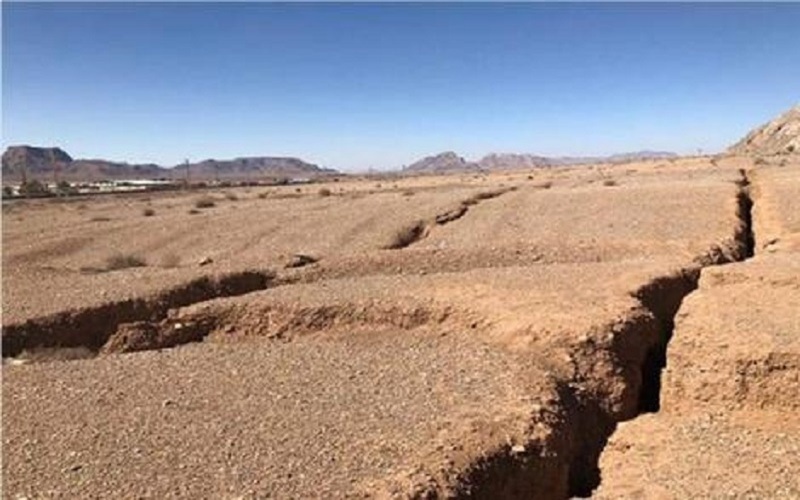

A Geological Survey official warns that land subsidence now affects nearly 100,000 square kilometers of Iran, with previously isolated zones merging across large parts of the country.
Iran’s environmental crisis is taking an increasingly dangerous form beneath the surface. The area affected by land subsidence has expanded roughly tenfold in just eight years, according to a senior official from Iran’s Geological Survey and Mineral Exploration Organization.
Reza Shahbazi, deputy head of the organization, told the state-run ISNA news agency that the area affected by subsidence increased from approximately 10,000 square kilometers in the mid-2010s to around 100,000 square kilometers by 2024.
More alarming, he said, is that areas previously affected by subsidence as separate and isolated patches are increasingly merging. In parts of Iran, formerly distinct subsidence zones have now formed continuous, interconnected areas.
The development represents a major warning about the consequences of the country’s worsening water crisis and the excessive pressure placed on underground water resources.
A National Crisis Spreading Across Major Population Centers
Shahbazi identified Isfahan, Kerman, Tehran, Alborz, and Qazvin among the provinces most seriously affected by land subsidence. The cities of Isfahan, Kerman, and Tehran, along with the plain southwest of the capital, are among the areas facing particularly significant risks.
The situation is also worsening around Mashhad in Razavi Khorasan province. Shahbazi warned that subsidence is no longer confined to areas outside urban centers and that its expansion toward the city itself is being observed.
The changing geographical pattern is particularly concerning. Subsidence that once appeared as scattered areas is now spreading and connecting, creating increasingly extensive zones where the ground is gradually sinking.
Such changes can damage infrastructure, buildings, roads, agricultural land, pipelines, and other vital installations. They can also create long-term damage that is difficult or impossible to reverse.
Isfahan: A City Entirely Exposed to Subsidence
Isfahan provides one of the clearest examples of the scale of the crisis.
On September 12, Ali Beitollahi, head of the seismology and risk department at Iran’s Road, Housing and Urban Development Research Center, told ILNA that Isfahan is the only Iranian city in which the entire urban area is exposed to land subsidence.
The problem is linked not only to excessive groundwater extraction but also to the prolonged disruption of the Zayandeh Rud River.
Beitollahi pointed to several factors behind the river’s decline, including the transfer of water from the Zayandeh Rud Dam to other areas, expansion of orchards within the dam’s watershed, cultivation of water-intensive crops such as rice, and the presence of at least 5,000 wells along the river’s margins.
Declining precipitation has compounded these pressures, contributing to the drying of the river.
The connection between the drying of the Zayandeh Rud and land subsidence is critical. As surface water disappears and groundwater reserves are depleted, dependence on underground aquifers increases. Continued extraction can cause the ground above depleted aquifers to compact and sink.
The Urmia Lake Basin Faces a Massive Subsidence Zone
The crisis extends far beyond Iran’s major cities.
Shahbazi estimated that land-subsidence zones surrounding Lake Urmia cover approximately 8,500 to 9,000 square kilometers. With the lake itself covering roughly 5,000 square kilometers, the affected plains in its surrounding watersheds amount to almost twice the area of the lake.
This highlights the scale of the environmental deterioration in the Urmia basin, where the depletion of water resources has already produced severe ecological consequences.
Shahbazi also reported signs of land subsidence in eastern Mazandaran province. Gilan remains, according to his assessment, almost the only province where widespread signs of subsidence have not yet been detected.
Groundwater Depletion at the Center of the Crisis
The rapid expansion of subsidence is closely associated with Iran’s growing water crisis.
Shahbazi linked the phenomenon to increasing pressure on groundwater resources and stressed that water shortages, air pollution, dust storms, and severe floods associated with climate change are among the country’s major environmental hazards.
Land subsidence is particularly dangerous because its effects can persist even after the original causes are reduced. Once underground geological formations have compacted significantly, lost storage capacity in aquifers may not be fully recoverable.
Iran is therefore confronting a problem that extends beyond periodic droughts. Decades of excessive groundwater extraction, declining rainfall, and inadequate management of water resources are producing permanent changes in the country’s landscape.
The Cost of Environmental Mismanagement
The expansion of land subsidence is another manifestation of Iran’s broader environmental crisis. Severe air pollution, uncontrolled groundwater extraction, forest fires, and the continuing destruction of ecosystems have become increasingly visible consequences of years of inadequate environmental policy and management.
The government’s failure to effectively protect water resources has placed both rural areas and major population centers at growing risk. As subsidence zones expand and merge, the consequences increasingly threaten not only agriculture and ecosystems but also urban infrastructure and the safety of millions of people.
The tenfold expansion of affected land in eight years is therefore more than a geological statistic. It is a measure of how deeply Iran’s water crisis has altered the country’s physical environment—and a warning that the consequences of continued mismanagement are becoming increasingly difficult to contain.