


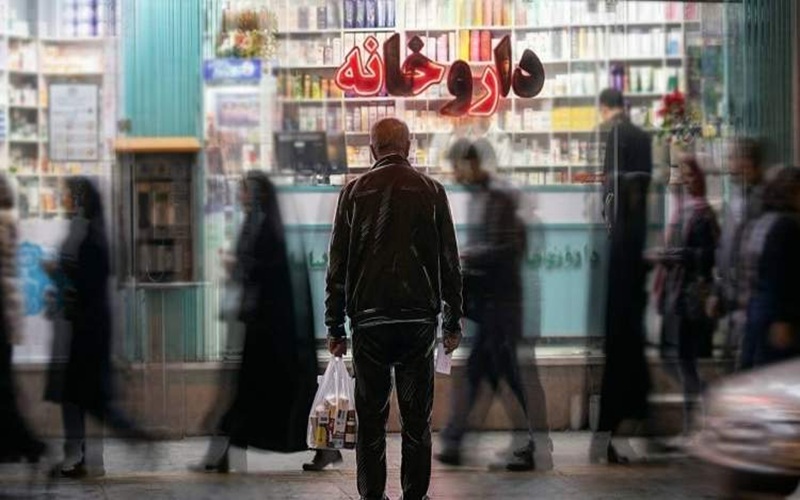

Iran’s healthcare system is facing mounting pressure as medicine prices surge, essential drugs become harder to find, and insurance payments fail to keep pace with rising costs.
Iran’s healthcare crisis is increasingly reaching patients directly, with medicine shortages, soaring prices, and mounting insurance debts making treatment less accessible across the country.
Health Minister Mohammad Reza Zafarghandi said on September 14 that 32 types of medicine are currently in short supply, including both imported drugs and medicines for which domestic alternatives exist. He said the shortage had reached 63 items before the war, rose to 43 during the war, and has now fallen to 32.
But the decline in the number of officially reported shortages has done little to ease pressure on patients. Reports from across Iran describe people struggling to find prescribed medicines and being forced to search multiple pharmacies to complete their treatment.
Zafarghandi attributed part of the problem to disruptions in transportation. When maritime imports are unavailable, he said, shipments have to be transported by air through several stages before reaching Iran by land. According to the health minister, the cost of this process has risen to 10 times its normal level.
The pharmaceutical industry, meanwhile, is confronting a much broader cost crisis.
Medicine prices surge as production costs rise
Hadi Ahmadi, the public relations director of the Iranian Pharmacists Association, said on September 13 that the removal of preferential foreign-exchange rates for most pharmaceutical materials has dramatically increased production costs.
According to Ahmadi, the exchange rate used for much of the industry has risen from 28,500 tomans to around 160,000 tomans. He said this has increased the cost of obtaining raw materials by more than five times.
Around 30 percent of the cost of producing medicine is directly linked to raw materials purchased with foreign currency, he explained, while the remaining 70 percent is also affected by the open-market exchange rate.
The war has added another layer of pressure. Damage to Iran’s aluminum and petrochemical industries has reportedly pushed the price of some packaging materials as high as three times previous levels.
There is some discrepancy in official estimates of transportation costs. While the health minister put the increase at up to 10 times normal levels, the Pharmacists Association estimated the rise in alternative air and land transportation costs at up to three times. The reason for the substantial difference between the two estimates remains unclear.
The consequences for consumers are nevertheless stark.
Ahmadi said prices of domestically produced medicines have increased by around 150 percent since the beginning of the year. In some cases, imported medicines have become 400 to 500 percent more expensive, while food supplements have risen by 300 to 400 percent.
Individual cases illustrate the scale of the shock. The price of the anticonvulsant and mood stabilizer Depakine has reportedly risen from 200,000 tomans to 1.2 million tomans. Mesalazine 500, used to treat gastrointestinal conditions, has doubled in price in one month, from 900,000 tomans to 1.8 million. A seven-dose package of Asacol enema has reached eight million tomans.
For many patients, such increases are not merely an economic burden. They can determine whether treatment continues at all.
Reports indicate that some patients have begun reducing their medication intake, switching to different drugs, or abandoning treatment altogether because they can no longer afford the prescribed medicines.
Insurance coverage is failing to protect patients
The deterioration of access to medicine is compounded by the financial crisis engulfing Iran’s insurance system.
Ahmadi said the share of healthcare costs paid directly by patients—originally expected to remain around 25 percent—has risen to 43 percent. At the same time, some insurance providers have reportedly gone as long as 10 months without paying pharmacies what they are owed.
Total pharmaceutical-related debt had exceeded 77 trillion tomans by the end of August, according to the association’s figures.
The Social Security Organization alone reportedly owes pharmacies more than 28 trillion tomans, with approximately four trillion tomans added to that debt every month.
The result is a vicious cycle. Pharmacies lack the liquidity required to replenish their stocks, while pharmaceutical producers face increasing difficulty financing continued production.
Ahmadi warned that without strengthening insurance coverage, medicine will gradually disappear from the healthcare basket of low-income households.
The consequences are already visible among pensioners. Parviz Ahmadi Panjaki, a member of the board of Iran’s Supreme Council of Social Security Pensioners, said on September 14 that virtually no medicines are being provided free of charge at the Social Security Organization’s own facilities. Insured patients are instead being directed to outside centers to obtain their medicines.
Even basic medical supplies are reportedly affected. Sterile gauze, 10-cc syringes, pink IV cannulas, and latex gloves have faced shortages and rationing.
A healthcare system forcing patients to choose
The medicine crisis is not occurring in isolation. Iran’s broader economic deterioration is increasingly reshaping access to healthcare itself. Reports have emerged of healthcare services, including dentistry and even medicines, being offered on installment plans as households struggle to pay upfront costs.
The pressure extends to emergency services as well. Tehran Emergency Medical Services chief Mohammad Esmail Tavakoli described longstanding difficulties in financing the ambulance fleet, saying that at one point authorities even considered allocating oil and using barter arrangements to purchase ambulances.
Meanwhile, Qazvin University of Medical Sciences president Hamidreza Qafaleh-Bashi warned on September 15 of shortages of standard medications used in addiction treatment, including opium-based medicines and their derivatives. He cautioned that shortages could push people undergoing treatment toward dangerous synthetic drugs, with potentially serious consequences for their mental health.
The contradiction in the government’s own statements is increasingly difficult to ignore. On September 5, Zafarghandi attributed rising medicine prices to higher raw-material and transportation costs and called on insurance providers to compensate for the increases. Yet he had said just days earlier that Iran was not facing a medicine-shortage crisis.
For patients, however, the distinction between an official declaration of a “shortage” and the reality of finding and paying for medicine is increasingly meaningless.
When medicines become several times more expensive, pharmacies cannot replenish their stocks, insurers accumulate massive debts, and patients begin cutting doses or abandoning treatment, the problem is no longer simply a shortage of individual drugs. It is a systemic failure of access to healthcare—one that places the greatest burden on the people least able to absorb it.