



A shrinking economy, collapsing household consumption, soaring living costs, and stagnant pensions are forcing Iranian families to choose between housing, food, healthcare, and their children’s education.
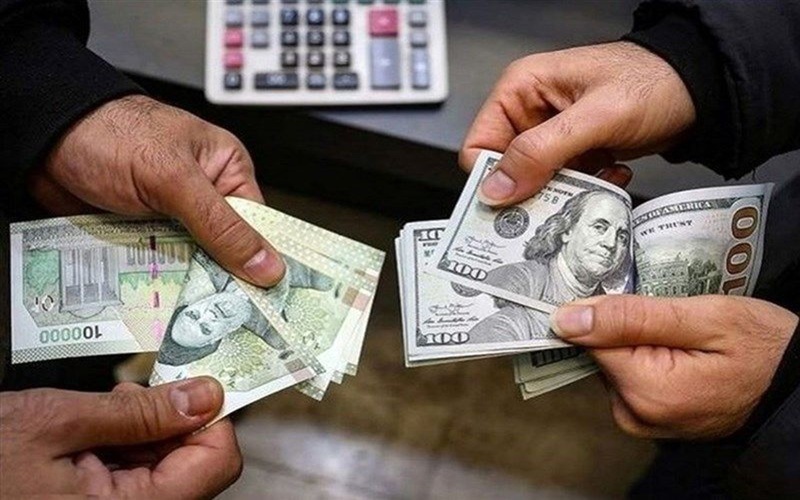
The Iranian rial’s renewed plunge at the end of summer has added another layer of pressure to millions of wage earners, retirees, and working families. With the dollar reaching around 236,000 tomans, the latest currency shock is expected to push up the price of goods and services just as Iranian households enter the autumn season facing an increasingly severe economic squeeze.
The currency decline comes alongside official figures showing that Iran’s economy is contracting at an alarming rate. According to the regime’s Statistics Center, the economy shrank by 10.1 percent in the spring of 1405 (2026) compared with the same period a year earlier.
The contraction was not confined to the oil sector. The economy excluding oil contracted by 4.6 percent, while industries and mines declined by 14.7 percent and services by 4.8 percent. The oil sector suffered the sharpest contraction, with negative growth of 26.4 percent.
At the household level, the consequences are already visible. Final household consumption fell by 4 percent during the same period, indicating that families are cutting back on goods and services that were once ordinary components of everyday life.
Retirees: Working Again After 30 Years
Among the clearest examples of the deepening crisis are retirees whose pensions no longer cover even basic housing costs.
Abdollah Balwasi, a labor activist, told ILNA that some retirees receive pensions of around 22 million tomans per month, while their rent alone exceeds that amount. Some have also had to pay several million tomans in deposits. To cover food, medicine, utilities, and transportation, they are being forced to find additional work.
After three decades of employment, many retirees are returning to day labor. During the agricultural season, some reportedly earn only 300,000 to 500,000 tomans per day for work such as weeding or harvesting.
The contradiction is stark: people who spent their working lives contributing to the economy are now returning to physically demanding labor at an age when they need greater access to rest, medication, and medical care.
Balwasi also described cases in which families, unable to afford medical treatment for sick relatives, reached the desperate point of wishing that the patient would die rather than leave the family facing unaffordable treatment costs.
Such accounts illustrate how Iran’s economic crisis has moved beyond reduced consumption of clothing, recreation, or higher-quality food. For some families, it is now affecting access to essential healthcare.
Healthcare Costs Become Another Financial Burden
The healthcare crisis is also reflected in protests by retirees.
On Tuesday, retired steel workers in Isfahan gathered outside the provincial governorate, demanding action over their health-insurance problems and the full implementation of pension equalization measures.
The retirees said they had been forced to pay their medical expenses themselves in July and had subsequently faced prolonged difficulties obtaining reimbursement for medical bills.
They also argued that the government and the pension fund had failed to honor their responsibilities under a December 17, 2025 agreement concerning healthcare provision. They are demanding pensions equivalent to 90 percent of the wages of comparable active employees.
The retirees further complained that promised meetings at the governorate to address their demands had not taken place.
Meanwhile, Mohammad Asadi, head of Iran’s Supreme Council of Social Security Retirees, acknowledged that contrary to some reports, no new decision had been made to increase retirees’ pensions.
For retirees entering autumn, this leaves a widening gap between income and the basic cost of survival.
Back-to-School Season Exposes the Collapse in Purchasing Power
The beginning of the new school year has added another burden to working families.
In Shiraz, stationery sellers report that seasonal demand has fallen to around 40 percent of the normal level. Families are reportedly eliminating nonessential purchases and postponing some necessary school supplies because they cannot afford them.
Prices have risen sharply compared with last year. A pen that previously sold for 7,000 tomans now costs around 17,000. Notebooks that once cost 30,000–35,000 tomans are selling for 100,000 to 150,000 tomans. Larger notebooks cost more than 200,000 tomans, an average pencil case can reach 600,000 tomans, and an ordinary pencil costs around 40,000 tomans.
For families already struggling with rent and food, these increases turn the beginning of the school year into another financial crisis.
The problem is compounded by irregular wage payments. On Tuesday, contract workers employed by the railway’s technical construction units called on authorities to pay their September wages on time so they could purchase school uniforms and supplies for their children.
They said delayed wage payments are a recurring problem, making it increasingly difficult to meet expenses associated with the start of the school year.
Food Prices and the Risk of Unsafe Substitutes
The pressure is also visible in the food market.
Tehran police reported on Tuesday that they had discovered 254 kilograms of meat from single-hoofed animals, including donkeys, mules, and horses, in the Khaniabad district. Five people were arrested in connection with the operation, including a person reportedly active in the restaurant sector.
The case highlights another consequence of the collapse in purchasing power. As the price of conventional beef and lamb rises beyond the reach of more households, cheaper and potentially unsafe meat can find a market among consumers who may not even know what they are purchasing.
This is not simply a question of changing consumer preferences. When basic food becomes unaffordable, the distinction between poverty and food insecurity becomes increasingly blurred.
Wage Increases Fail to Keep Pace With Living Costs
The regime increased the minimum wage by 60 percent this year, but the increase has failed to preserve workers’ purchasing power as housing, food, healthcare, and education costs have risen faster.
Even members of the regime’s parliament have acknowledged that the wages of employees, workers, and retirees are insufficient to cover living expenses and have called for income increases to be adjusted in line with inflation.
The problem, however, goes beyond the nominal level of wages. A higher paycheck has little effect on living standards when the currency continues to lose value and essential expenses rise simultaneously.
For millions of households, the result is a continuous reduction in what their income can actually purchase.
An Economy Shrinking While the Cost of Living Expands
The combination of a dollar exchange rate of approximately 236,000 tomans, severe inflation, negative economic growth, and declining household consumption points to a crisis that can no longer be confined to Iran’s poorest households.
Workers, salaried employees, retirees, and large sections of the middle class are increasingly confronting expenses that their monthly incomes cannot cover.
The figures tell the same story from different directions: production is contracting, household consumption is falling, the currency is losing value, and the cost of necessities continues to rise.
The regime’s economic policies have left families absorbing the consequences through reduced consumption, delayed medical care, additional work, unpaid or delayed wages, and postponed educational purchases.
For many Iranian families, autumn is therefore beginning with a choice that should never have become ordinary: pay the rent, buy food, afford medical treatment, or pay for their children’s education.
The deepening cost-of-living crisis is ultimately a measure of the distance between official economic claims and the reality experienced by millions of people whose incomes no longer provide even basic economic security.