


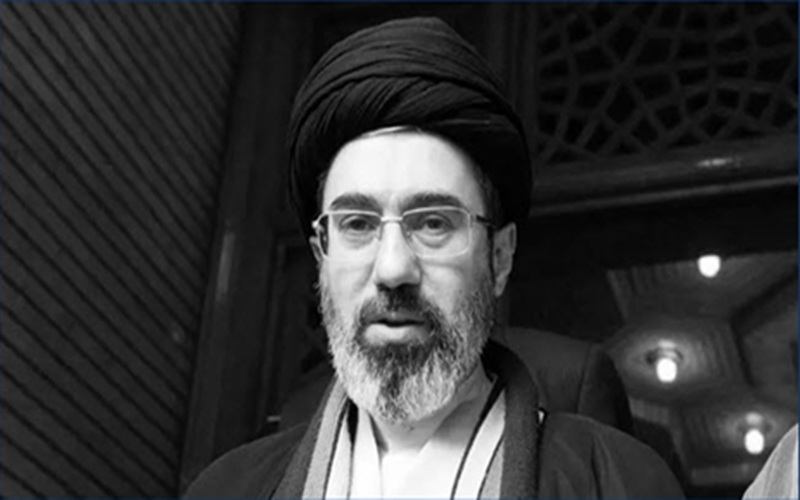

Mojtaba Khamenei’s claims of global supremacy, millions of “self-sacrificing” supporters, and nationwide military readiness reveal the widening gap between regime propaganda and the realities confronting Iranian society.
One of the clearest signs of decay in an authoritarian system is the widening gap between the rulers’ narrative and the reality experienced by society. When a political establishment can no longer provide credible answers to basic economic, social, and administrative problems, propaganda increasingly becomes a substitute for governance.
The latest statements by Iran regime leader Mojtaba Khamenei offer a striking illustration of this phenomenon.
In a message published on September 28, Khamenei claimed that some already consider Iran the “fourth superpower” but went further, asserting that according to “divine calculations,” Iran is the “first power in the world.” He also claimed that more than 30 million Iranians had declared themselves ready to sacrifice themselves for the regime and that a capacity of 500,000 people was filled within the first 100 minutes of a mobilization effort.
These are not ordinary boasts about military capability. They point to a much deeper problem: the regime increasingly needs an alternative reality in which its claims of power can survive the evidence visible in everyday Iranian life.
When propaganda replaces the measurements of power
A country’s international power is not established by slogans. Economic resilience, monetary stability, industrial capacity, technological capability, military effectiveness, social cohesion, institutional legitimacy, and the welfare of its population are among the measurable factors that shape national power.
By these standards, the regime’s claim to first place in the world requires considerable explanation.
Iran’s currency, for example, has reached unprecedented lows. Reuters reported in September that the rial had fallen beyond 2 million to the U.S. dollar, while inflation had reached 66 percent in July. The Central Bank governor simultaneously sought to reassure the public that the economy remained stable and that the currency could be supported through foreign-exchange intervention.
The contradiction is difficult to conceal. A regime cannot simultaneously point to monetary collapse, accelerating inflation and severe economic pressure as evidence of national strength while asking society to accept an undefined claim of global supremacy.
The problem is not merely the credibility of one statement. It is the growing distance between the regime’s language and the measurable conditions of the country.
Thirty million supporters—or a number without a social reality?
The claim of more than 30 million “self-sacrificing” Iranians deserves the same scrutiny.
The regime and its affiliated media have promoted the figure as evidence of mass support. Its own official messaging has described more than 30 million people as having registered in the “Janfada” campaign.
But a registration figure promoted through a regime-organized campaign is not equivalent to an independently verified measure of political allegiance, much less proof that 30 million people are prepared to fight or die for the ruling establishment.
The contrast with electoral participation is revealing. In the March 2024 parliamentary election, turnout was about 41 percent—the lowest recorded since the 1979 revolution, according to Reuters.
That figure cannot by itself measure the totality of Iranian public opinion, and elections in Iran are conducted within a system of candidate vetting and political restrictions. But it does demonstrate why claims of an enormous, enthusiastic political constituency cannot simply be accepted at face value.
A regime claiming tens of millions of committed supporters therefore faces an obvious question: where is the independently observable social evidence for such a constituency?
The forgotten Iran outside the security apparatus
The same contradiction appears in the claim that different ethnic communities and regions are prepared to take up arms in support of the regime.
Iran is a diverse society whose peripheral and minority-populated regions have repeatedly experienced discrimination, poverty, security crackdowns, and political repression. Human Rights Watch has documented entrenched discrimination against Azerbaijani Turks, Kurds, Baluchis, Ahwazi Arabs and Turkmen, as well as disproportionate abuses against marginalized communities.
Sistan and Baluchistan provides an especially stark example. Security forces’ lethal repression in Zahedan on September 30, 2022—the event widely known as “Bloody Friday”—was extensively documented by Human Rights Watch.
The issue, therefore, is not whether every citizen in these regions opposes the regime. Such a sweeping claim would be just as simplistic as the regime’s propaganda. The point is that portraying Iran’s diverse population as a unified military constituency of the ruling establishment ignores a documented history of repression and resistance in precisely those regions.
The economic reality cannot be rewritten
The regime’s propaganda ultimately collides with the most powerful witness of all: everyday economic life.
Families do not measure national power through official speeches. They experience it through the value of their wages, the price of food and medicine, the availability of electricity and water, housing costs, employment opportunities, and the future available to their children.
When the national currency loses value at a historic pace and inflation reaches extraordinary levels, claims of unprecedented strength become increasingly detached from the population’s experience.
This is why the language of “superpower” is politically significant. It does not solve the economic problems facing the country. It does not restore purchasing power. It does not create jobs or stabilize the currency. And it does not answer the question of why so many Iranians have become alienated from the institutions ruling them.
It serves another purpose: sustaining a narrative of strength when the regime has fewer convincing demonstrations of strength available to it.
Propaganda is aimed inward
The intended audience for such claims may not primarily be the outside world.
Foreign governments and international institutions can measure Iran’s economic performance, military capabilities, diplomatic position, and regional influence through independent sources. They do not need a claim about “divine calculations” to determine the country’s position.
The more important audience is inside the regime itself.
An authoritarian system needs its security forces, political cadres, state employees, and ideological supporters to believe that the system remains powerful, legitimate, and capable of prevailing. If confidence among these groups begins to weaken, propaganda becomes increasingly important.
The enormous numbers in the latest claims therefore function as psychological reassurance. Thirty million supporters. Five hundred thousand mobilized within 100 minutes. A fourth global superpower. Then, beyond even that, the first power in the world.
The numbers grow as the gap between the narrative and reality grows.
Reality eventually defeats the narrative
There is a fundamental limit to political propaganda: it cannot permanently override lived experience.
A worker knows what his wages can buy. A family knows the cost of food and medicine. A young person knows whether meaningful employment and a future are available. A pensioner knows whether his income covers basic necessities. And communities subjected to discrimination and repression know the difference between official claims of national unity and their own experience with state institutions.
This is why the regime’s increasingly extravagant claims matter. They are less an indication of measurable national power than a window into the political narrative the leadership needs to construct.
The central contradiction is becoming impossible to hide: the regime speaks the language of global supremacy while Iranian society confronts the consequences of economic deterioration, repression, political alienation, and international isolation.
No number of supposed supporters can erase that contradiction. No slogan can restore the value of a collapsing currency. And no claim of military readiness can substitute for social legitimacy.
Ultimately, the future of Iran will not be determined by the imaginary statistics of official propaganda. It will be determined by the country’s actual social, economic, and political forces—and by the widening distance between those forces and the narrative imposed from above.
The higher the regime builds its wall of illusion, the more dramatic the collision becomes when reality breaks through.