


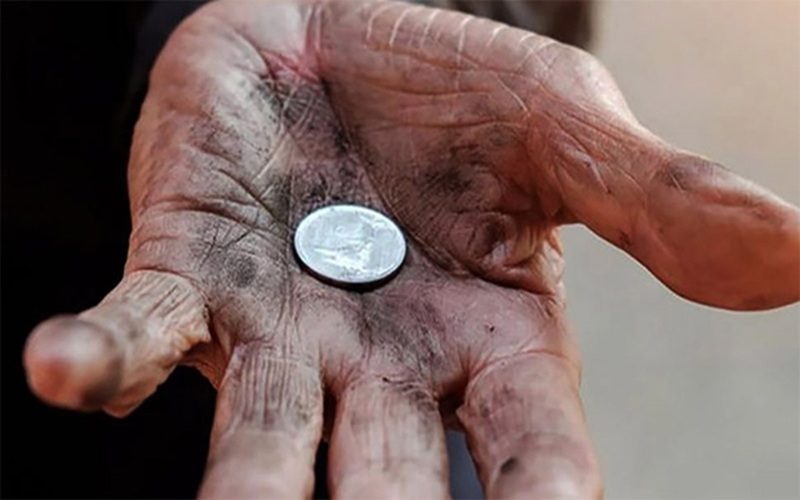

The accelerating collapse of the rial is driving up the cost of imported goods, production, transportation, and basic services, while weakening the purchasing power and savings of millions of Iranians.
The Iranian rial has suffered another sharp decline, with the U.S. dollar recently breaking through the 256,000-rial level on the open market. The latest slide has intensified concerns over inflation, household purchasing power, and the increasingly severe economic pressures facing Iran’s population.
The dollar had risen from the 200,000-rial range to approximately 256,700 rials within days, while the euro reached around 290,000 rials and the UAE dirham approached 70,000 rials.
The acceleration of the currency crisis is significant because the exchange rate affects far more than imported consumer goods. Iran’s domestic production system is heavily dependent on imported raw materials, machinery, components, and intermediate goods, meaning that a weaker rial rapidly feeds into prices throughout the economy.
Rial Collapse Means Broad-Based Loss of Purchasing Power
The most immediate consequence for ordinary Iranians is a decline in the real value of their income and savings.
Over the past year, the dollar has reportedly risen by approximately 71 percent. For households holding their savings in rials, this represents a dramatic erosion of purchasing power even if the nominal amount in their bank accounts has remained unchanged.
The same pressure affects financial and physical assets whose real value has failed to keep pace with the currency’s depreciation.
More importantly, households are confronting a simultaneous increase in the cost of everyday necessities.
Imported medicines, food products, electronics, mobile phones, televisions, and other goods are directly exposed to exchange-rate movements. A 71-percent increase in the dollar’s value places substantial upward pressure on the rial-denominated cost of these products before additional expenses such as transportation, distribution, taxes, and domestic inflation are even taken into account.
As a result, the actual increase in consumer prices can exceed the increase in the exchange rate itself.
Domestic Production Is Also Being Hit
The impact of the currency collapse is not confined to imported products.
Many Iranian manufacturers rely on imported machinery, spare parts, raw materials, and components. When the rial loses value, production costs rise even for products manufactured entirely or predominantly inside Iran.
Businesses consequently face a difficult choice: absorb higher costs and accept lower margins, raise prices and risk losing customers, or reduce production.
The same mechanism affects transportation, travel, services, and virtually every sector with direct or indirect exposure to imported inputs.
This creates a cycle in which currency depreciation raises production costs, higher costs push up prices, and rising prices further reduce household purchasing power.
Housing and Gold Are Not an Escape for Most Iranians
Some households with sufficient financial resources attempt to protect their savings by purchasing gold, foreign currency, or property.
But these options are largely unavailable to low- and middle-income households whose incomes are already being consumed by basic necessities.
Iran’s housing market has remained severely constrained by the collapse in purchasing power. Even when nominal property prices rise, households without sufficient income or savings cannot enter the market.
The fundamental problem is therefore not simply where people can place their savings. It is whether they have enough purchasing power to meet their basic needs in the first place.
Central Bank Measures Face Mounting Pressure
The regime’s Central Bank has announced another injection of $2 billion in cash currency into the market in an effort to contain the exchange-rate surge.
Similar interventions have been attempted previously, but they have failed to reverse the broader depreciation trend.
The repeated need to inject scarce foreign currency highlights the structural nature of the problem. Temporary market interventions cannot by themselves resolve the underlying shortages of foreign exchange, persistent inflation, declining confidence in the rial, and structural weaknesses of Iran’s economy.
Currency Crisis Deepens the Regime’s Economic Problems
The consequences extend beyond households.
A weakening rial increases the cost of government operations and imports while placing additional pressure on state-controlled enterprises and industries. At the same time, declining production and weak domestic demand constrain economic activity.
Industries facing rising input costs and insufficient demand may reduce production or shut down operations altogether. This creates additional unemployment and further weakens household purchasing power.
The result is a reinforcing cycle:
Rial depreciation → higher import costs → higher production costs → higher prices → lower purchasing power → weaker demand → lower production and employment.
For ordinary Iranians, this translates into rapidly deteriorating living standards. For the regime, it means increasing difficulty in managing an economy already burdened by inflation, sanctions, structural inefficiencies, and declining productive capacity.
A Currency Crisis That Reflects a Deeper Economic Breakdown
The latest exchange-rate shock is therefore more than another fluctuation in Iran’s currency market.
A rial trading above 256,000 to the dollar reflects the extent to which the currency has lost value and the resulting pressure on households, businesses, and state institutions.
For millions of Iranians, the central issue is increasingly straightforward: their incomes and savings are failing to keep pace with the cost of living.
As the rial continues to lose value, imported goods become more expensive, domestic production becomes costlier, and basic purchasing power continues to deteriorate.
The currency crisis is consequently feeding directly into Iran’s broader economic and social crisis, with the burden falling most heavily on households that have the fewest resources to protect themselves against inflation and depreciation.