


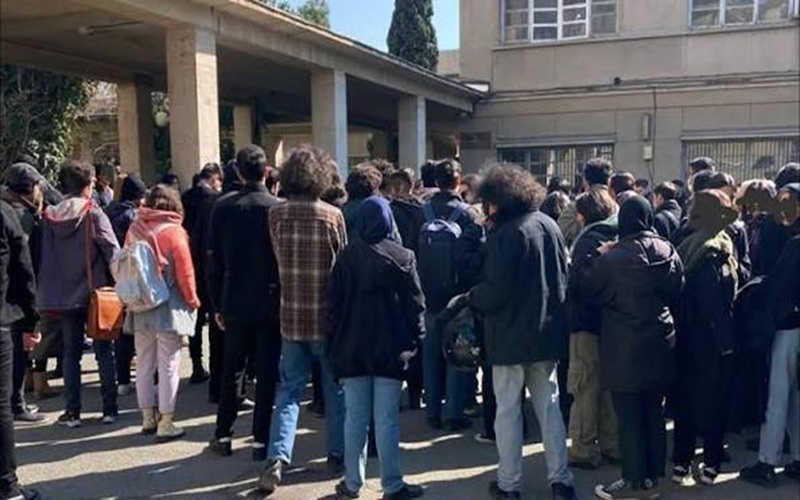

Warnings from regime officials, Friday prayer leaders, and state media reveal growing concern over universities becoming a focal point for wider social unrest.
As universities reopen across Iran, the regime is rapidly intensifying warnings, threats, and security measures targeting students. State media, regime officials, and Friday prayer leaders have repeatedly called for tighter control of campuses, portraying universities as potential centers of what they describe as “organized unrest.”
The campaign has begun even as the new academic year is only days old, underscoring the regime’s sensitivity to student activism and its potential connection with broader social protests.
Regime Fears Universities Becoming a Catalyst for Unrest
A recent report in the regime-affiliated Nobonyad newspaper, associated with the hardline Paydari faction, criticized the Ministry of Science for what it described as insufficiently forceful action against alleged “elements of unrest” and called for tougher measures on university campuses.
The newspaper cited regime parliamentarians warning that opponents were allegedly preparing organized unrest and placing particular emphasis on universities.
The rhetoric reflects a broader pattern. In recent weeks, regime Friday prayer leaders in cities including Mashhad, Shiraz, and Bojnurd have warned families to closely monitor their children and have specifically highlighted student activity.
Such warnings indicate that concern over universities extends beyond campus administrators. The regime is attempting to mobilize families themselves as an additional layer of pressure on students.
Repression Has Already Intensified on Campuses
The regime’s warnings come despite years of extensive security measures against Iranian students and academics.
Students have faced suspension and expulsion, restrictions on access to education, disciplinary proceedings, arrests, threats, and prosecution. Academics have likewise faced pressure and dismissal when they have challenged official policies or supported students.
Security restrictions have included various screening mechanisms and disciplinary measures designed to prevent politically active students from organizing.
Some students have also faced severe criminal charges in connection with protest activity, while others have been barred from returning to university.
Recent campus gatherings have triggered additional intimidation. Following a protest at Allameh Tabataba’i University, families of participants were reportedly sent threatening text messages warning them about possible arrests and other consequences.
The pattern demonstrates that the regime has not been passive toward student activism. Rather, it has maintained a sustained system of surveillance, intimidation, and punishment while simultaneously warning that universities must be prevented from becoming centers of protest.
Why Is the Regime So Concerned About Students?
The heightened rhetoric reflects a broader fear: the possibility that student protests could connect with grievances already present throughout Iranian society.
Universities occupy a distinctive position within Iran’s protest landscape. Students can rapidly communicate across campuses and cities, while university protests can attract attention from workers, teachers, retirees, and other social groups facing economic and political pressures.
This became particularly evident during the January 2026 uprising. Although the initial movement emerged from economic grievances and protests, the participation of university students helped expand the demonstrations into a broader social movement.
For the regime, the significance of student activism therefore lies not only in what happens inside university campuses. The greater concern is the possibility that campus protests could become a bridge connecting different sectors of society.
Internal Regime Rivalries Also Shape the Crackdown
The renewed attacks on the Ministry of Science and its leadership also reflect the regime’s internal political conflicts.
As the regime confronts mounting economic, political, and social crises, disputes between its factions increasingly spill into public attacks against government institutions and officials.
Hardline factions can use the issue of campus security to accuse the government of failing to suppress dissent aggressively enough. Criticism of the Ministry of Science thus serves both a security purpose and a factional political purpose.
But the underlying issue extends beyond disputes between regime factions.
Regardless of which faction controls the relevant ministry, the regime has continued to use disciplinary measures, surveillance, arrests, threats, and restrictions to contain student activism.
Families Become Part of the Regime’s Pressure Campaign
The warnings directed at parents are particularly revealing.
By telling families to monitor their children, regime officials are attempting to extend political control beyond university gates. The objective is not simply to police demonstrations after they begin but to discourage students from participating in them in the first place.
Threatening families also serves as a warning to students that participation could carry consequences beyond their own university status.
Yet the need to repeatedly warn families about student activism also illustrates the regime’s concern that repression alone may not prevent renewed mobilization.
The Student Movement’s Broader Significance
Iranian universities have repeatedly served as important centers of political and social activism. Their importance is amplified when student protests coincide with movements among other sectors of society.
The regime’s current campaign therefore reflects an effort to prevent a potential chain reaction: student protests leading to broader demonstrations, which in turn could bring additional social groups into the streets.
This explains the unusual intensity of the warnings appearing across regime media and from Friday prayer leaders even before the academic year has fully developed.
The regime is attempting to control the universities before they become a focal point of wider unrest.
But the repeated warnings, threats against students and their families, and renewed demands for harsher measures also reveal the regime’s continuing concern over the political potential of Iran’s campuses.
For the authorities, the issue is not simply university discipline. It is the possibility that student activism could once again connect the grievances of Iran’s universities with the wider demands of a society under mounting pressure.