


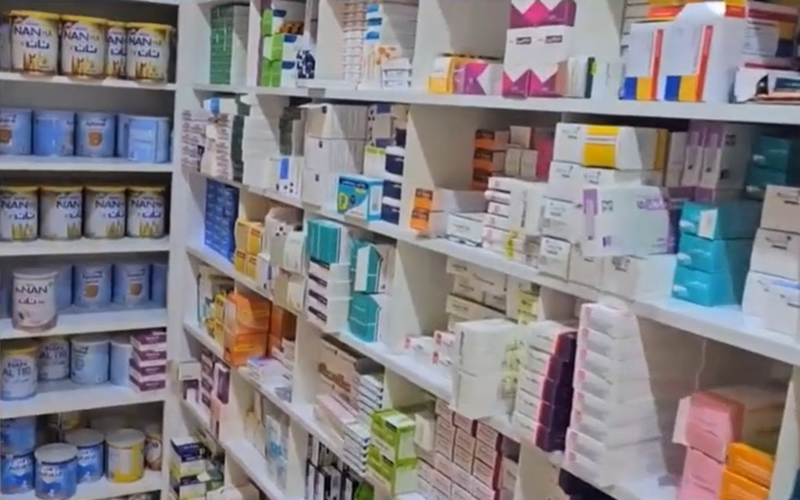

Medicine prices have multiplied, shortages have spread, and mounting healthcare costs are forcing families to choose between essential treatment and basic living expenses.
The crisis extends beyond shortages in pharmacies. It reflects years of structural failures in healthcare financing, dependence on imported pharmaceutical ingredients, currency depreciation, and mounting costs that families can no longer absorb.
Medicine Prices Surge Beyond Patients’ Means
Despite official assertions that 80 to 90 percent of medicines are produced domestically, a substantial portion of this production depends on imported raw materials and ingredients. Restrictions and disruptions affecting supply routes, including those through Turkey and India, have increased costs and complicated access to essential medicines.
The sharp depreciation of the rial has further intensified the crisis. One example cited in recent reporting concerns a medicine used to treat breast cancer, whose monthly cost reportedly rose from approximately 400,000 tomans to 5 million tomans—a more than twelvefold increase.
Patients are also struggling to obtain cardiovascular medicines, antibiotics, and even ordinary painkillers. Some have turned to Tehran’s Naser Khosrow market, known for informal medicine sales, after failing to find their prescriptions through regular pharmacies. There, they may face substantially higher prices.
The scale of shortages has also expanded. Figures cited in the discussion indicate that the number of medicines facing shortages increased from approximately 150 items six months earlier to around 800. This expansion has made obtaining prescribed treatments an increasingly difficult task for patients and their families.
Families Forced to Choose Between Treatment and Survival
The combined burden of medicine prices, rent, food, and transportation has pushed many households beyond their financial limits. For some patients, continuing treatment means sacrificing other essential expenses, including housing and their children’s basic needs.
As a result, patients may reduce their medication use, interrupt treatment, or abandon it altogether because they cannot afford the cost. For people with serious or chronic illnesses, these decisions can have devastating consequences.
The crisis also places enormous pressure on doctors and nurses. Medical professionals may prescribe necessary treatments while knowing that patients lack the money to obtain them. The gap between medical needs and financial reality increasingly undermines the ability of healthcare workers to provide effective care.
Insurance financing has compounded these difficulties. Although patients were previously expected to cover no more than 30 percent of medicine costs, figures cited in parliamentary discussions indicate that their share can now exceed 80 percent in many cases. Meanwhile, insurance organizations’ debts to pharmacies have further strained medicine distribution.
Budget Shortfalls Deepen the Supply Crisis
Funding shortfalls have added another obstacle to securing reliable medicine supplies. According to figures cited in the discussion, an initially planned budget of approximately 180 trillion tomans yielded only around 92 trillion tomans in available funding.
Foreign-currency allocations for medicine have also reportedly been reduced, with a cited figure falling from $3 billion to $500 million before further reductions affected parts of the available resources.
These financial constraints threaten the entire pharmaceutical supply chain, from importing raw materials to distributing medicines through pharmacies.
Iran’s medicine crisis is therefore not simply a question of whether a particular drug is available. It is a crisis of affordability, financing, and access to treatment. When patients cannot obtain essential medicines or must abandon treatment to pay for food and housing, healthcare becomes a privilege determined by financial means rather than a service accessible to those who need it.