



At least 43 prisoners executed between September 30 and October 13, as death sentences and executions target young men accused of leading uprisings in Mashhad and Isfahan.
Iran’s regime has intensified executions and death sentences against young protesters in an effort to suppress a society increasingly unwilling to submit to repression. Yet the latest executions reveal the limits of a policy that the regime has relied on for decades to maintain its grip on power.
According to the National Council of Resistance of Iran (NCRI), the regime executed at least 43 prisoners between September 30 and October 13, 2026. The executions came amid a broader escalation in death sentences against young men accused of participating in uprisings and confronting the regime’s security forces.
The cases of Ali Hemmati and Javad Nikandish illustrate the political significance of this campaign. Both young men were executed after being accused of leading an uprising on Tabarsi Street in Mashhad. Their executions followed those of three other young men accused of similar activities at the same location in May.
The pattern extends to Isfahan, where the regime executed Alireza Sepahi and Alireza Raeisi. Their cases followed the executions of five other young protesters associated with Aliakhani Square, while 23 others received prison sentences ranging from five to ten years.
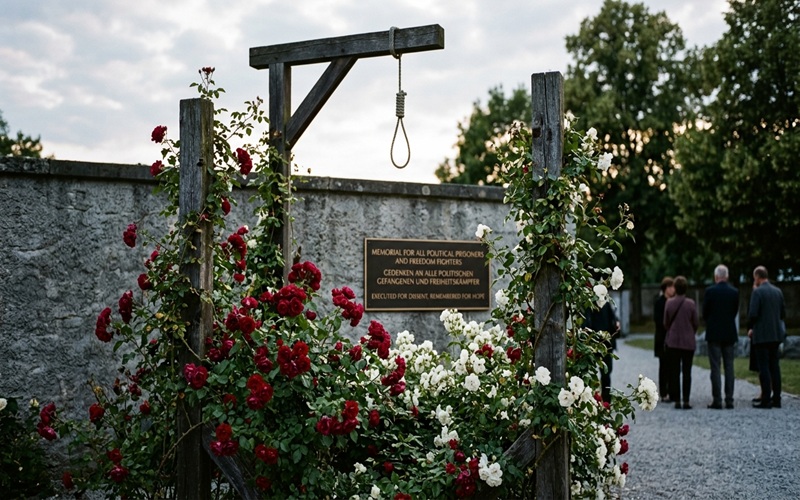
The regime had previously resorted to public executions in the area in an attempt to intimidate the population. However, amid concerns about the social reaction, it withdrew the gallows and postponed the executions of the two young men until recently.
The renewed executions demonstrate that the regime continues to view the death penalty as a principal instrument for preventing further resistance.
Executions Target Young Men Who Challenged Security Forces
The recent executions also include prisoners accused of confronting security forces in several Iranian cities.
Among them were prisoners accused of killing law enforcement officers in Damghan and Minab. Danyal Jahaniyan was executed in connection with an incident involving a member of the security forces in Bandar Abbas. Another prisoner was executed in Zahedan over participation in an attack on a police station in which multiple regime security personnel were killed.
These cases reveal the regime’s determination to punish not only organized political opposition but also acts of direct confrontation with its security apparatus.
The authorities use capital punishment to send a warning to a population facing political repression, economic hardship, and the denial of basic freedoms. By publicizing executions and pursuing death sentences against young men, the regime seeks to raise the perceived cost of resistance and discourage others from following the same path.
But the severity of the punishment also underscores the authorities’ fear of renewed confrontation.
Why the Regime’s Execution Policy Is Failing
The regime has relied on executions for decades as a means of preserving its rule. Its current escalation reflects an attempt to revive the same strategy as it confronts a society that has repeatedly demonstrated its unwillingness to accept the existing conditions.
One case illustrates the depth of this confrontation. When a prosecutor questioned a young man about why he had attacked a police station, the response was direct: “To get weapons and kill you.”
The statement reflects the intensity of the hostility confronting the regime among those prepared to challenge its security forces. Rather than demonstrating that repression has restored stability, the continuing cycle of executions points to an unresolved confrontation between the authorities and a population unwilling to surrender.
The regime’s calculations rest on the assumption that enough executions will eventually extinguish resistance. Yet the repeated targeting of young men in Mashhad, Isfahan, and other cities has not eliminated the underlying sources of public anger.
Instead, the escalation exposes the authorities’ continued dependence on fear as a means of political survival.
The central question is no longer simply how many prisoners the regime will execute, but whether executions can achieve the political outcome the authorities seek. The pattern of repression suggests that the regime is attempting to contain a volatile society through increasingly severe punishment, without resolving the conditions driving resistance.
As long as those conditions persist, executions alone cannot guarantee the silence or submission the regime seeks.