


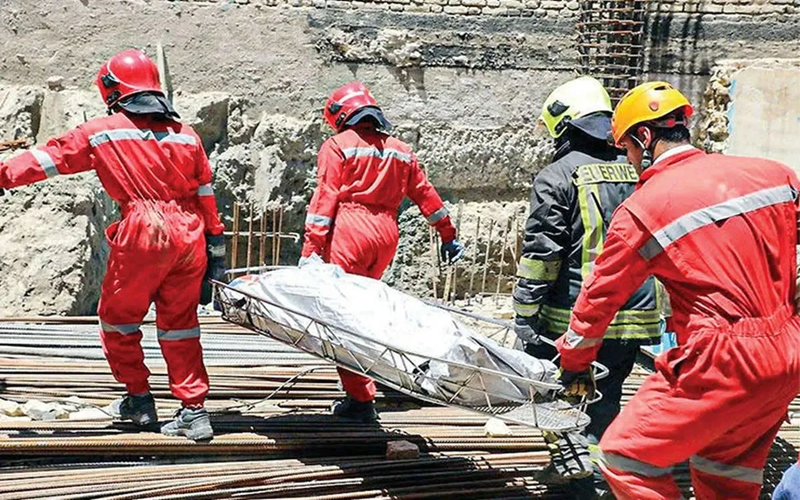

While workplace safety laws, independent trade unions, and employer accountability protect workers in Nordic countries, Iran’s workers face preventable deaths, inadequate protections, and a lack of transparency over workplace accidents.
The contrast between workplace conditions in Iran and those in Nordic countries exposes a fundamental difference in how workers’ lives and rights are treated. While countries such as Norway, Sweden, and Denmark have established legal frameworks, independent trade unions, and strict employer accountability to protect workers, workplace accidents in Iran continue to claim lives amid inadequate safety measures and a lack of transparent reporting.
Under Iran’s ruling regime, the actual number of workers killed or injured in occupational accidents has never been disclosed transparently since the regime came to power. Comprehensive statistics would expose the consequences of decades of neglect, exploitation, and disregard for workers’ most basic rights. Instead, scattered figures published by state-affiliated media offer only a partial glimpse of the scale of the crisis.
According to figures published by the state-run Mehr News Agency’s counterpart, Khabar Online, citing the director general of the Legal Medicine Organization in Hamadan Province, 349 workers were injured and 21 died in workplace accidents during the first six months of the current Iranian year. In Mazandaran Province, 55 workers were reported injured in occupational accidents, representing a 31 percent increase compared with the previous year.
These figures, drawn from only two provinces, illustrate the dangers facing workers across the country. They also raise serious questions about the extent of workplace accidents that go unreported or are inadequately documented.
The problem is not simply the occurrence of industrial accidents. It is the absence of effective protection, prevention, and accountability that allows preventable incidents to become fatal.
Independent unions and workplace safety make the difference
The situation in Norway and other Nordic countries demonstrates that workplace accidents are not an unavoidable price of industrial activity. Strong labor protections, independent trade unions, and enforceable safety regulations can substantially reduce risks and ensure that workers are not left alone to bear the consequences of unsafe working conditions.
In Norway, workplace safety legislation places clear responsibility on employers to protect employees’ health and lives. Employers are required to identify potential hazards, assess workplace risks, and eliminate or minimize dangers before they result in accidents.
Safety equipment is also a legal obligation, not an optional benefit. Depending on the nature of the work, employers must provide helmets, protective gloves, safety footwear, appropriate clothing, and specialized equipment. Workers exposed to high temperatures, for example, must have fire-resistant clothing, protective footwear, and safety glasses.
Employers must also ensure that workers receive proper training on the equipment they use and understand the safety procedures relevant to their jobs. Training must be provided in a language workers can understand.
Failure to meet these obligations can carry serious consequences. Employers who neglect safety requirements and expose workers to preventable accidents may face substantial fines and criminal prosecution.
A key factor behind this system is the existence of powerful, independent trade unions that defend workers’ interests. These organizations have the freedom and institutional strength to hold employers accountable and work alongside government authorities and employers to improve working conditions.
This is fundamentally different from a system in which workers lack effective independent representation and have little power to challenge unsafe workplaces.
Social protections extend beyond the workplace
Nordic labor protections also recognize that workers’ security does not end when they leave the factory or workplace.
In Norway, employees receive written employment contracts from the beginning of their employment and are covered by workplace accident insurance and social security arrangements.
Workers are also entitled to paid annual leave. Holiday pay amounts to 12 percent of their annual salary, allowing them to take four weeks of summer vacation. Employees over 60 receive an additional week.
Sickness benefits provide another layer of protection. During the first 16 days of illness, the employer is responsible for paying the worker’s salary. After that, the social security system provides full salary compensation for up to one year, subject to the applicable rules.
Workers who suffer permanent impairment as a result of occupational accidents can also qualify for disability benefits. Under the framework described, a worker who loses 30 percent of their working capacity may qualify for disability compensation.
These protections reflect a broader principle: workers should not be pushed into poverty or deprived of their livelihood because they become ill or suffer an accident while earning a living.
Workplace fatalities persist, but victims and families are protected
Even with extensive safety regulations and workplace inspections, occupational accidents still occur in Nordic countries.
The figures cited for annual workplace fatalities are approximately:
| Country | Annual workplace fatalities |
|---|---|
| Norway | 20–30 |
| Sweden | 30–40 |
| Denmark | 30–45 |
| Finland | 12–26 |
| Iceland | 2–5 |
These figures show that no industrial society can eliminate workplace accidents entirely. The decisive difference lies in prevention, accountability, and the protections available when tragedies occur.
When a worker dies in an occupational accident in Norway, compensation is provided through the relevant employer liability and insurance arrangements, alongside social security protections. Surviving spouses and children are entitled to financial support, with children eligible for benefits until the age of 21.
The families of deceased workers are therefore not simply abandoned to face the economic consequences of losing their breadwinner.
Workers’ lives are not expendable
The contrast between Iran and Nordic countries is ultimately about more than statistics or differences in economic development. It reflects two fundamentally different approaches to labor rights and human dignity.
In countries where independent unions can defend workers, safety regulations are enforceable, and employers face consequences for negligence, protecting workers’ lives is an institutional responsibility.
In Iran, meanwhile, the absence of transparent nationwide statistics, recurring reports of workplace injuries and deaths, and the persistent vulnerability of workers expose a system in which basic occupational protections remain inadequate.
The deaths and injuries reported in Hamadan and Mazandaran are not isolated figures. They are a warning about the broader conditions confronting Iran’s working population.
Workers who build factories, operate machinery, construct infrastructure, and sustain the country’s economy should not have to risk their lives simply to earn a living. Workplace safety, fair wages, independent labor organizations, and social security are fundamental rights, not privileges that can be granted or withheld at the discretion of those in power.
A system that cannot guarantee workers’ safety, concealment notwithstanding, cannot escape responsibility for the human cost of its policies.