
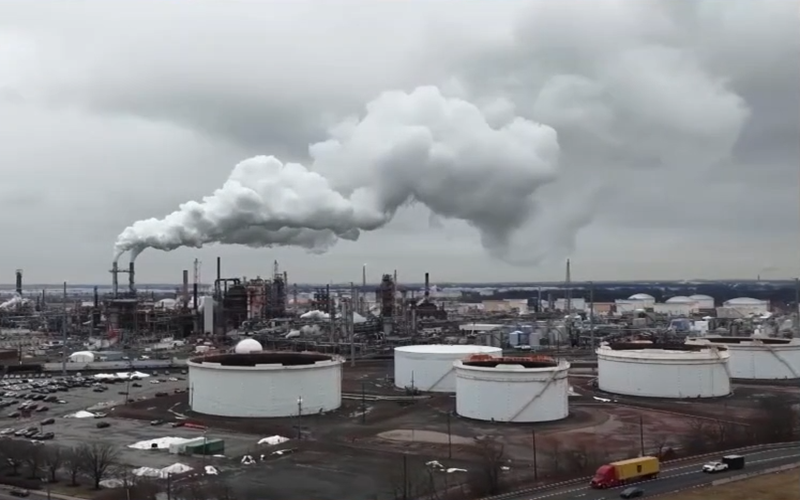

With oil exports increasingly constrained, the regime is considering higher taxes, energy price increases, currency devaluation, and borrowing to cover its budget deficit. But a genuine oil-free budget would require dismantling the financial privileges and military spending that sustain the IRGC.
On November 20, a deputy head of the regime’s Planning and Budget Organization announced that the draft budget for the next Iranian calendar year (1406) would be submitted to the government within two weeks. The announcement comes as the regime faces the challenge of covering a widening budget gap amid declining economic activity and limited access to foreign currency.
The scale of the problem is evident in recent budget figures. Iran’s 2025 budget was approximately $77 billion, while the 2026 budget fell to an estimated $45–48 billion. Including allocations for state-owned companies, banks, and other government-controlled institutions, however, the overall public-sector budget reaches approximately $111 billion.
Continued restrictions on oil exports could reduce national income by an estimated 7 to 8 percent, further weakening the government’s revenue base.
The regime has several possible ways to compensate for the shortfall. None, however, offers a sustainable solution. Most would simply transfer the financial burden to households, employees, businesses, and already impoverished sections of society.
Higher taxes and energy prices threaten households and businesses
One option is to increase tax collection. But the deteriorating economic situation leaves little room for additional taxation. During the first five months of the current Iranian year, the government collected only around 28 percent of its projected tax revenue, illustrating the difficulty of meeting existing targets.
A meaningful expansion of the tax base would require collecting taxes from large economic institutions and government-affiliated entities that currently benefit from exemptions. Yet these institutions are closely connected to the regime’s power structure, making such a move politically difficult.
The likely alternative is to increase pressure on registered businesses, shopkeepers, employees, and ordinary taxpayers. Businesses, in turn, would pass additional costs on to consumers through higher prices.
Another likely measure is an increase in the prices of gasoline, natural gas, electricity, and other public services. The guidelines for the 2027 budget emphasize addressing energy imbalances, changing consumption patterns, and introducing new taxation and mechanisms for using government assets.
In practice, this could mean higher energy prices or reduced subsidies, including for natural gas, which households depend on during the winter months. Such measures would intensify inflation and further erode purchasing power.
Currency devaluation and oil-backed bonds offer only temporary relief
The regime is also relying increasingly on currency devaluation to generate more rials from its foreign currency revenues.
The dollar, which traded at approximately 60,000 tomans two and a half years ago, rose above 200,000 tomans before the war and has since reached approximately 295,000 tomans. By selling foreign currency at increasingly higher rates, the government can collect more domestic currency to finance its expenditures.
But this mechanism does not create new national wealth. It reduces the purchasing power of the rial and accelerates inflation, effectively imposing another hidden tax on the population.
The issuance of government bonds is another proposed solution. One proposal involves using oil that cannot currently be exported as backing for oil bonds, which could be transferred to contractors and other government creditors in place of outstanding payments. The government would promise to settle these obligations when the oil is eventually sold.
This approach, however, does not eliminate dependence on oil revenue. It merely postpones payment and transfers the risk to creditors.
The regime may also attempt to sell government-owned properties and other assets. Previous privatization exercises have often benefited politically connected buyers, who acquired public assets at prices far below their actual value. Such transfers do little to address structural budget problems while further concentrating economic resources in the hands of regime-linked networks.
The Development Fund cannot cover the deficit indefinitely
Another potential source of financing is the National Development Fund, which successive administrations have drawn upon to cover government expenditures.
The fund’s reported assets under management in 2026 were approximately $195 billion. However, this figure includes cash, loans, investments, and outstanding claims, rather than immediately available foreign currency.
More than $110 billion is reportedly owed to the fund by the government itself, while the National Iranian Oil Company owes approximately another $17 billion.
After accounting for these liabilities and the nature of its assets, the fund’s actual available liquidity is estimated at around $16 billion, and even this amount is not entirely accessible because part of it is tied to existing obligations.
Using these resources to finance routine government spending would further deplete assets intended to support the country’s long-term economic development.
The regime could also reduce public expenditure on education, healthcare, infrastructure maintenance, and other essential services. Alternatively, it could borrow directly or indirectly from the Central Bank, which would require creating additional liquidity without adequate backing.
Both approaches carry substantial economic costs. Cutting essential services would further deteriorate living conditions, while monetary expansion would fuel inflation.
A genuine oil-free budget would require cutting the IRGC’s financial empire
Beyond the immediate revenue crisis lies a more fundamental problem: the regime’s claim that it can operate a budget independent of oil revenues.
There is a crucial distinction between preparing a budget on paper without explicitly listing oil income and actually implementing one without relying on oil.
The regime can use accounting arrangements to make oil revenues appear under different categories. Oil income can be transferred to state-owned companies, allocated to military institutions, or reclassified as revenue from petroleum products, natural gas, and petrochemical exports.
These accounting changes do not eliminate dependence on oil. They merely obscure it.
The regime’s 2026 budget illustrates the problem. When oil revenues and targeted subsidy-related resources are included, approximately 2,835 trillion tomans were allocated from these sources. At an exchange rate of 260,000 tomans per dollar, this amounts to roughly $11 billion.
A genuinely non-oil budget would have to exclude these resources rather than simply classify them differently.
More importantly, it would require confronting the extensive economic and financial privileges of the Islamic Revolutionary Guard Corps (IRGC).
Official military expenditure figures provide only a partial picture of the regime’s security-related spending. According to the Stockholm International Peace Research Institute (SIPRI), Iran’s officially reported military expenditure amounts to approximately 2.1 percent of gross domestic product.
However, this figure does not necessarily capture the full financial resources available to the IRGC. These include oil revenues placed under its control, preferential foreign currency allocations, the activities of companies linked to the Guards, missile and drone programs, and financing for regional proxy forces.
An assessment presented in the budget analysis places the broader resources controlled by the IRGC at approximately 47 percent of national income when these additional channels are included. This is a broader estimate, not an official military expenditure figure comparable to SIPRI’s measure.
Reducing this extensive financial network would be essential to any meaningful budget reform. But doing so would strike at the foundations of the regime itself.
The cost of the regime’s budget crisis falls on ordinary Iranians
The regime’s economic and political structures are deeply intertwined. Its spending priorities extend beyond the official government budget and include the institutions responsible for domestic repression and regional intervention.
A genuine restructuring would therefore require more than tax increases, bond issuance, or accounting adjustments. It would demand substantial reductions in the IRGC’s economic privileges, military expenditures, and resources devoted to repression and regional expansion.
The regime is unlikely to undertake such changes because they would undermine central pillars of its power.
Instead, the available options point toward a familiar pattern: higher taxes on businesses and employees, increased energy prices, further currency devaluation, borrowing, depletion of national funds, and cuts to essential public services.
Each measure would deepen the economic pressure on a population already struggling with inflation and declining purchasing power.
The regime may be able to present a nominally oil-free budget through accounting maneuvers and alternative financing mechanisms. But as long as its economic structure remains dependent on oil revenues and its vast military-security apparatus continues to absorb national resources, a genuinely non-oil budget will remain an illusion.
Iran’s budget crisis is therefore not simply a problem of insufficient revenue. It reflects a system in which the costs of maintaining the regime’s power are increasingly transferred to the population, while the institutions controlling much of the country’s wealth remain beyond meaningful public accountability.